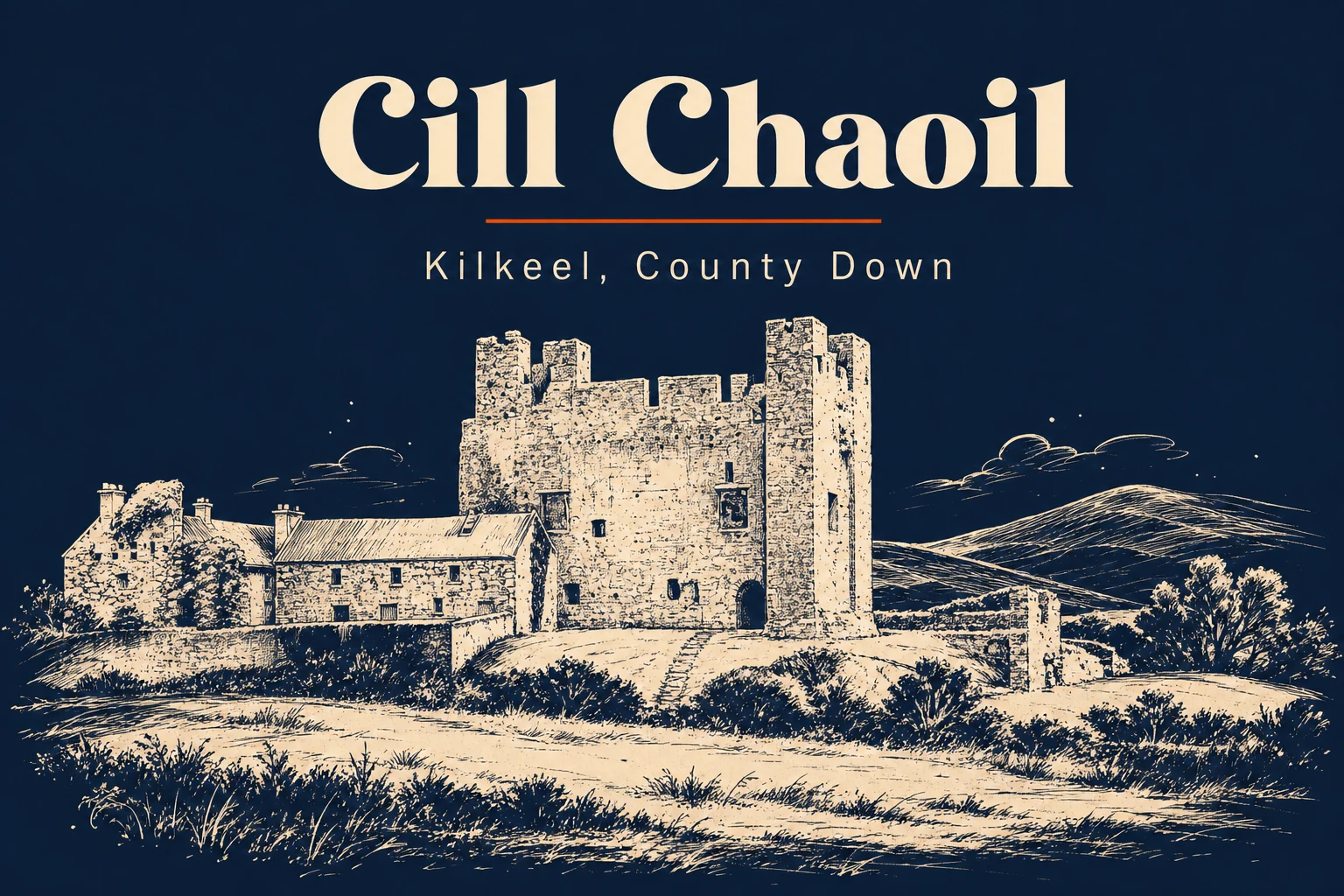
Cill Chaoil · Co. Down
Northern Ireland's biggest fishing fleet still lands at six in the morning. The town is built around that.
Kilkeel is a working fishing port that happens to sit at the foot of the Mournes. That order matters. The visitor stuff - the harbour walk, the Nautilus Centre, the cookery school upstairs - is built around an industry that was here long before any of it and would carry on without any of it. Northern Ireland's largest fleet lands at this harbour. Most of the prawns in a UK supermarket scampi packet came through Kilkeel Seafoods at the back of the harbour. The town is what it is because of that, and it does not need to perform.
The mountains behind it are the southern Mournes - Slieve Binnian above Silent Valley, Slieve Muck and the long ridge running west towards Hilltown. Silent Valley reservoir is up the Head Road, four miles inland from the town, and it is the reason Belfast has water. The Mourne Wall - about 31 kilometres of dry-stone built by hand between 1904 and 1922 to enclose the catchment - runs over fifteen summits and is the obvious feature on every walk up here. Greencastle, the Anglo-Norman keep on the lough, is at the western end of the parish; the Carlingford ferry goes from a pier next to it.
Don't read the Mourne Coastal Route signage as a verdict on the town. The A2 brings the coach traffic through on its way from Newcastle to Warrenpoint, and most of it does not stop. That's fine. Stop. Walk the harbour at five in the afternoon when the boats are coming in. Eat in the Kilmorey Arms or up the road in Annalong. Drive up to Silent Valley before nine and have it to yourself. Then do the ferry across to Cooley on a day the wind isn't lifting the lough.