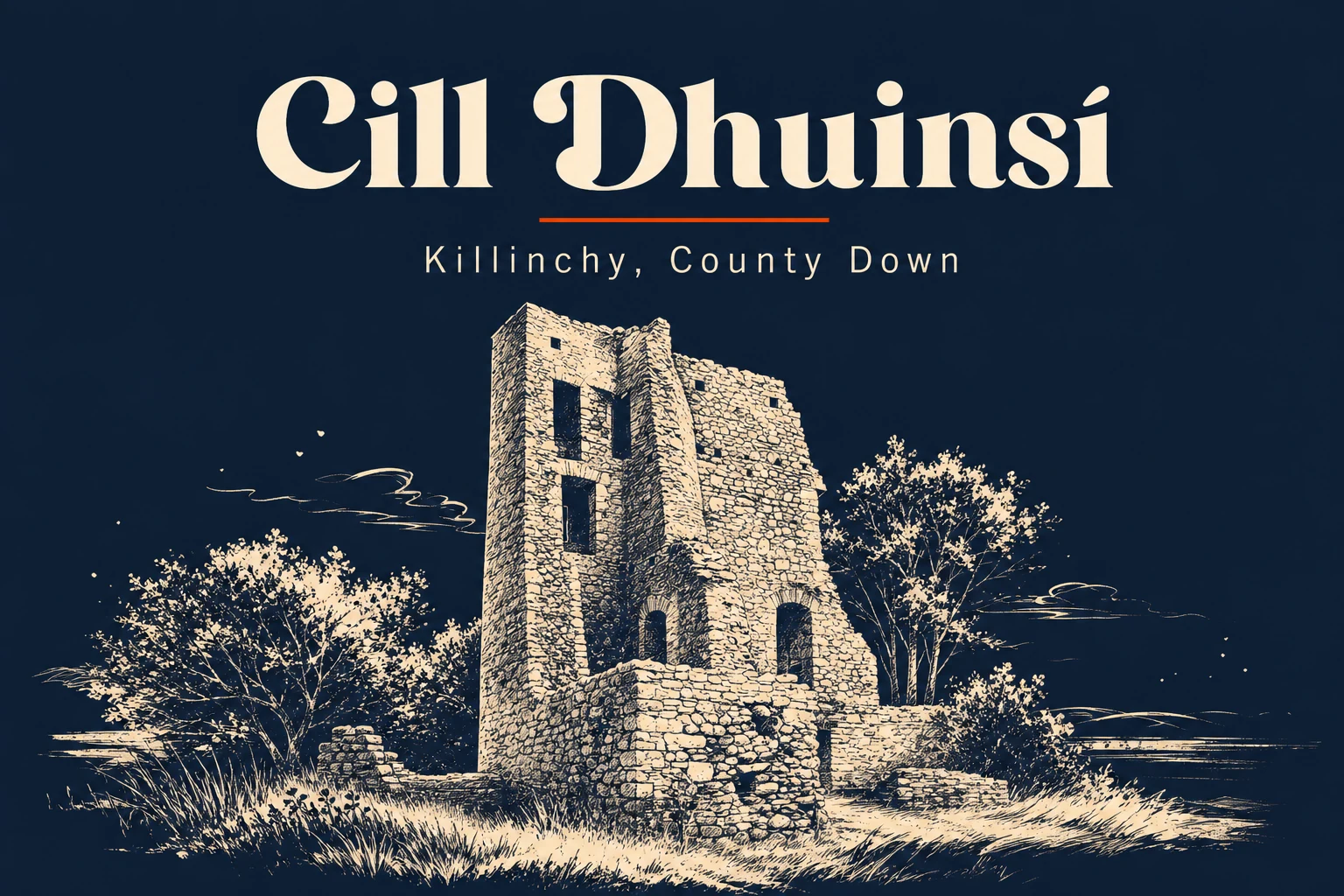
Cill Dhuinsí · Co. Down
A hill above Strangford Lough, a ruined tower on a causeway, and a restaurant people drive an hour for.
Killinchy is a crossroads village on a hill above the western shore of Strangford Lough. There is a church at the top, a primary school, a petrol station, and not much else in the village itself. The reason to come is two miles east - down the Whiterock Road to a stone causeway that runs out across the mudflats to Sketrick Island.
On Sketrick you get the ruin of a 15th-century tower house at the north end and a restaurant called Daft Eddy's at the south end. The castle stood mostly intact until a storm in 1896 knocked half of it down. The restaurant has been run by the same family for over twenty-five years and is the reason people in Belfast know where Killinchy is at all. The view from the deck is the lough and a thousand little drumlin islands and the Mournes in the distance on a clear day.
Stay for the Ulster-Scots story too. The Presbyterian congregation here dates to 1630, when John Livingstone arrived from Scotland and started preaching. Four years later the bishops silenced him. He sailed for America from Groomsport on the Eagle Wing in 1636 and the Atlantic sent him back. The meeting house went up in 1714 and was rebuilt on the same ground in 1739 - that cruciform building is what you see today, and the graveyard reads like a roll-call of County Down Presbyterianism.