County Galway Ireland · Co. Galway · Ballynahinch Save · Share
POSTED FROM
BALLYNAHINCH
CO. GALWAY · IE

Ballynahinch
Baile na hInse

The Wild Atlantic Way
STOP 02 / 06
Baile na hInse · Co. Galway

A village built around a lake and a castle. The salmon fishing is serious. The hotel is where you want to be.

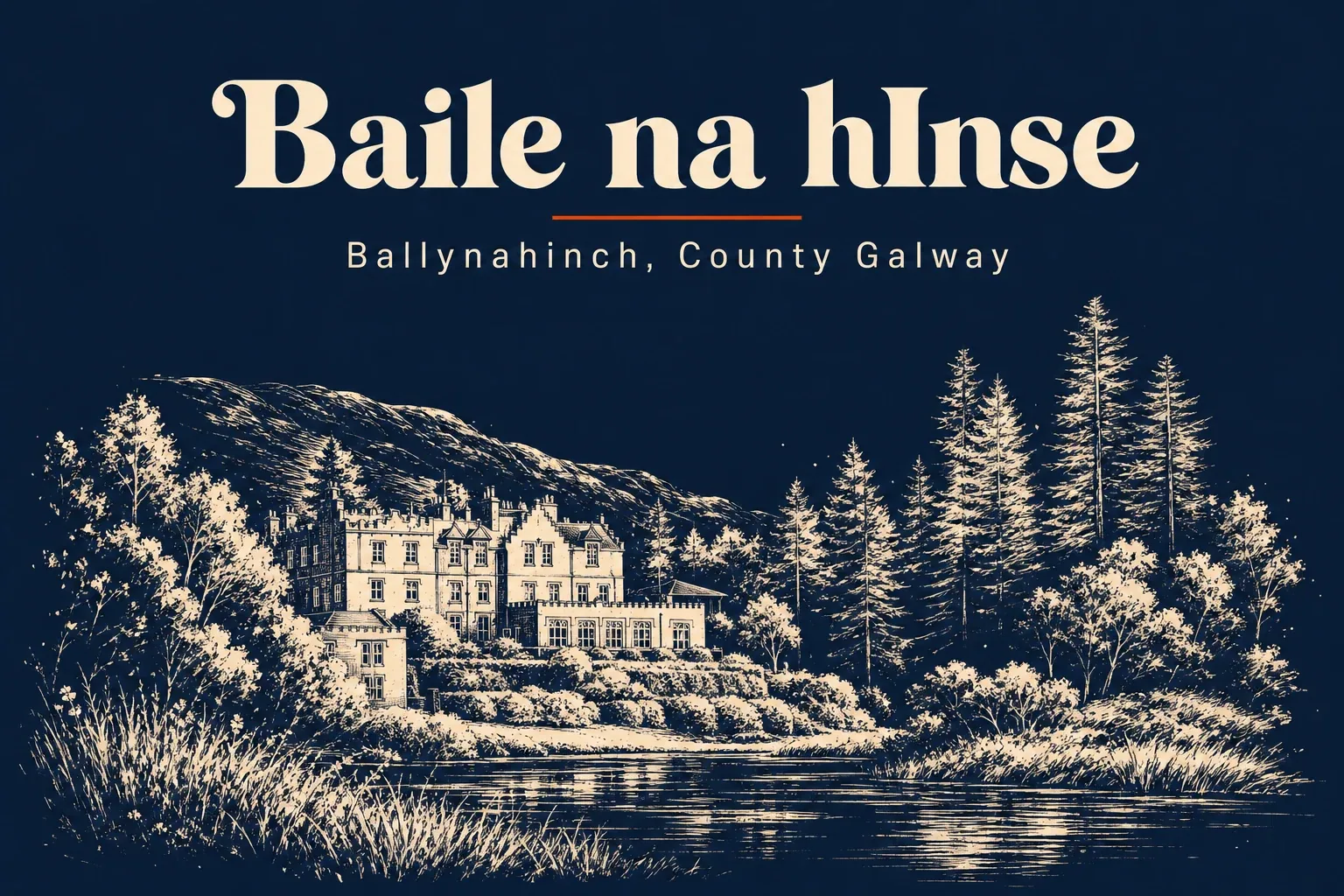
Ballynahinch is a small village on the edge of Ballynahinch Lake, deep in Connemara, about 30 kilometres west of Galway city. The lake is three kilometres long, sits in a bowl of rock and bog, and is one of the finest Atlantic salmon fisheries in Ireland. The village exists because of the castle, the castle exists because of the lake, and everything else follows from that.

What you need to know: Ballynahinch Castle Hotel is the anchor. It was built in the 1820s as a fishing lodge, rebuilt and expanded over the years, and in 1924 was bought by K.S. Ranjitsinhji — the Prince of Nawanagar, captain of the Indian cricket team and a former England international. He kept it until his death in 1933, bringing servants from India, throwing parties for visiting dignitaries, and fishing the lake with serious intent. The castle is a genuine country house hotel now — not a theme park, not a brochure, but a place built around fishing, hospitality and land management. If you are coming to fish, this is where you come. If you are coming to walk and watch, this is still where you come, and the hotel will feed you and let you sit by the fire.

The village is small. There are two small pubs, a shop, some holiday cottages scattered around the edges. The centre of gravity is the lake and the castle. Stay two nights. Walk the lake edge in the morning, sit in the hotel bar in the evening, talk to the fishermen coming in with their stories. This is Connemara in one place — water, rock, fishing, and a history that arrived from somewhere else and decided to stay.
Population
~100
Pubs
2and counting
Walk score
Lake edge to hills in ten minutes
Founded
19th century — castle estate and fishing lodge
Coords
53.5281° N, 9.8903° W
01 / 09

At a glance.

Three things every local will eventually mention. Read these and you've already understood more than most day-trippers do.

02 / 09

The pubs.

None of these are themed Irish pubs, because they don't need to be. A few that earn the trip:

Keogh's Bar

Quiet, fishermen
Local pub

The smaller of the two. Locals and the occasional angler at the end of a day on the lake. Simple. No music, no menu, no pretence. This is where the fishermen come to be quiet.

O'Dowd's Bar & Restaurant

Mixed, families and fishermen
Pub & restaurant, village centre

Food and drink, the kind of pub that serves both without fussing about which is which. Stew, fish, the simple things done well. Busy in the fishing season, quiet the rest of the year.

03 / 09

Where to eat.

PlaceTypeLocal note
O'Dowd's Bar & Restaurant Pub restaurant €€ The only serious food option in the village proper. Stew, fresh fish, lamb. The kitchen works with what is fresh and what the season brings. The bar is the restaurant.
Ballynahinch Castle Hotel Hotel dining €€€ Dinner for residents and non-residents alike. The kitchen sources from the estate and beyond — salmon, local lamb, vegetables that have been grown not imported. Book ahead for non-residents. The dining room looks over the lake.
04 / 09

Where to sleep.

PlaceTypeLocal note
Ballynahinch Castle Hotel Country house hotel A genuine fishing lodge turned hotel. Twenty-nine bedrooms, log fires, a bar, a dining room. The staff are accustomed to fishermen and to people who know the difference between fishing and tourism. Book well in advance, especially in the May-June fishing season. Rates include access to the estate, the lake edge, the paths. This is the place.
Ballynahinch Lake cottage Self-catering Available through the castle or the usual booking sites. On the estate or near the village. Quieter than the hotel, your own kitchen, views of the lake or the mountains depending on which one you book.
A house in the hills above the lake Holiday rental Scattered around the estate boundary and the village edge. Sleep in the hills, walk down to the lake or into Connemara. Check Airbnb, Vrbo, or ask the hotel for local recommendations.
05 / 09

Stories & lore.

The reason to come back. The things every local will eventually tell you about, usually after the second pint.

The Maharaja who fished in Ireland

K.S. Ranjitsinhji and a castle in Connemara

Kumar Shri Ranjitsinhji Vibhaji II was born in 1872, became Prince of Nawanagar (a state in India), played cricket for England at the highest level, and led the Indian cricket delegation to the 1911 coronation of George V. In 1924, at the age of 52, he bought Ballynahinch Castle from a fishing lodge operator and lived here, off and on, until 1929. He brought his entourage, his servants, his style. He fished the lake. He threw parties. He brought India to Connemara in the 1920s and nobody seemed to find it odd. He died in 1933 in Jamnagar, India. Ballynahinch stayed a fishing lodge. But for a decade he was here, and the castle remembers it.

The fishing that made the castle

Atlantic salmon and Ballynahinch Lake

Ballynahinch Lake is a three-kilometre salmon fishery in the middle of Connemara. Atlantic salmon return from the ocean in spring to spawn — usually March to July. The fish come back to the rivers they were born in, and Ballynahinch catches them as they run. The casting is from the shore, the boats are light, the tackle is specialist, the knowledge is learned over years. A good day is three fish. A better day is five. The waiting between bites is the meditation. The hotel exists because of this fishing. The fishermen who come here know the rhythm of the seasons and the rhythms of the lake.

Built, rebuilt, survived

The castle on the lake

The castle was built in the 1820s as a fishing lodge — a solid stone building with thick walls and a slated roof, the way you built things to last in the west of Ireland. It was rebuilt and expanded in the Victorian era, expanded again in the 20th century. Ranjitsinhji added a wing. The Irish Free State saw it as a private house and taxed it accordingly. Wars came and went. The hotel survived by being useful — fishermen need a bed and a bar and a place to talk about the fish that got away. The building is four-storey stone, with a tower, and sits on the lake edge with the bog and the Twelve Bens behind it. It is not pretty in the way of tourist castles. It is solid in the way that things built to work are solid.

Stone and water and light

The lake walks and the bog

The walks around Ballynahinch Lake are not long but they are serious — bog, bog water, stone, the light changing on the lake. The loop around the lake edge is six kilometres and takes two hours. There are paths that lead up into the hills behind, tracks that cross the bog toward Benlettery and Bencullagh. The weather is its own opinion — bring a coat that means it. The best days are after rain, when the light breaks through and the lake sits still. The worst days teach you something about Connemara weather and about yourself.

06 / 09

Things to do outside.

Wear waterproofs. Bring a sandwich. Tell someone where you're going if it's the mountain.

Ballynahinch Lake loop Around the lake edge — stone, bog, the occasional view opening to the hills. Not a maintained path; you are walking the estate boundary and farm tracks. The right bank is the prettier side. Start from the castle and go clockwise. Bring a map.
6 km loopdistance
2 hourstime
To Benlettery mountain A longer walk into the hills north of the lake, heading toward Benlettery (902m) on the far side of the bog. A serious walk, not a stroll. The view from the high point is Connemara in all directions. Bring a map and compass, and go in clear weather.
8 km returndistance
3–4 hourstime
Kylemore and Pollacodden walks Walks that branch north and east from the estate toward Kylemore and beyond. Ask at the hotel for the current state of the paths — some are more maintained than others, and the bog makes paths temporary.
5 kmdistance
1.5 hourstime
The lake edge evening Just the lower, easier loop from the castle as the light changes in the evening. Not a hike, a walk. Do it before dinner, when the lake sits still and the light is gold.
2.5 kmdistance
45 mintime
07 / 09

When to go.

There is no bad time. There are different times.

Spring
Mar–May

The salmon are running. If you are fishing, this is the season. If you are walking, the bog is drying out and the light is true. May is best — the weather is improving and the fish are still here.

◉ Go
Summer
Jun–Aug

The fishing season ends at the end of July. The lake is warm as it ever gets, the hotel is busier, the prices rise. The walking is easier but less private. Late June is the balance point.

◐ Mind yourself
Autumn
Sep–Oct

The season restarts in early September. The lake quiets after the summer rush. The light is different — lower, longer, the golds and oranges on the hills are the point. Two nights here in late September is the perfect time.

◉ Go
Winter
Nov–Feb

The hotel is quieter but stays open. The walking is serious — the bog is wet, the light is brief, the weather is not kind. Come for the solitude and the fire in the bar. Spring is when the lake is itself again.

◐ Mind yourself
08 / 09

What to skip.

Honestly? Don't bother.

If a local was sitting beside you, this is the bit where they'd lean in.

×
Coming to fish if you do not fish seriously

Ballynahinch is a working fishery. The guide, the tackle, the knowledge, the ethics of it — this takes time and money. If you want to watch the fishermen and the lake, stay and walk. If you want to fish, train first.

×
A one-night stay expecting a "Connemara experience"

One night is arrival and the first walk. Two nights is when the place settles into you. Stay two nights and spend a full day walking or watching the lake.

×
Visiting in August without booking the hotel well ahead

August is peak summer and peak fishing season. If you have not booked the hotel by June, you will have a cottage or a disappointment. Plan three months out, or come in late September.

×
Expecting the castle to be a museum or a ruin

This is a working hotel. You can stay here, eat here, drink here. You cannot wander the rooms or photograph the interiors as if it is a tourist site. You are a guest or you are outside looking at the walls.

+

Getting there.

By car

Galway to Ballynahinch is roughly 1h by car on the R341 via Oughterard and Maam Cross, then south toward Roundstone and Clifden. Follow signs for Ballynahinch Castle Hotel — the last few kilometres are narrow lake-edge roads.

By bus

Bus Éireann and CityLink run Galway–Clifden services, stopping at Maam Cross and Recess. Ballynahinch is not on the main route — you will need to hire a car for the last leg, or arrange a transfer with the hotel.

By train

No train. Nearest station is Galway. From Galway, bus to Maam Cross or Recess, then hire a car for the final 20 minutes.

By air

Ireland West Airport (Knock) is 1h 30m by car. Shannon is 2h. Galway is 1h.