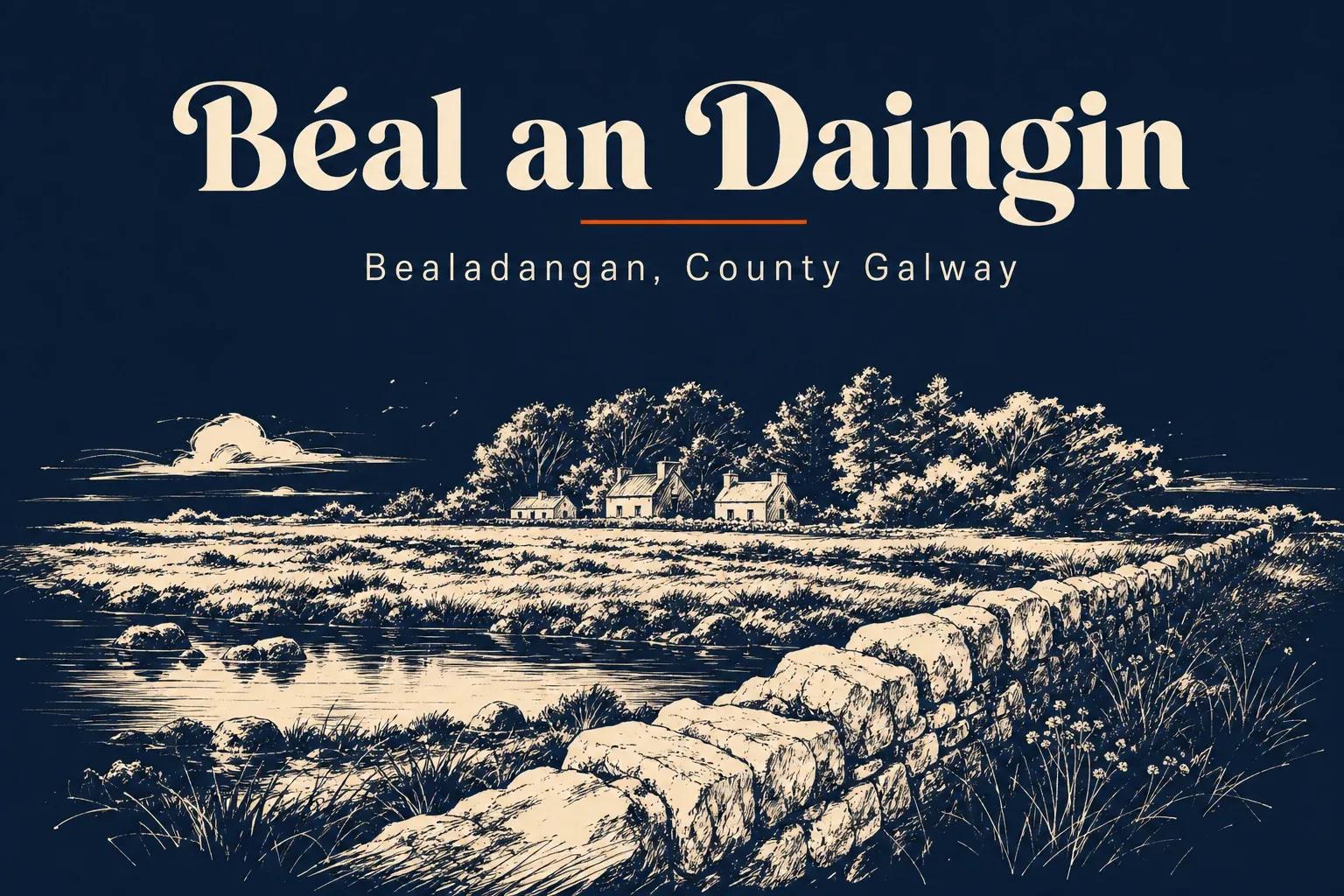
Béal an Daingin · Co. Galway
The mainland end of the bridge. A working Gaeltacht village where the road to the south Connemara islands begins.
Bealadangan sits on the mainland shore of south Connemara, west of Galway city, at the point where the road runs out of mainland and starts hopping across water. The name is Béal an Daingin - "Mouth of the Stronghold" - a reference long lost, kept alive in the name. What matters on the ground: this is the threshold to the island chain. From here a causeway and a string of bridges carry the road out to Annaghvaan (Eanach Mhéain), then Lettermore (Leitir Móir), then Gorumna (Garmna). The R374 begins at Bealadangan and runs out across them.
This is Gaeltacht. Irish is the first language - the language of the pub, the school, the road signs - and all but a few of the older people also have English. The village is small and honest: a pub, a post office, the primary school (Scoil an Tuairín) within a few miles, and the working water of Kilkieran Bay all around. It does not perform for visitors. The landscape is the classic south Connemara mix of rock, bog, stone walls and salt inlets, low and weathered, with the islands sitting out in the bay.
Come if you are driving the back roads of south Connemara and want to understand the point of transition - where the mainland becomes a chain of islands. Come for the pier, the bridges, and the plain scarcity of a place that serves itself first. Cross the bridge and you are on the islands. Stay on the mainland side and you are standing at the door to them.