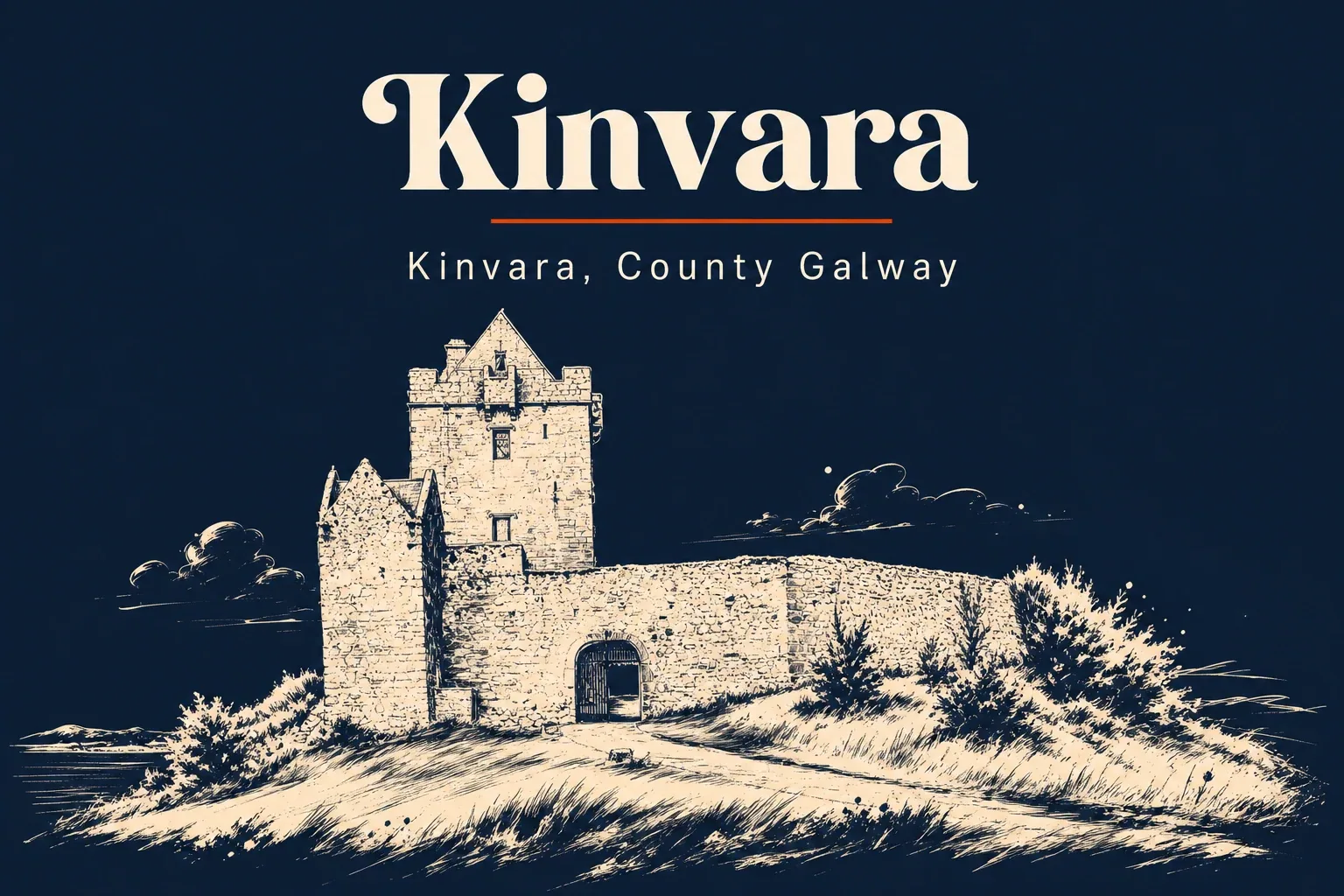
Kinvara · Co. Galway
Black sails, limestone, and a castle that caught the last light. Festival-bound in August.
Kinvara is a fishing village on the south shore of Galway Bay, 28 kilometres south of Galway city, at the point where the limestone of the Burren meets the water. The castle on the promontory is Dunguaire, built around 1520, a tower house in red stone that catches the last light and looks nothing like the real world - which is why everyone photographs it.
The village itself is smaller than it looks. A harbour, a main street, four pubs, and the black-sailed Galway hookers moored or hauled up for the winter. These boats - bád mór, leath bhád, gleoteog, púcán - are the working boats of Connacht. They still fish. The village still builds them. Every August the Cruinniú na mBád, the Gathering of the Boats, brings them all home for a festival of racing, sessions, and the noise of wooden boats doing what wooden boats do.
The real draw is the marriage of water, stone, and music. Walk the pier at evening, when the light goes gold across the bay. Sit in Connolly's or Green's and wait for the fiddles to come out - they usually do. The Burren is behind you to the south, limestone climbing away into thin soil and thin sky. Galway Bay is in front. It is a small place, but it does not feel small.