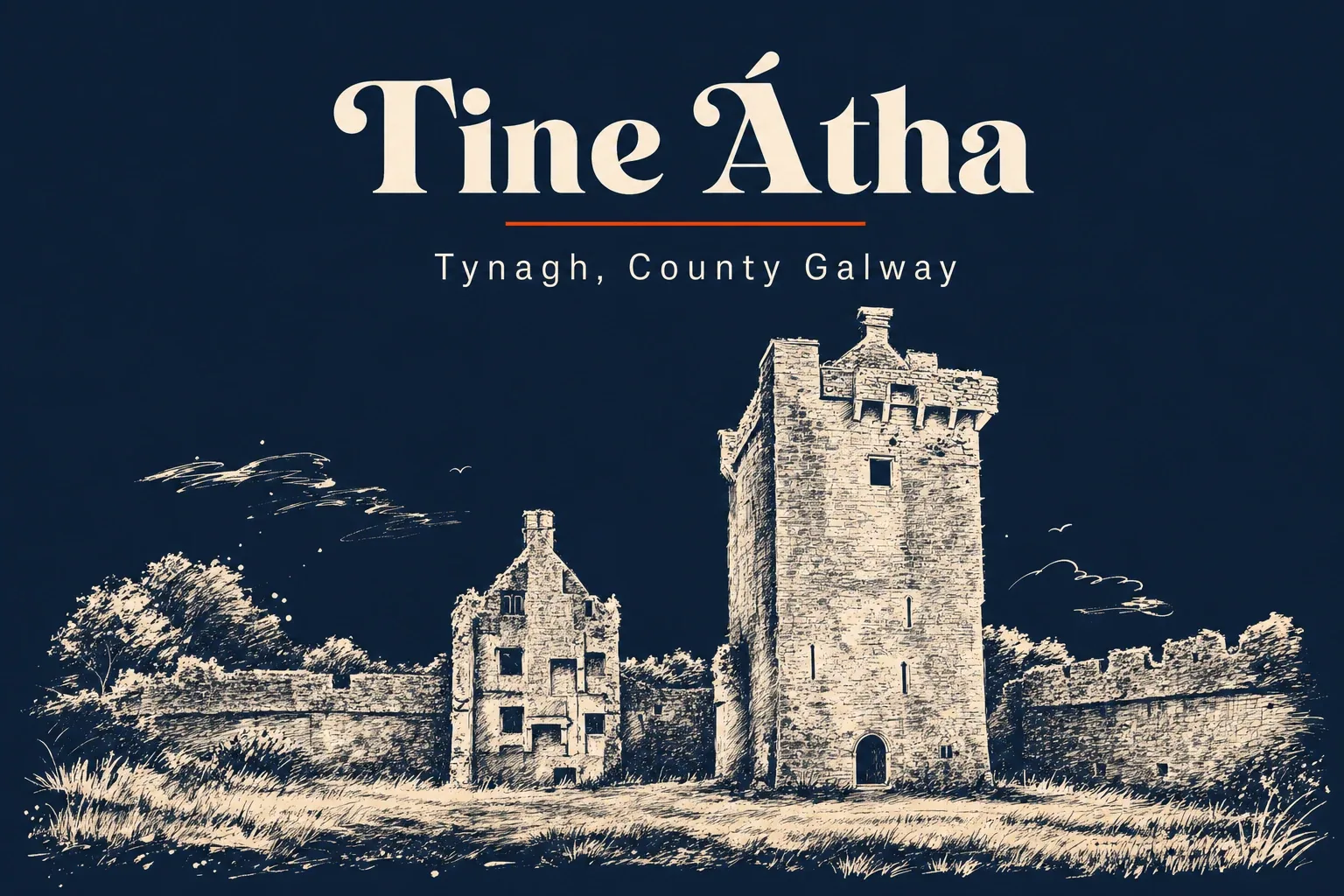
Tine Átha · Co. Galway
A village built by a mine, abandoned when the mine closed. The tailings remain.
Tynagh sits 25 kilometres east of Galway city, in the townland of the same name. Before 1965, it was a small agricultural settlement. Then Tynagh Mines opened - a lead and zinc mining operation that would become one of Ireland's largest mineral extraction projects. At its peak, the mine employed 600 people and extracted 2.5 million tonnes of ore per year. The village grew around it. Housing was built. A school opened. The economy was the mine.
The operation ran for 16 years, from 1965 to 1981. Over that time, 41 million tonnes of ore were extracted and processed. The company used open-pit and underground methods. The ore was crushed, concentrated, and smelted. The mine shipped its product across Europe. Then the metal market collapsed. In 1981, lead and zinc prices fell so steeply that the operation became uneconomical overnight. The company announced closure. Within months, 600 jobs were gone. Two thousand people left the area. The village emptied.
What remains is contested ground. The mine site itself - flooded pits, ore waste, processing facilities - covers hundreds of hectares. The company conducted environmental restoration and the site is now managed as a 40-hectare nature reserve and community project. But the tailings remain. Water quality in the area was affected. There are ongoing questions about contamination, remediation, and liability. This is not a picturesque story of rural heritage. This is what industrial Ireland looked like when it was profitable, and what it looked like when it stopped being profitable. The village that grew because of the mine persists, but its reason for existing is gone.