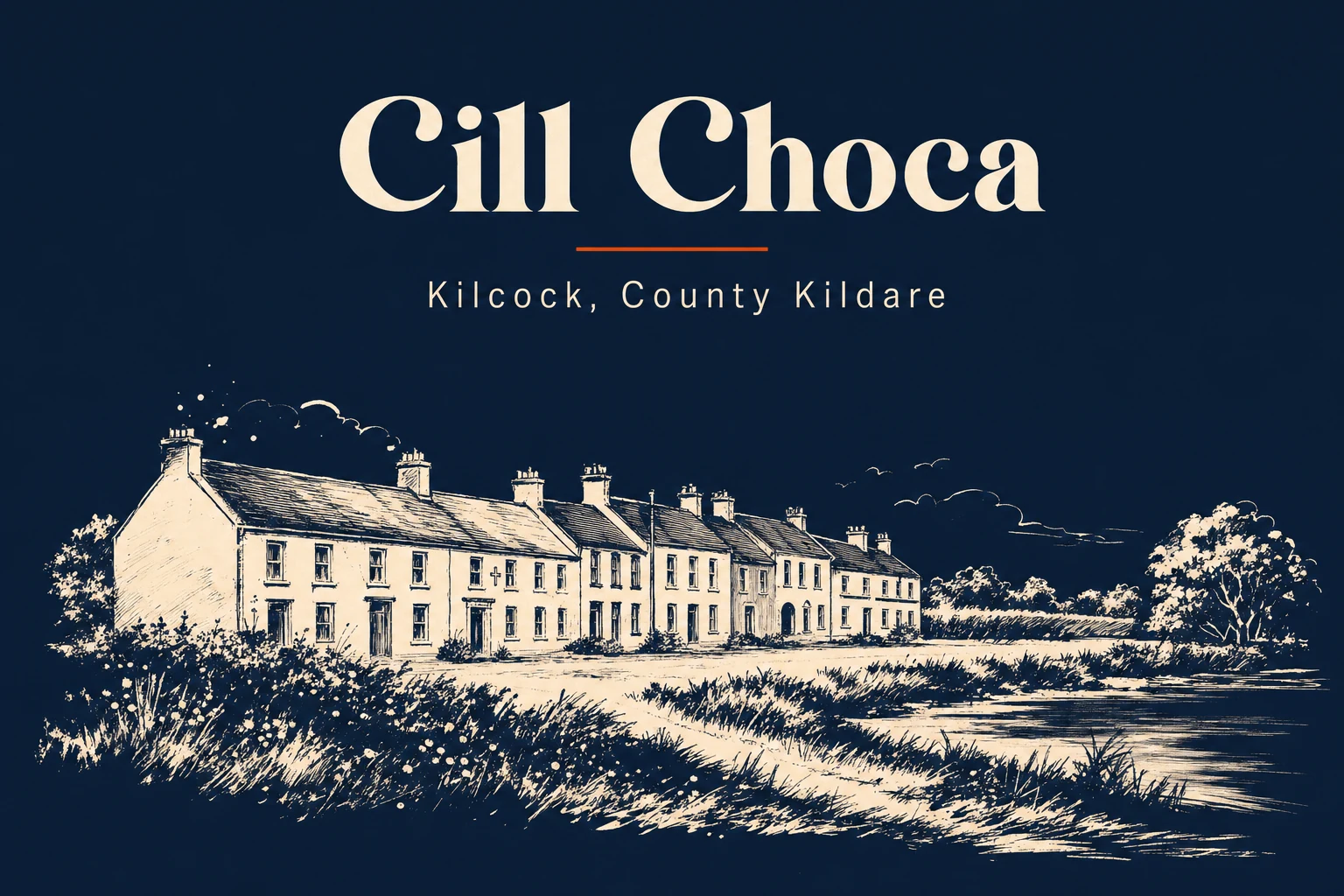
Cill Choca · Co. Kildare
Named for a female saint. Most Irish towns weren't.
Kilcock sits where Kildare meets Meath, on a Rye Water crossing that has mattered since the 6th century. The Royal Canal runs through the middle of town, restored and reopened to boats in 2010, and the towpath east to Maynooth is the best flat walk in north Kildare. The M4 bypassed the town in 1994. The train stopped in 1963, came back in 1998. The canal never left.
The Irish name is Cill Choca - church of Coca. Saint Coca was a woman, which is unusual enough that it's worth saying twice. She set up her Christian settlement beside the Rye Water sometime in the 6th century, embroidering vestments for Colmcille and maintaining connections with Glendalough. The circular street system around the old graveyard still traces the outer wall of her original enclosure. Walk around it and you are walking around a 1,400-year-old boundary.
What Kilcock is now is a commuter town that knows it. Ireland's youngest average age - 32, against the national 38.8 - tells you something about who moved here and why. The train to Dublin Connolly takes under an hour. The M4 is two minutes from the square. The canal is five minutes from the square. The locals who run the GAA club and the canoe polo squad and the bakery and the pub have been here longer than any of that, and they are not leaving.
Come for the canal walk. Stay for a meal at one of the three pubs that have been feeding this town for longer than the motorway has existed. Drive out to Larchill if you want to see a landscape that the rest of Europe forgot to preserve. The town is not trying to be a destination. That is part of what makes it one.