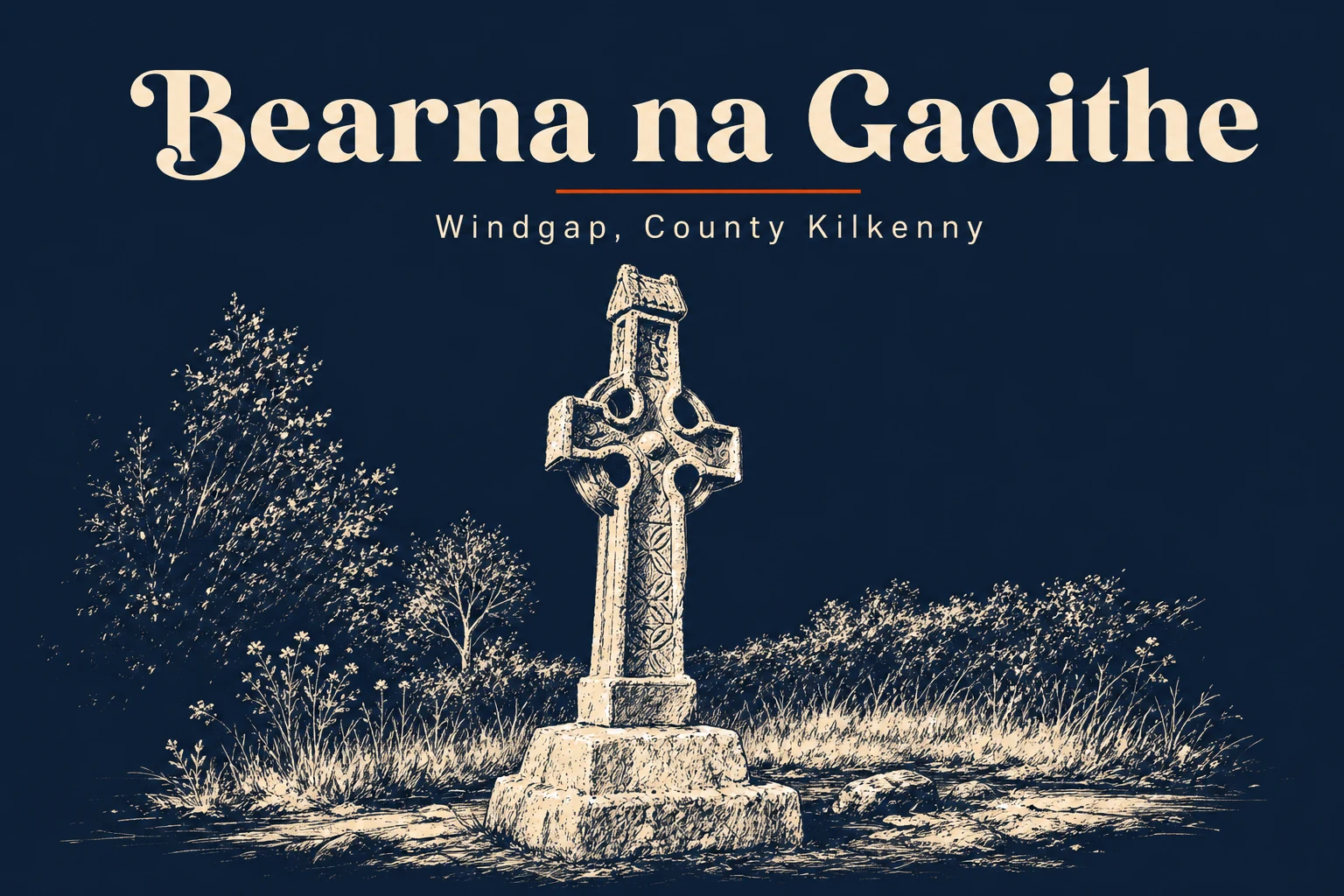
Bearna na Gaoithe · Co. Kilkenny
A small village in a pass through the hills east of Slievenamon. The name tells the whole story.
Windgap is a small village in southwest Kilkenny, hard against the Tipperary border, sitting in a pass through the hills that run east of Slievenamon. It is a parish of a few hundred people, a single pub, a church, a lake and a grotto, and a great deal of quiet. It is the kind of place that teaches you to read a landscape - the hills are not the destination, they are the ordinary view out every window.
The village exists because the gap exists. The road through the high ground goes here because here is where the hills step back far enough to let it. Stand in the village on a rough day and you will understand why it is called what it is called: the wind comes down through the gap and that is the thing you remember when you leave. The wider district was a slate-quarrying place once - the Ormonde and Victoria quarries worked the seam that crosses the county line - but the slate is long finished and dairy farming is what runs the parish now.
There is not a lot to do here in the tourist sense, and that is the honest truth of it. What there is is good: a pint and a bit of trad in Guinan's, a walk up the Bearna Brac, the enormous Calvary grotto on the hillside above the graveyard, and the Knockroe passage tomb a few kilometres south, which is older than almost anything you will stand beside in Ireland. The novelist Michael Banim set a whole book here in 1835, The Mayor of Windgap, which tells you the place has been worth a story for a long time.