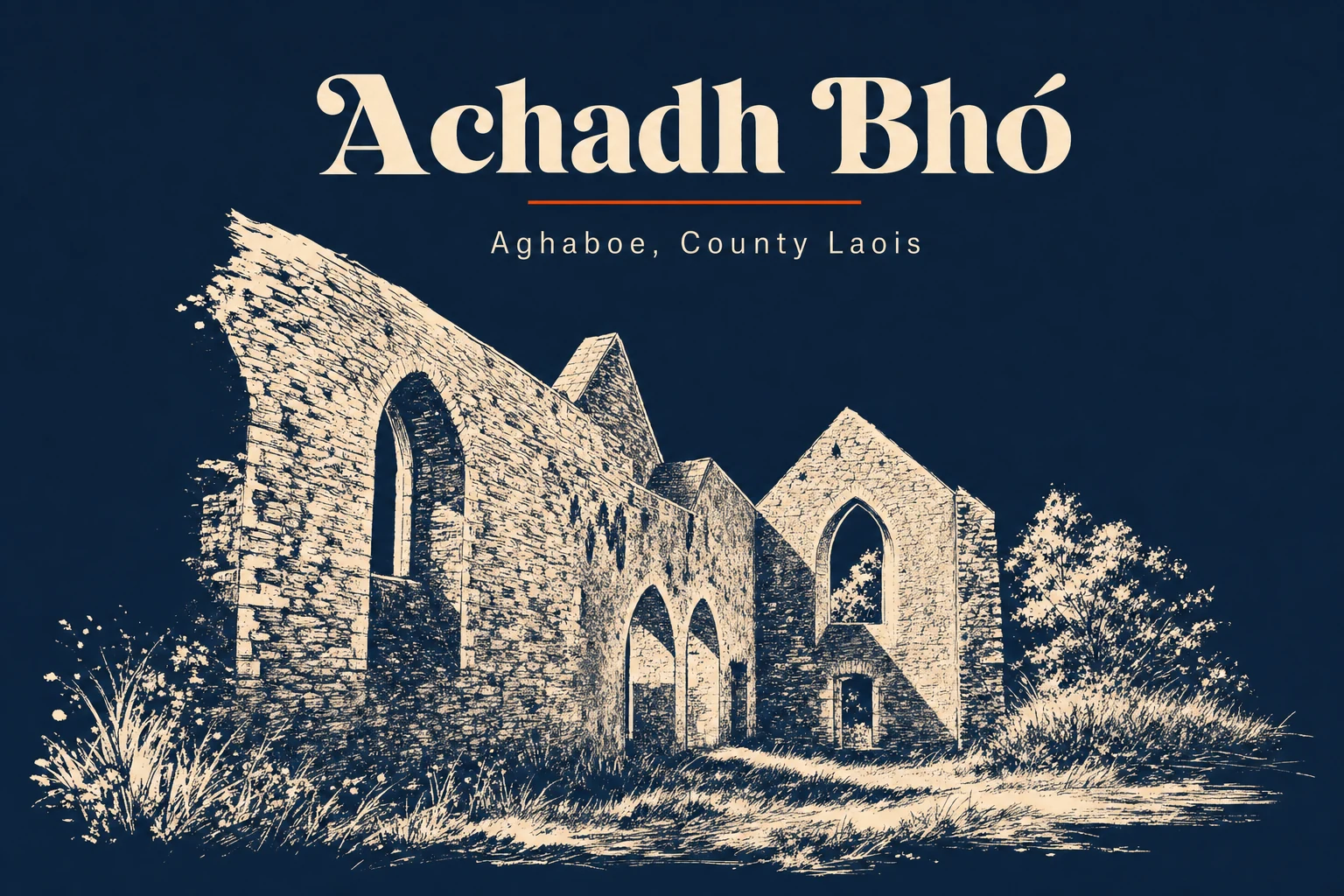
Achadh Bhó · Co. Laois
A 6th-century monastery, a 14th-century Dominican friary, and a Norman motte - all in one tiny field in south Laois.
Aghaboe - in Irish Achadh Bhó, the field of the cow - is a hamlet of about a hundred people in south Co. Laois, and it exists because a monastery existed. St Canice (the same Canice who gives Kilkenny its name) founded a community here in the 6th century, in the old kingdom of Osraige. It grew into a real centre of learning and farming, was plundered by Vikings, burned and rebuilt more than once, and for a while was the principal church of Ossory before the seat moved to Kilkenny.
What you see in the field today is mostly later. The handsome ruin with the carved east window is a Dominican friary, founded in 1382 by Finghin Mac Giolla Phádraig, Lord of Upper Ossory. It was suppressed in 1540 under Henry VIII. A small Church of Ireland church was built across the site in 1818, reusing older stone, and a tree-covered Norman motte sits nearby. So in one short walk you cross from early-medieval monastery to mendicant friary to Georgian parish church to Norman earthwork.
Nothing much happens here now. There is no shop, no obvious pub in the village itself, no visitor centre - just the graveyard, the ruins and the quiet. That is the whole point of the place. Come, walk slowly, read the stones, and drive on to Abbeyleix or Ballacolla for a pint and a feed.