County Louth Ireland · Co. Louth · Baltray Save · Share
POSTED FROM
BALTRAY
CO. LOUTH · IE

Baltray
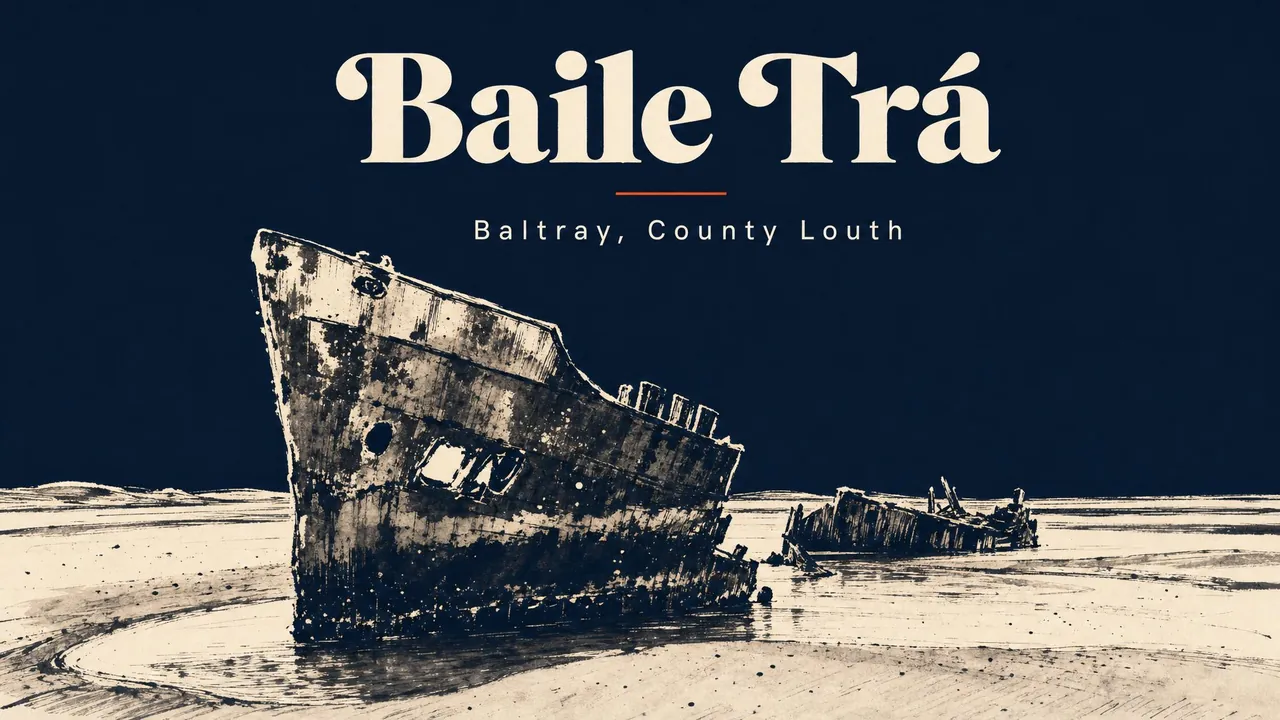
Baile Trá

The Ireland's Ancient East
STOP 04 / 06
Baile Trá · Co. Louth

A hamlet on the Boyne estuary with one of the three best links courses in Ireland on its doorstep.

Baltray — Baile Trá, 'town of the beach' — is a hamlet of about a hundred and fifty people on the north shore of the Boyne estuary, six kilometres east of Drogheda by road. The name is the geography. The whole settlement sits on a sand and shingle spit between the open sea and the river mouth, and what isn't dune is fairway. The County Louth Golf Club — known to every golfer in the country as Baltray — has been here since 1892.

It is a links course in the proper Scottish sense: laid on natural dune, the wind a permanent variable, the rough thick where it isn't bare, the greens fast and the bunkers deep. Tom Simpson, the English course architect, came over in 1938 and reshaped the course into broadly the layout it has today; Donald Steel did a careful restoration in the 2000s. Golf Monthly has it in the top sixty courses in Britain and Ireland; Top 100 Golf Courses places it inside the global top hundred. It hosted the East of Ireland championship every year since 1941, and the Irish Open in 2004 and again in 2009 — the year a 22-year-old amateur called Shane Lowry won the title in a play-off.

Beyond the golf there is the estuary. The Boyne Estuary Special Protection Area starts at the spit and runs back upriver — designated under the EU Birds Directive for its wintering waders (a mean peak of over six thousand golden plover, plus redshank, oystercatcher, lapwing) and a breeding colony of little tern that the Louth Nature Trust shepherds each summer from May to August on the same strand the golfers walk past. Across the river the Maiden Tower and the Lady's Finger are the 16th-century navigation marks the Mornington pilots used. The Baltray standing stones — two prehistoric pillars in a field on the way into the village, aligned to the winter solstice sunrise over Rockabill — are the older marker.

Don't come for a village. Baltray is a clubhouse, a beach, a few houses, and one pub. Come for a tee time at County Louth (book months ahead, expect a green fee), a long walk on the strand from the river mouth to Seapoint, a pint in The Boyne after the round, and a half-hour at the standing stones at sunset if the season is right. Stay in Drogheda or at Flynns in Termonfeckin. Eat in either. Baltray itself is the round and the beach.
Population
~150
Pubs
1and counting
Walk score
Clubhouse to estuary to standing stones in an hour
Founded
Coastal hamlet at the Boyne river mouth; County Louth Golf Club founded here 1892
Coords
53.7250° N, 6.2750° W
01 / 09

At a glance.

Three things every local will eventually mention. Read these and you've already understood more than most day-trippers do.

02 / 09

The pubs.

None of these are themed Irish pubs, because they don't need to be. A few that earn the trip:

The Boyne Inn (Brennan's)

Single-bar local, golfers welcome
Village pub

The pub in Baltray. Single bar, locals at the counter, the after-round golfers in the lounge. Pints, toasted sandwiches, a few daily specials on the chalkboard. The kind of pub where the names on the wall plaques are people who played in the East of Ireland and who you'll meet at the bar.

County Louth Golf Club bar

Pre- and post-round only
Members & visitors clubhouse

Inside the clubhouse — sandwiches and a pint after the round, dinner in the dining room with a booking. Open to visitors who have played; not really a drop-in pub. The 19th hole in the proper sense.

Triple House, Termonfeckin

Set-menu old building
Restaurant pub, ten minutes by road

Three kilometres north (round by road, eight minutes). Pat Fox's set-menu restaurant since 1988. Most Baltray locals doing a sit-down dinner end up here.

McPhail's, Drogheda

Snug and garden
Pub & beer garden, ten minutes

Six kilometres west into Drogheda. The proper pub night out — McPhail's beer garden in summer, Clarke's or Matthews if it's raining. Taxi back to Baltray is fifteen euro.

03 / 09

Where to eat.

PlaceTypeLocal note
County Louth Golf Club restaurant Clubhouse dining room €€ Open to visitors who have played the course. Lunch is a sandwich-and-soup operation; dinner is a proper sit-down with bookings, traditional menu, the kind of room where the talk is all about the round. View over the 18th green.
Triple House Restaurant, Termonfeckin Set-menu restaurant €€ The closest dinner outside the clubhouse — eight minutes round by road. Pat Fox in the kitchen since 1988, fixed price, fresh fish. Book ahead.
Scholars Townhouse, Drogheda Hotel restaurant €€€ The proper dinner. Ten minutes into Drogheda. Modern Irish, two AA Rosettes, the dining room of choice when the round has been good and a bottle is being opened.
04 / 09

Where to sleep.

PlaceTypeLocal note
County Louth Golf Club dormy house On-site lodge for visiting golfers The club operates a dormy lodge with rooms for visiting golfers — meaning you can play in the evening, eat in the clubhouse, sleep on site, and tee off again the next morning without leaving. Bookable through the club. Standard, unfussy, the obvious answer for golfers.
Flynns of Termonfeckin Boutique hotel, ten minutes by road Three kilometres north (round by road), in the 19th-century coaching inn at Termonfeckin. Eight rooms, a proper restaurant, the closest non-golf hotel. Use it as a base for both villages.
Drogheda hotels Ten minutes by road Scholars Townhouse, the D Hotel, the Westcourt — all in Drogheda, all within ten minutes. Use Drogheda for shopping, restaurants and the train, drive out to Baltray for the round and the beach.
05 / 09

Stories & lore.

The reason to come back. The things every local will eventually tell you about, usually after the second pint.

1892, and the Tom Simpson rebuild

County Louth Golf Club

The club was founded in 1892 by a group of Drogheda professionals — solicitors, doctors, the local bank manager — who wanted a links to play on the dunes north of the Boyne. The original nine-hole course was rough-and-ready. In 1938 the club commissioned Tom Simpson — the English architect responsible for Cruden Bay, Royal Antwerp, and a string of celebrated continental courses — to redesign the layout. Simpson's plan is broadly what is played today: eighteen holes routed cleverly through the dune system, no two consecutive holes playing in the same direction, the wind always different, the greens small and fast. Donald Steel did a sensitive restoration in the 2000s, recovering bunkers and lines that had drifted. The club has hosted the East of Ireland championship every year since 1941 — the longest-running annual amateur in the country. The professional Irish Open came in 2004, when Brett Rumford won, and again in 2009 when a young amateur from Esker Hills called Shane Lowry holed a putt on the third extra hole of a play-off and changed his life.

A protected stretch of mud, sand and birds

The Boyne Estuary

The Boyne Estuary Special Protection Area — Site Code 4080, designated under EU Birds Directive Regulations 2011 — covers the tidal Boyne from downstream of Drogheda to the open sea, including the spit at Baltray and the strand to the south. The site supports a mean peak of over 6,000 golden plover, internationally important numbers, plus large counts of redshank, oystercatcher, lapwing, dunlin and curlew on autumn and winter passage. The breeding little tern colony — fourteen pairs in 1995, monitored each year by Louth Nature Trust wardens with Heritage Council and NPWS support — nests on the strand south of the village from May to August. Cordoned area, dog leads, no driving on the dunes. The conservation has held; the colony is one of the few breeding sites for the species on the east coast.

Two pillars, one solstice alignment

The standing stones

About half a kilometre south-west of the village, in a field on the left of the Baltray road, two standing stones rise out of the grass. They are not signposted from any road. Local antiquarian Martin Brennan and the writer Anne-Marie Moroney showed in the 1990s that the line drawn from the smaller stone over the larger one points to the winter solstice sunrise, with the disc of the sun appearing precisely behind the small island of Rockabill in the Irish Sea on the morning of 21 December. The stones are dated stylistically to the late Neolithic or Bronze Age. Are they older than Newgrange (3200 BC) inland? It is argued. The argument is not settled. They are free, in a field, with cows. The locals know where they are; ask in The Boyne.

The Maiden Tower and the Lady's Finger

The lighthouses across the river

Across the estuary on the Mornington side, two 16th-century navigation marks frame the river mouth. The Maiden Tower — a square crenellated stone tower built in the reign of Mary I (1553–1558), supposedly named for the queen — was erected to guide pilots up the Boyne to Drogheda. The Lady's Finger — a tapering circular pillar a few hundred metres downriver from the tower — completes the alignment. Together with the modern East and West Lights they have brought ships up to Drogheda for nearly five hundred years. From Baltray you see them across the river. From the dune ridge above the 14th green at County Louth you see all of it: the tower, the pillar, the river mouth, the Mournes in the distance on a clear day.

06 / 09

Things to do outside.

Wear waterproofs. Bring a sandwich. Tell someone where you're going if it's the mountain.

Baltray to Seapoint beach From the end of the village road onto the strand, north along the open beach toward Termonfeckin and Seapoint. Long, exposed, the wind doing about half the walking. Watch the tide; the spit gets cut off at high water in the wrong conditions. Little tern cordon May–August on the southern section.
6 km returndistance
2 hourstime
Boyne Estuary birdwatching From the village down to the river mouth, looking back upriver across the estuary. Best two hours either side of low tide for waders feeding on the mud. Bring binoculars. The Louth Nature Trust hut south of the river is staffed in summer and worth a stop for the spotting scope.
3 km loopdistance
1 hourtime
Standing stones at sunrise Drive halfway back toward Drogheda, park where the locals will tell you in The Boyne, and walk into the field. Best on or around 21 December for the solstice alignment with the sunrise behind Rockabill. Working farmland — close gates behind you, mind the cattle, and don't go without permission if there's stock in the field.
1 km returndistance
30 minutestime
07 / 09

When to go.

There is no bad time. There are different times.

Spring
Mar–May

The course is firming up, the green fees haven't peaked, and the migrating waders are passing through. Beach quiet, dunes coming green. Best time for a non-golfer's walk.

◉ Go
Summer
Jun–Aug

Course is at its busiest — book months ahead. Little tern colony active on the southern strand: keep dogs on leads, observe the cordon. Beach fills with day-trippers from Drogheda at weekends. Weekday mornings are still empty.

◐ Mind yourself
Autumn
Sep–Oct

Best of the year for golf and for walking. The course is at its best in October — fast, dry, the wind sharp, the rough thinning. Estuary fills with autumn-passage waders. Light on the dunes at four in the afternoon is the photograph.

◉ Go
Winter
Nov–Feb

Course is open but tee times limited; weather is what it is on a coastal links. The estuary at peak — wintering golden plover in their thousands. The solstice sunrise at the standing stones (21 December) is the rare-event call: cold, dark, worth it.

◐ Mind yourself
08 / 09

What to skip.

Honestly? Don't bother.

If a local was sitting beside you, this is the bit where they'd lean in.

×
Showing up at County Louth without a tee time

It is one of the busiest links in the country. Visitor tee times are bookable months in advance through the club; turning up on the day will not work in season. Members and society days take most of the calendar.

×
Driving a 4×4 onto the strand or the dunes

The whole spit is part of the Boyne Estuary SPA and the dunes are designated coastal habitat. Beach access is on foot only. The little tern colony is ringed off in summer for a reason.

×
Confusing Baltray and Bettystown

Bettystown is the next strand south, on the Meath side of the estuary. Baltray is the north shore. They look similar from a distance and the locals will correct you politely if you mix them up. Different counties, different beaches, different pubs.

×
Looking for a village shop

Baltray is a hamlet. The closest shop is in Termonfeckin or Drogheda. Stock up on the way out.

+

Getting there.

By car

Drogheda to Baltray is six kilometres on the R167 — twelve minutes. From Dublin, M1 to junction 10 (Drogheda North), through the town, follow signs for Baltray and the County Louth Golf Club. Belfast is 1h 30m the other way down the M1.

By bus

No regular bus to Baltray. Local Link Louth runs limited services from Drogheda on weekdays — check live timetable. Most visitors come from Drogheda by taxi or by car as part of a Boyne Valley road trip.

By train

No train. Drogheda MacBride is the nearest station — half-hourly to Dublin Connolly, Enterprise services to Belfast. Twelve minutes by taxi from the station to the clubhouse.

By air

Dublin Airport (DUB) is 50 minutes by car straight up the M1 and out at junction 10. Belfast International (BFS) is 1h 30m. Most visiting golfers fly into Dublin and pick up a hire car.