Baile an Tallúnaigh · Co. Louth
A small Glyde-side village with a ruined Plunkett seat and a Tidy Towns trophy.
Tallanstown is a small one-pub village on the R171, thirteen kilometres south-west of Dundalk and ten minutes east of Ardee, sitting on the north bank of the River Glyde. About six hundred and seventy people, a Catholic church from around 1780 dedicated to Saints Peter and Paul, a national school of 1840 (now the community hall), and a stone bridge over a river that knew its way to the sea long before there was a road on either side of it.
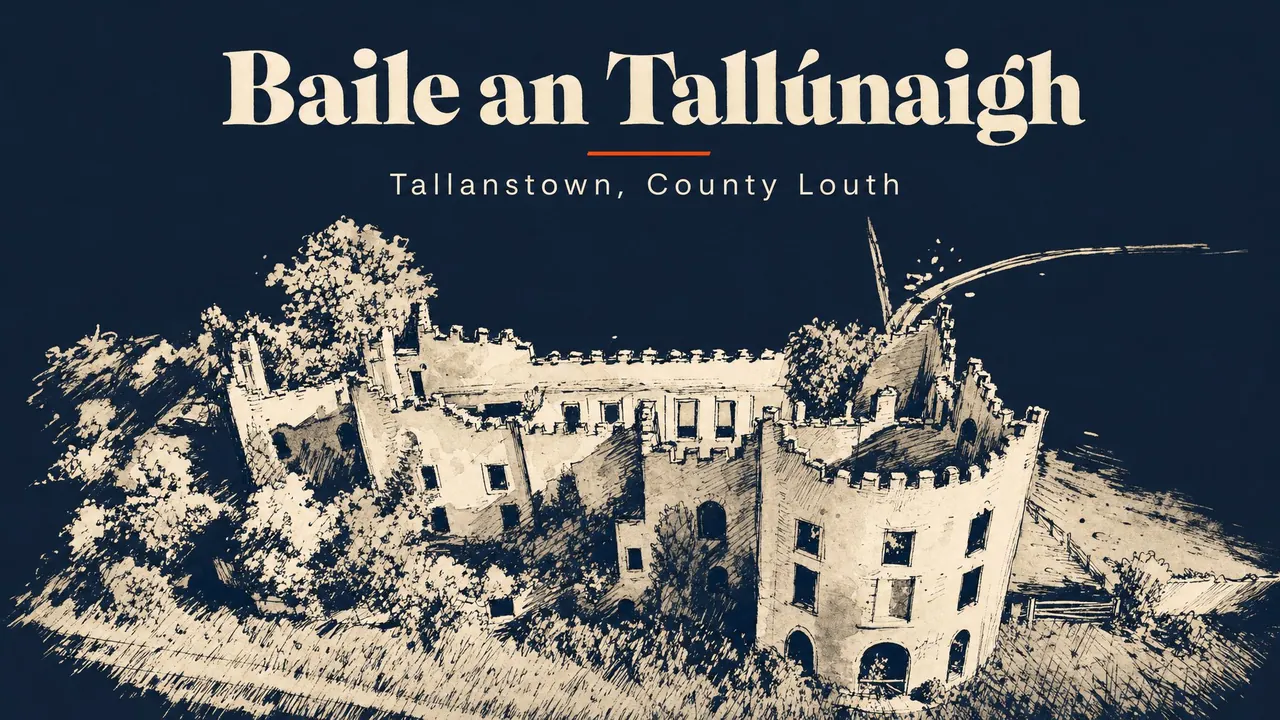
The history of the place is the Plunketts of Louth Hall. A branch of the Anglo-Norman Plunkett family - different cousins from those at Beaulieu - settled here by the late 15th century. Oliver Plunkett was created Baron Louth by Henry VIII in 1541. The Plunketts held the title and the tower house at Tallanstown for the next four hundred years. The big Georgian house wrapped around the original tower in about 1760, with Richard Johnston adding a ballroom and Gothic windows in 1805, and the family lived there until the 14th Baron sold up after the 1903 Wyndham Land Act and decamped to Jersey. A fire in 2000 took the plasterwork and the interiors. The shell is still there.
The other big house in the parish is Knockabbey, five minutes up the road - a tower house of 1399, Georgian wing, Gothic flourishes, and the eleventh-century water gardens that Cyril O'Brien took on in 1998 and brought back from a hundred years of sleep. Visitor access was always seasonal and is now hard to pin down - the estate website has gone and the listings contradict each other, so ring before you go. If Louth Hall is the warning of what happens when a country house loses its purpose, Knockabbey is the second chance.
Don't come for a checklist. Tallanstown is where you stop on the way between Ardee and Dundalk for a quick pint at Smyth's, half an hour at Knockabbey gardens if they are taking visitors, and a look at the ruined hall. One night here, two nights in Carlingford or Ardee. The Tidy Towns silverware is on display in the community hall; the village earned it by behaving the way villages used to.