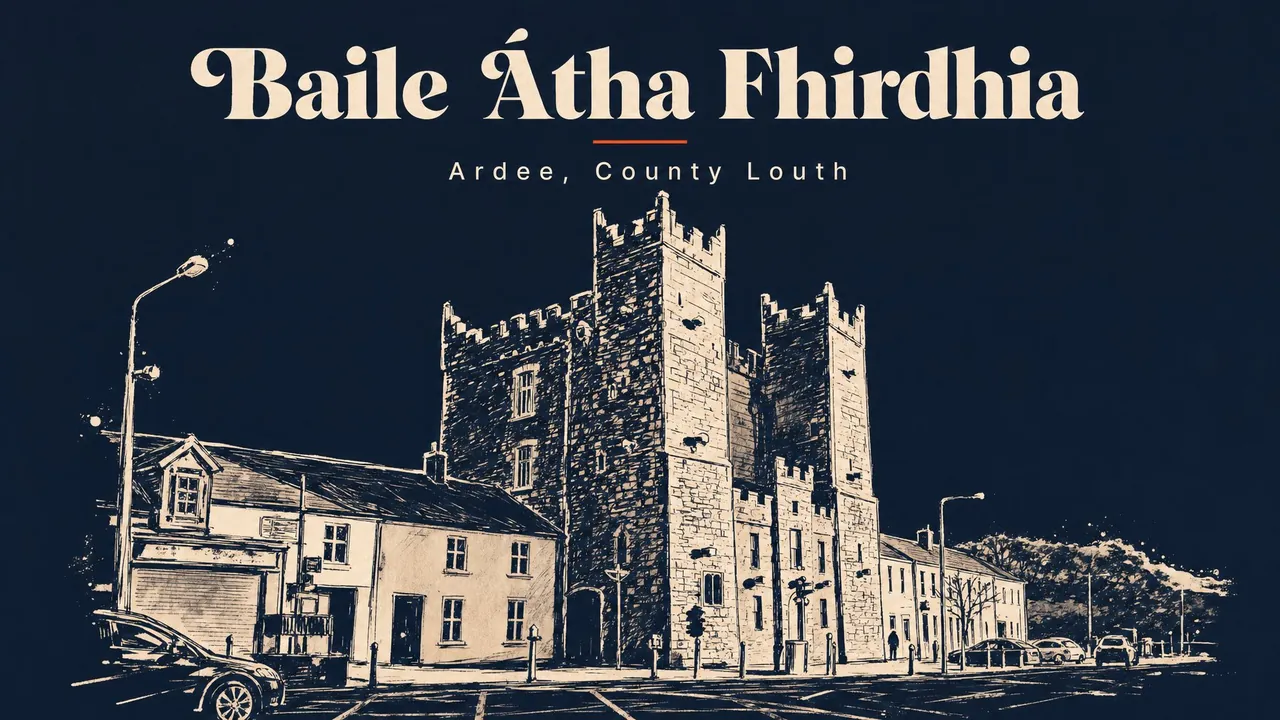
Baile Átha Fhirdhia · Co. Louth
A medieval Pale town at the ford where Cú Chulainn killed his foster-brother.
Ardee is a market town on the River Dee, halfway between Dublin and the border, where the N2 from Dublin meets the N52 cutting east-west across the country. Five and a half thousand people, two surviving castles on the main street, and a name that comes straight out of the oldest story in Irish. Most of the traffic on the M1 bypasses it now, which is the best thing that ever happened to the place.
It was built as a frontier. The town sits at the northernmost edge of what the Anglo-Normans called the Pale - the strip of English-administered Ireland around Dublin - and Ardee was where the wall of the Pale ended. Henry V gave it a royal charter in 1414. The two castles on Market Street were not picturesque flourishes. They were what stood between the burgesses and whichever Gaelic chief was raiding that year. The kind of building where 'medieval' is not a decorating choice.
Don't come for a checklist. Come for an hour walking the Market Street grid with the two castles in your line of sight, a pint in Brian Muldoon's on Bridge Street where the same family have been pouring them since 1965, a plate at Muldoon's or Nosh on Market Street, and a stop at the bronze of Cú Chulainn and Ferdiad on the riverbank. The Battle of the Ford is not a tourist attraction here. It is just the reason the town has its name.
If you have an afternoon, drive ten minutes south to Mellifont - Ireland's first Cistercian abbey, founded 1142, the ruins are properly atmospheric. Ardee makes a better base than Drogheda for the inland Boyne Valley if you don't fancy crowds. Quiet streets. Two castles. A river with a story.