Achadh Ghobhair · Co. Mayo
A round tower, two holy wells, and a pilgrim road still in use after fifteen hundred years.
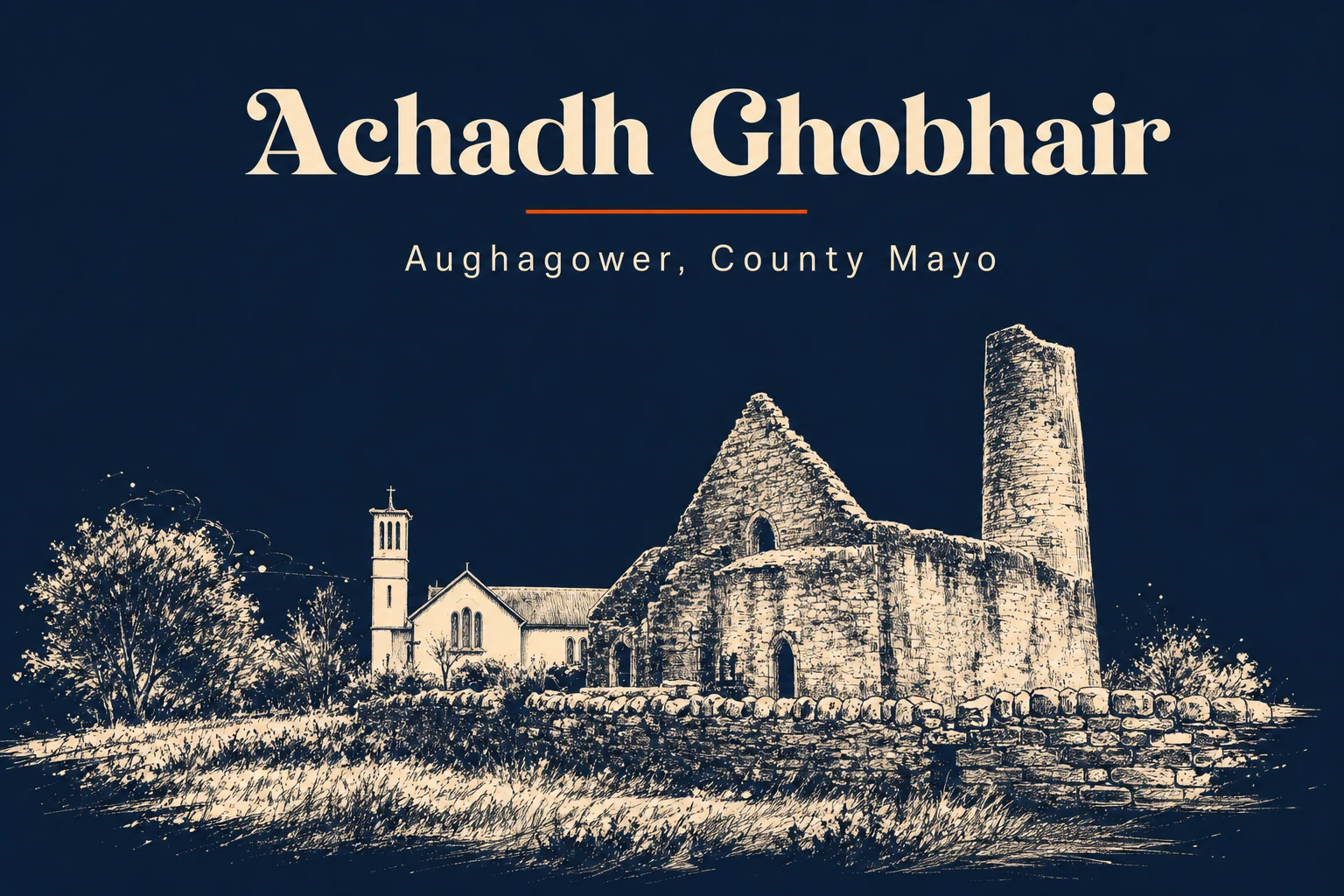
Aughagower is a small village seven kilometres southeast of Westport, and almost everything that makes it worth visiting was built before the year 1200. The bones of an early medieval monastery sit in a single field at the edge of the road - a 12th-century round tower preserved to roughly sixteen metres, the ruins of a medieval church on the same enclosure, two holy wells in the grass, and a few low stones that have names older than the parish itself.
The story starts with Senach, a disciple of Patrick, who was left here to run a bishopric while Patrick walked on to Croagh Patrick. The Book of Armagh records bishops still in residence in the early ninth century. By 1215 the parish was important enough that the archbishops of Tuam and Armagh were arguing over it in front of Pope Innocent III in Rome. None of that is obvious now. What you see is a quiet field, a tower with daylight at the top, and a road that keeps going west toward the mountain.
The other thread is the Tóchar Phádraig - the old pilgrim road from Ballintubber Abbey to the summit of Croagh Patrick, about 35 kilometres in total. It predates the monastery; it predates Patrick. Aughagower is the halfway point, and the wells were the place pilgrims stopped to wash before the last push. People still walk it. The route goes through farmyards and over stiles and past the round tower, and on a good Saturday in summer you'll meet a dozen walkers with sticks and damp boots making for the Reek.
Don't come to Aughagower expecting a village to wander around. It's a church, a tower, a road, and a handful of houses. Come for an hour with a guidebook, sit on the wall by the wells for a bit, and then drive on to Westport for a pint. That's the visit.