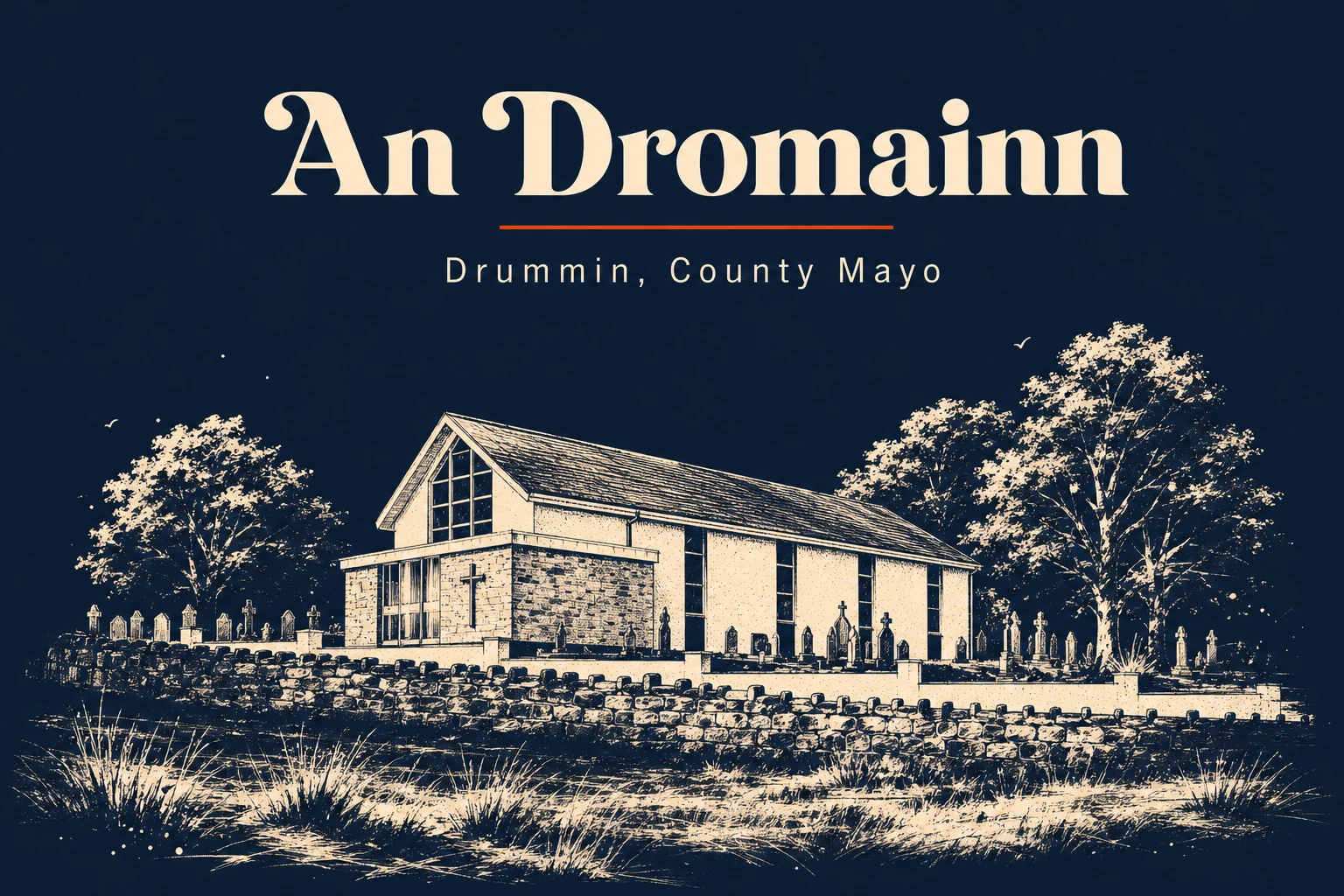
An Dromainn · Co. Mayo
A ridge village south of Westport, under Croagh Patrick, on the old pilgrim road through the last of the Atlantic oakwood.
Drummin is a small ridge village about fifteen kilometres south of Westport, on the high hilly ground under the southern side of Croagh Patrick. The Irish is An Dromainn - the ridge - and the place is honest to it: winding lanes, scattered farms, long views down to Clew Bay and the islands. It is not a town and it does not pretend to be one. There is a church, a national school, a pub, and the country around them.
What it has that the bigger places do not is the old road and the old wood. The Tochar Phadraig, the pilgrim causeway to Croagh Patrick, passes through the parish and through Brackloon Wood beside it. The wood is the headline: one of the last good stands of native Atlantic oakwood in the west, restored over the last few decades by Coillte, with a quiet looped walk through oaks that are descendants of the trees the O'Malleys would have known. There is a stone ringfort hidden in the middle of it.
The area was O'Malley country - the elevated ground gave Granuaile, Grace O'Malley, the pirate queen of Clew Bay, the long sightlines down to Clare Island and the bay she ruled. The Famine emptied a lot of these townlands, as it did across rural Mayo, and the population never fully came back. What stayed is a working parish and a landscape that rewards anyone willing to leave the Westport-to-Leenane road and go up the lanes.
Use it the way the locals and the pilgrims do: as a base for the wood, the Tochar, and the climb. Westport for everything else is twenty minutes north. Don't come expecting a village centre with shops and cafes - come for the trees, the road, and the mountain at the end of it.