County Mayo Ireland · Co. Mayo · Brickens Save · Share
POSTED FROM
BRICKENS
CO. MAYO · IE

Brickens
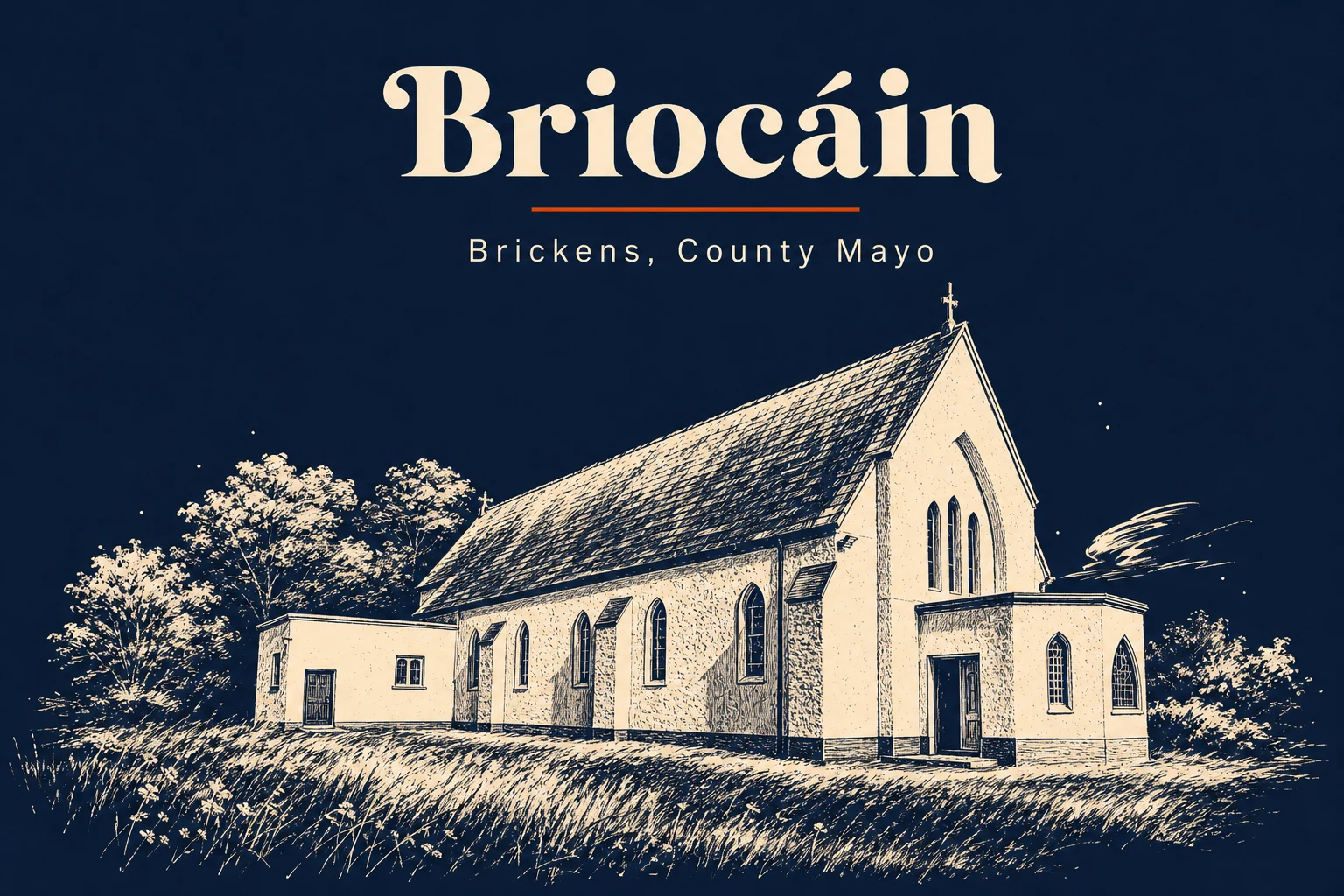
Briocáin

STOP 03 / 03
Briocáin · Co. Mayo

A crossroads on the N60, a river, three ringforts, and a church.

Brickens is a crossroads settlement in the parish of Bekan, on the N60 between Claremorris and Ballyhaunis in south Mayo. The Irish name, Briocáin, comes from broc — the badger — in diminutive form. What remains in the village: a church, a community centre, the Eastern Gaels GAA grounds, the Gilmore Enterprise Centre, and the River Robe running through on its way to Lough Mask.

The largest single chapter in the village's documented history is the Cromwellian one. The Crean family, transplanted from County Galway around 1653 under Cromwellian settlement policy, established Ballinvilla Demesne 375 metres southeast of the church. By 1876 they held 731 acres across five townlands in Bekan parish. In 1916 they sold 571 acres to the Congested Districts Board, which redistributed the land. The house was demolished in later decades. The Crean family graveyard survives. The land went back to farming.

In 1984, parents from Bekan, Logboy, and Brickens met in the Community Centre and founded the Eastern Gaels GAA football club. Royal blue and gold. The grounds are on the northern outskirts toward Keebagh. The club now plays in the East Division of Mayo GAA and competes in the Mayo Junior A Championship — forty-odd years from one meeting in a community centre to a functioning club at county junior level.
Population
townland-scale
Founded
Parish of Bekan; church built 1927–28
Coords
53.7167° N, 8.9167° W
01 / 03

At a glance.

Three things every local will eventually mention. Read these and you've already understood more than most day-trippers do.

02 / 03

Stories & lore.

The reason to come back. The things every local will eventually tell you about, usually after the second pint.

Cromwellian transplant, 1653

Ballinvilla and the Creans

The Crean family were Catholic landowners in County Galway until Cromwellian policy moved them west of the Shannon around 1653. They settled at Ballinvilla, 375 metres southeast of the present church, and built up a demesne that covered 731 acres across five Bekan parish townlands by 1876. The Congested Districts Board bought 571 of those acres in 1916 as part of land reform — the process that broke up most of Mayo's remaining big-house estates. Ballinvilla House was demolished in subsequent decades. The Crean graveyard remains.

Founded 1984 in the community centre

Eastern Gaels

The inaugural meeting that created the Eastern Gaels GAA football club took place in the Brickens Community Centre in 1984. Parents from three communities — Bekan, Logboy, and Brickens — agreed to pool resources and register a club with Mayo GAA. The name Eastern Gaels placed them geographically within the county. Royal blue and gold were the chosen colours. Four decades later the club runs junior and underage teams from grounds on the Keebagh road and competes in the Mayo Junior A Championship.

Liscolman, Lurgan, and the long view

Three ringforts

The lios in Liscolman's name marks a ring-fort that dates to somewhere between 500 and 1000 AD — a fortified farmstead enclosing a family and their livestock against a world where the next townland might as easily be hostile as friendly. Two more ringforts at Lurgan are visible within a short distance. Three ringforts in a small area suggests the land was worth controlling. The south Mayo plain, the Robe nearby, the route between Claremorris and Ballyhaunis — it was productive country. Still is.

+

Getting there.

By car

Claremorris is roughly 15 km west on the N60. Ballyhaunis is about 12 km east. Castlebar is 25 km northwest. Ireland West Airport Knock is approximately 25 km northeast — about 25 minutes on regional roads.

By bus

Bus Éireann services on the N60 corridor connect Ballyhaunis and Claremorris; stops serving the Brickens area vary by timetable. Check current schedules — services are infrequent.