County Meath Ireland · Co. Meath · Kells Save · Share
POSTED FROM
KELLS
CO. MEATH · IE

Kells
Ceanannus Mór

The Ireland's Ancient East
STOP 09 / 09
Ceanannus Mór · Co. Meath

The monastery where illuminated pages traveled further than the monks who drew them.

Kells is a monastery town. In 806, when the Vikings raided Iona in Scotland and killed sixty-eight monks, the surviving Columban monks fled to a sister monastery at Kells in Meath. They brought books, manuscripts, the accumulated learning. The Book of Kells—the illuminated Gospel manuscript that sits now in Trinity College Dublin—was either completed here or brought here or worked on here; the historians argue about which and no one is certain. What matters is that for a thousand years the town has carried the reputation of that book.

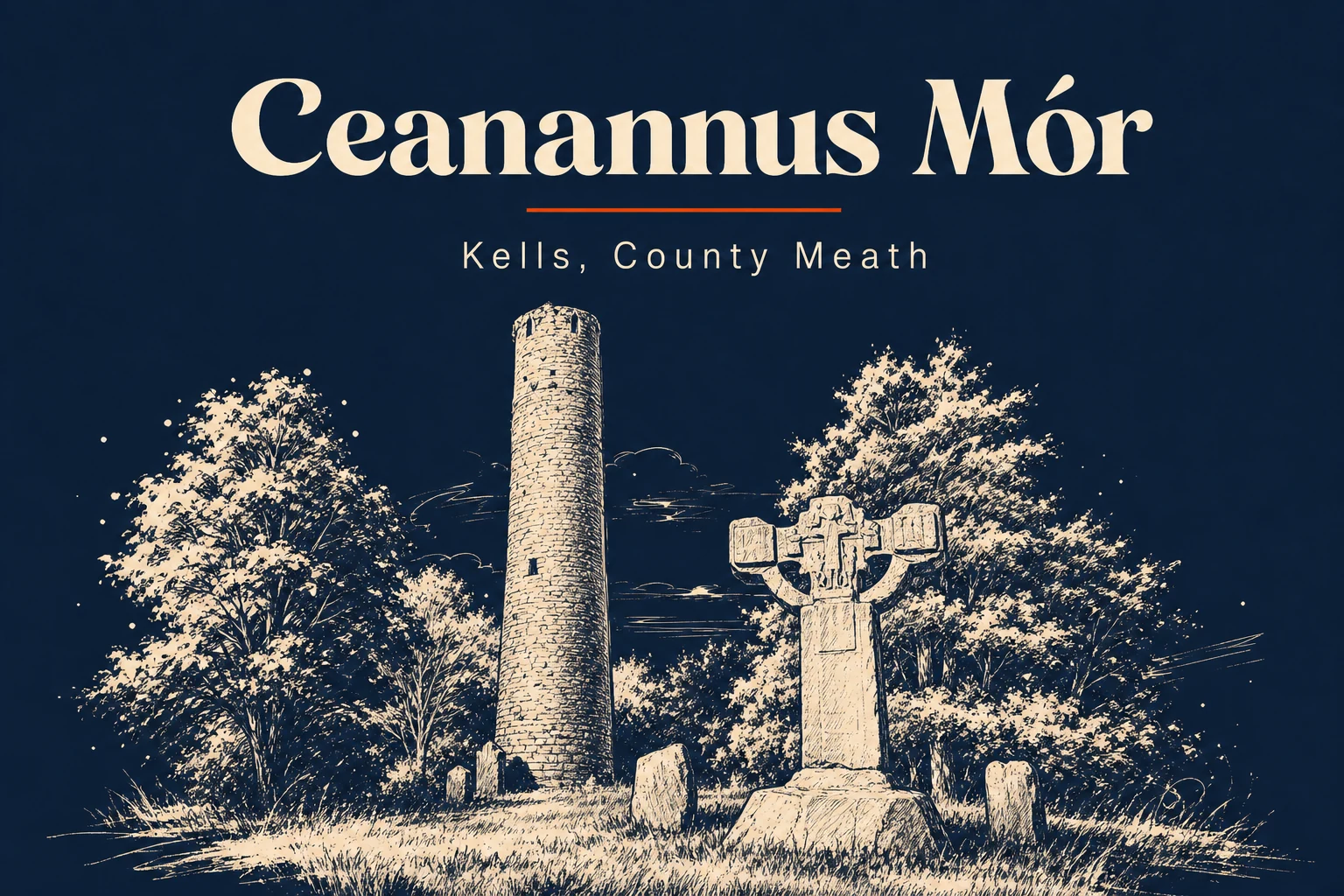
Walk through the town and you see the medieval architecture: the high crosses, the round tower, the remains of the abbey. St Columba's House sits apart, a small stone structure from the 800s. The town itself is a market town, lived-in, full of the people who stayed.

Don't come expecting to see the Book of Kells here. It's in Dublin. Come instead for the monastery itself and the smaller manuscripts, and the town that kept the memory alive until the book came home to be famous.

Population
6,608
Pubs
8and counting
Founded
c. 561
Coords
53.7351° N, 6.8621° W
01 / 09

At a glance.

Three things every local will eventually mention. Read these and you've already understood more than most day-trippers do.

02 / 09

The pubs.

None of these are themed Irish pubs, because they don't need to be. A few that earn the trip:

Headfort Arms Hotel bar

Central, professional
Hotel bar & restaurant

The Kelltic Bar. Gourmet pub grub, live entertainment Thursday to Sunday. The hotel is the hub of the town.

Smith's Pub

Traditional wooden seats
Local bar

Heart of Kells. Quaint in the right way. The kind of place that has been there, will be there.

03 / 09

Where to eat.

PlaceTypeLocal note
Vanilla Pod Restaurant Contemporary €€€ Established 15+ years. Innovative menu, local ingredients—lamb, cheese—recognized at the Irish Restaurant Awards.
Jack's Bar & Restaurant Gastro bar €€ Award-winning for 2024. Leinster Gastro Bar winner. Food, cocktails, live music. Takes itself seriously without pretension.
Headfort Arms' Kelltic Bar Pub food €€ Hotel bar. Good quality pub food, not an afterthought to the drink.
04 / 09

Where to sleep.

PlaceTypeLocal note
Headfort Arms Hotel Hotel 4-star. Central location. Modern rooms, good breakfast. The obvious choice if you want a proper bed in the centre.
Eureka House B&B Near the Kells Heritage Centre. Simple, modern with traditional touches. Centrally located.
The Tom Blake Boutique B&B A 130-year-old house, luxurious rooms, renowned breakfast. Good hosts. Book ahead.
05 / 09

Stories & lore.

The reason to come back. The things every local will eventually tell you about, usually after the second pint.

Illuminated pages, disputed provenance

The Book

The Book of Kells is a Latin Gospel manuscript, created around 800 AD, possibly at the monastery here or possibly at Iona before the raid. The truth is lost. What matters is that the book is the pinnacle of Insular illumination—spirals, animals, interweaving lines, so intricate that you'd think it was made by ten monks working for forty years, and maybe it was. It now sits in a climate-controlled vault at Trinity College Dublin. The monks here guarded it until the world got interested enough to take it away.

When Vikings changed the map

Iona and Kells

In 806, the Vikings raided the monastery at Iona, off the coast of Scotland. Sixty-eight monks died. The survivors fled to Kells, an Irish monastery of the same confederation. For centuries after, the two monasteries were governed as one. Iona kept producing monks and manuscripts, but Kells became the refuge, the second home, the backup plan. Nothing ever returned to Iona. The refugees stayed.

What remained when the manuscripts left

The crosses and stones

When people talk about Kells, they talk about the Book. But the town also kept the high crosses, the round tower, the small stones carved with Celtic designs. These are the monuments that didn't fit in a monk's satchel. They stayed. They still stand. They're worth the trip by themselves.

06 / 09

Things to do outside.

Wear waterproofs. Bring a sandwich. Tell someone where you're going if it's the mountain.

Monastery loop through the town centre High crosses, St Columba's House, round tower, abbey remains. Slow walk, stopping often. The whole medieval layout is compressed into this circuit.
2 kmdistance
45 mintime
Along the Blackwater to the south The river path from the town. Quiet, green. You'll see few people and fewer tourists.
5 km returndistance
1.5 hourstime
07 / 09

When to go.

There is no bad time. There are different times.

Spring
Mar–May

Mild, the town opens after winter. Good for walking the monastery and the surrounding countryside.

◉ Go
Summer
Jun–Aug

Warm, the gardens around the town are at their best. The hotel fills with visitors, but Kells never gets mobbed.

◉ Go
Autumn
Sep–Oct

The tourists thin. The light is extraordinary. Perfect walking season.

◉ Go
Winter
Nov–Feb

Can be grey. The town doesn't empty, but half the restaurants and pubs keep irregular hours. Plan ahead.

◐ Mind yourself
08 / 09

What to skip.

Honestly? Don't bother.

If a local was sitting beside you, this is the bit where they'd lean in.

×
Hoping the Book of Kells is here

It's not. It's at Trinity College Dublin, in a vault, in a display case. Come to Kells for the monastery, not the manuscript.

×
Visiting without going into St Columba's House

The structure is small, unassuming, and eight hundred years old. Worth an hour.

+

Getting there.

By car

Dublin to Kells is 1h 15m. Navan is 30 minutes. Trim is 30 minutes.

By bus

Bus Éireann runs services Dublin–Kells. Several daily.

By train

No train. Nearest station is Drogheda, then bus or taxi (1h by road).