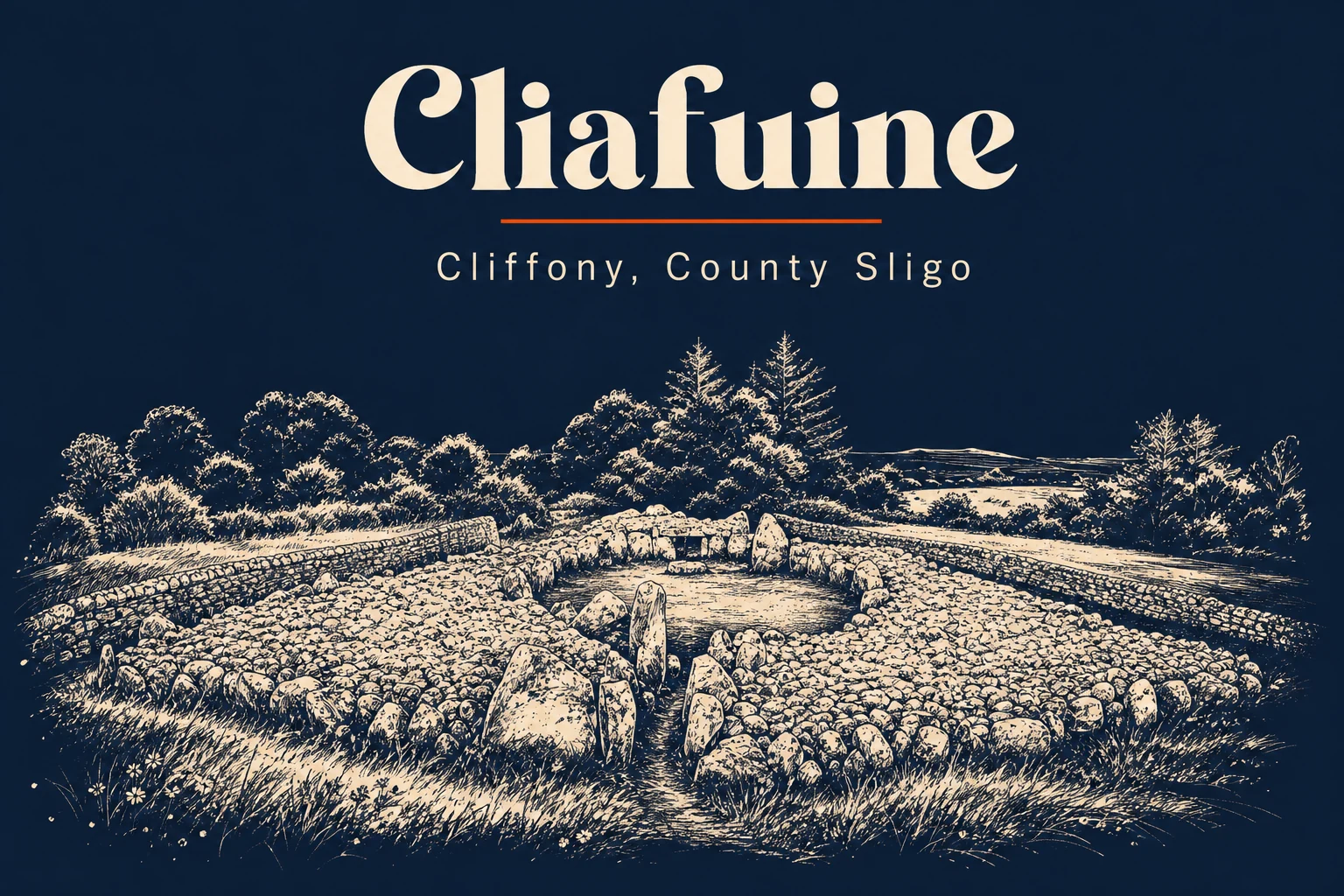
Cliafuine · Co. Sligo
A small village on the N15 with one of the great Neolithic tombs at the crossroads.
Cliffony is a small north Sligo village on the N15, two kilometres south of the Leitrim border and a few hundred metres east of the road that leads down to Mullaghmore. Most people drive through it in under a minute. The reason to stop is a Neolithic court tomb at the crossroads, fifty metres off the main road, four thousand years old and unfenced - you can walk into the open court at any hour of the day. Creevykeel is one of the best-preserved court tombs in Ireland. Harvard came in 1935 to dig it.
The other story is offshore. Inishmurray, the small island visible from the headlands above Cliffony on a clear day, was a working community for more than a thousand years and one of the most intact monastic sites in Western Europe. St Molaise founded a monastery there in the 6th century, the Vikings raided it in 795 and again in 807, and farming families held on until 1948 - the last 46 islanders were evacuated to the Sligo mainland on the 12th of November of that year. The cashel wall, the beehive cells, the cursing stones and the holy wells are still there, intact and unguarded. Day-trip charters run in summer from Mullaghmore harbour, weather depending. Most days, the weather does not permit.
The village itself is small. There is a pub, a shop, a primary school, a GAA pitch. There is no hotel and no restaurant beyond pub food. Use Cliffony as you would use a road sign - a turning point for the tomb, the island, Mullaghmore Head and Streedagh. Two hours is enough. Then move on to where you are sleeping.