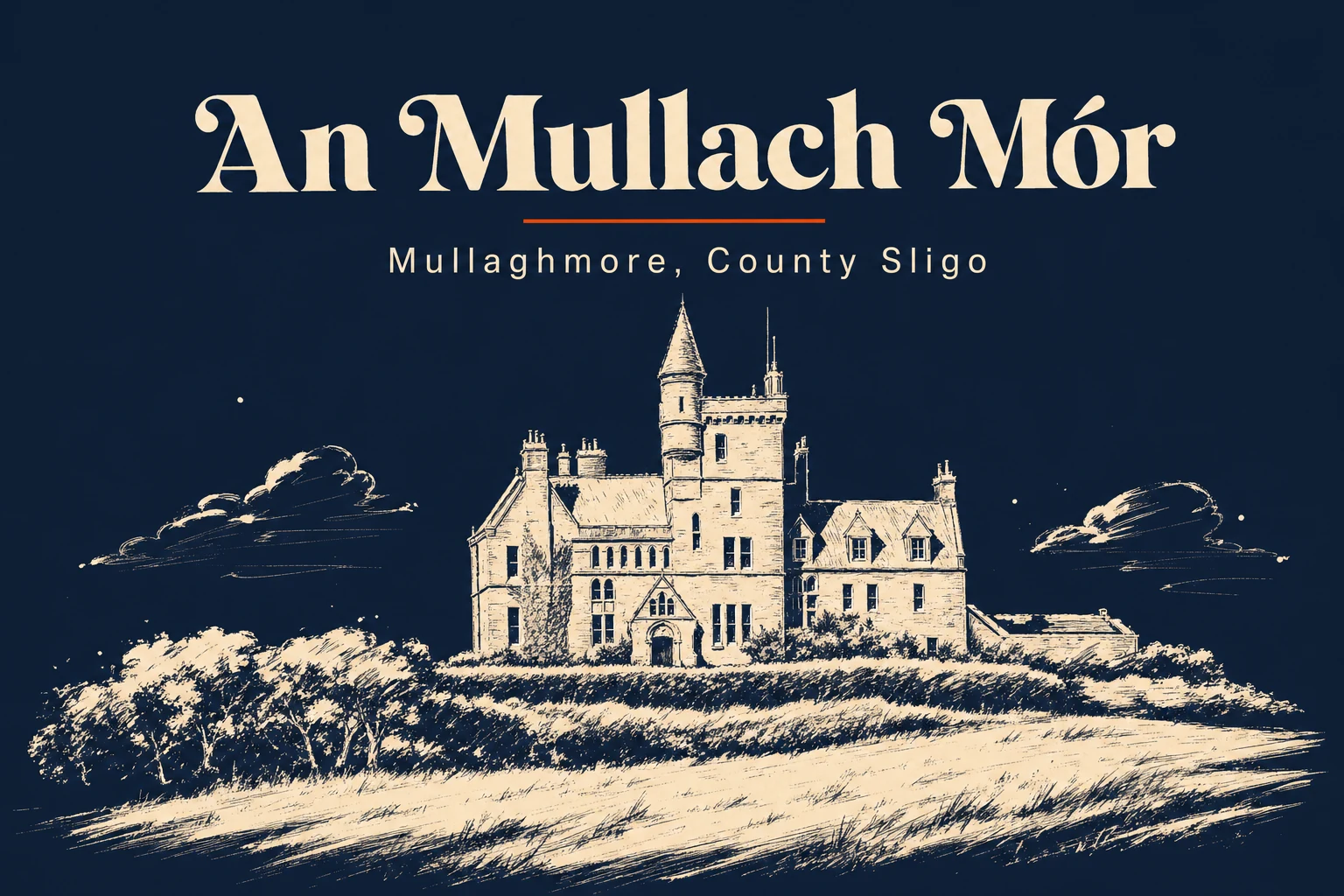
An Mullach Mór · Co. Sligo
A fishing pier, a castle on the headland, and a wave that draws the world.
Mullaghmore is a small fishing village on a small peninsula in the top corner of Sligo, almost over the Leitrim line. The headland is a five-kilometre loop. The village itself is a pier, a hotel, a restaurant, a few rows of houses, and a beach that empties into Donegal Bay. Classiebawn Castle stands above it all on the hill, gothic and unmistakable.
Two things have happened here that the place still carries. In August 1979 the IRA killed Lord Mountbatten and three others with a bomb on his boat just off the head - the story sits in the village whether you ask about it or not. Forty years later the reef outside the headland became one of the most serious big-wave spots in Europe, and tow-in surfers from California and Cornwall and Lahinch started turning up in winter to watch the swell charts. The same headland, two very different reasons to be there.
Most of the year, though, it's a quiet harbour. Walk the loop. Eat seafood at the pier. Stand at the back wall and look west at a slab of Atlantic with nothing between you and Newfoundland. The village does not need you to make a fuss of it, and is the better for it.