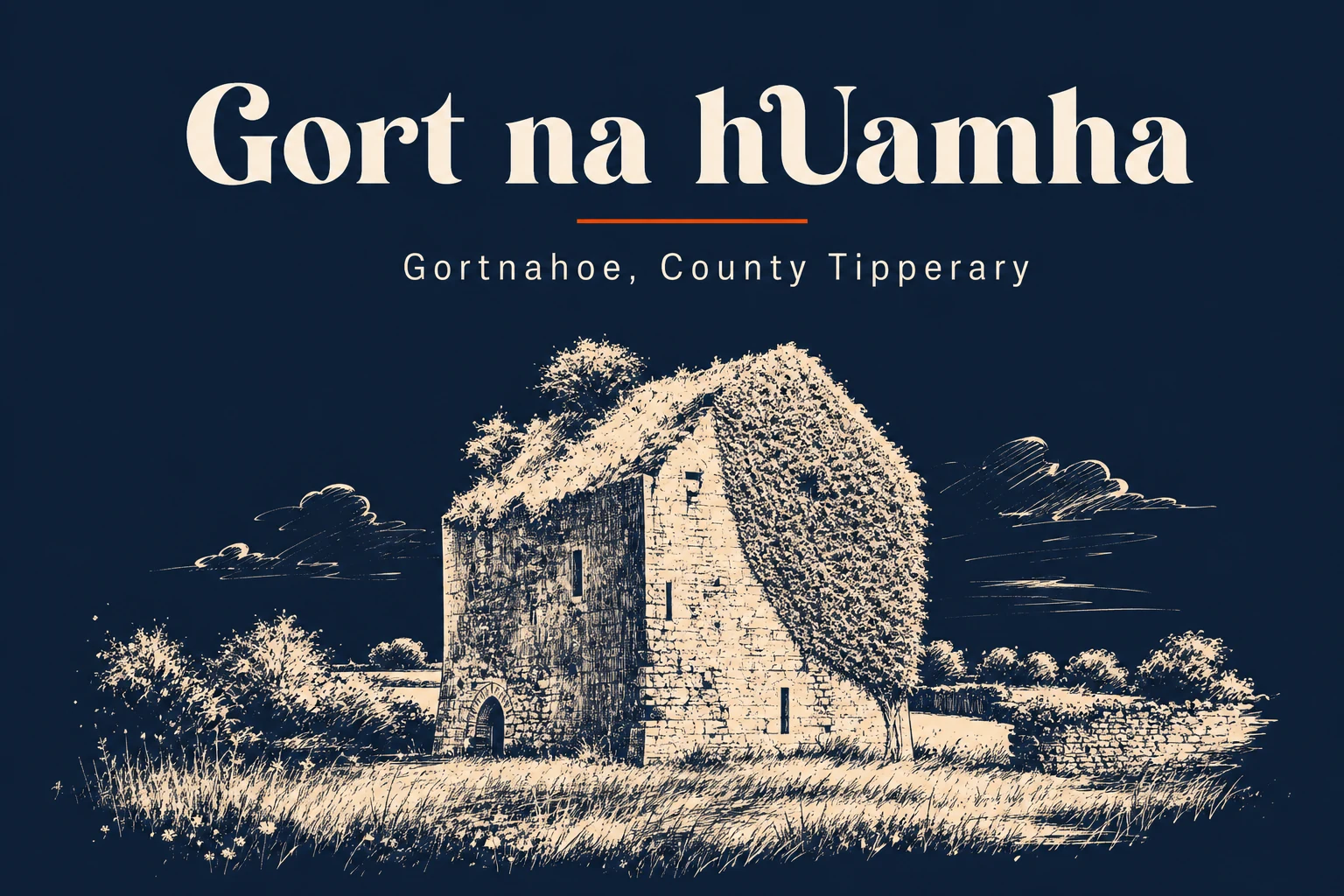
Gort na hUamha · Co. Tipperary
A Cistercian ruin, a seam of anthracite, and hurling as religion.
Gortnahoe sits on the R689, five kilometres south of Urlingford, in the low folded hills of the Slieveardagh range. The name translates as 'field of the cave or souterrain' - something underground has been part of this place's identity since before the Normans arrived. It's a small village: a crossroads, a pub, a church, a GAA pitch. If you blink, you've seen it. Stop anyway.
Two kilometres east, down a lane on the private Kilcooley Estate, stands what most people in this part of Tipperary will tell you is the finest thing for miles. Kilcooley Abbey was founded in 1182 by Cistercian monks from Jerpoint. Burnt in 1418, almost levelled in 1445, rebuilt, dissolved at the Reformation, handed to the Earl of Ormond, passed along. The ruins that remain include a screen wall with some of the best surviving Gothic sculpture in Ireland - apostles, a crucifixion, a mermaid combing her hair. And a butler's tomb carved by Rory O'Tunney, the same sculptor who worked at Jerpoint.
Below the abbey's history runs the coalfield's. The Slieveardagh Hills hold one of Ireland's only anthracite seams. Commercial mining ran from the 1820s until the late 1980s, when the last operations closed. The landscape still carries it - engine-house footings, overgrown spoil heaps, the memory of a colliery economy that shaped this part of south Tipperary for a hundred and fifty years. Kilcooley Abbey and a worked-out coalfield are not the obvious pairing, but in Gortnahoe they're two kilometres apart and they explain each other.