1757, and not in a straight line
The oldest licence
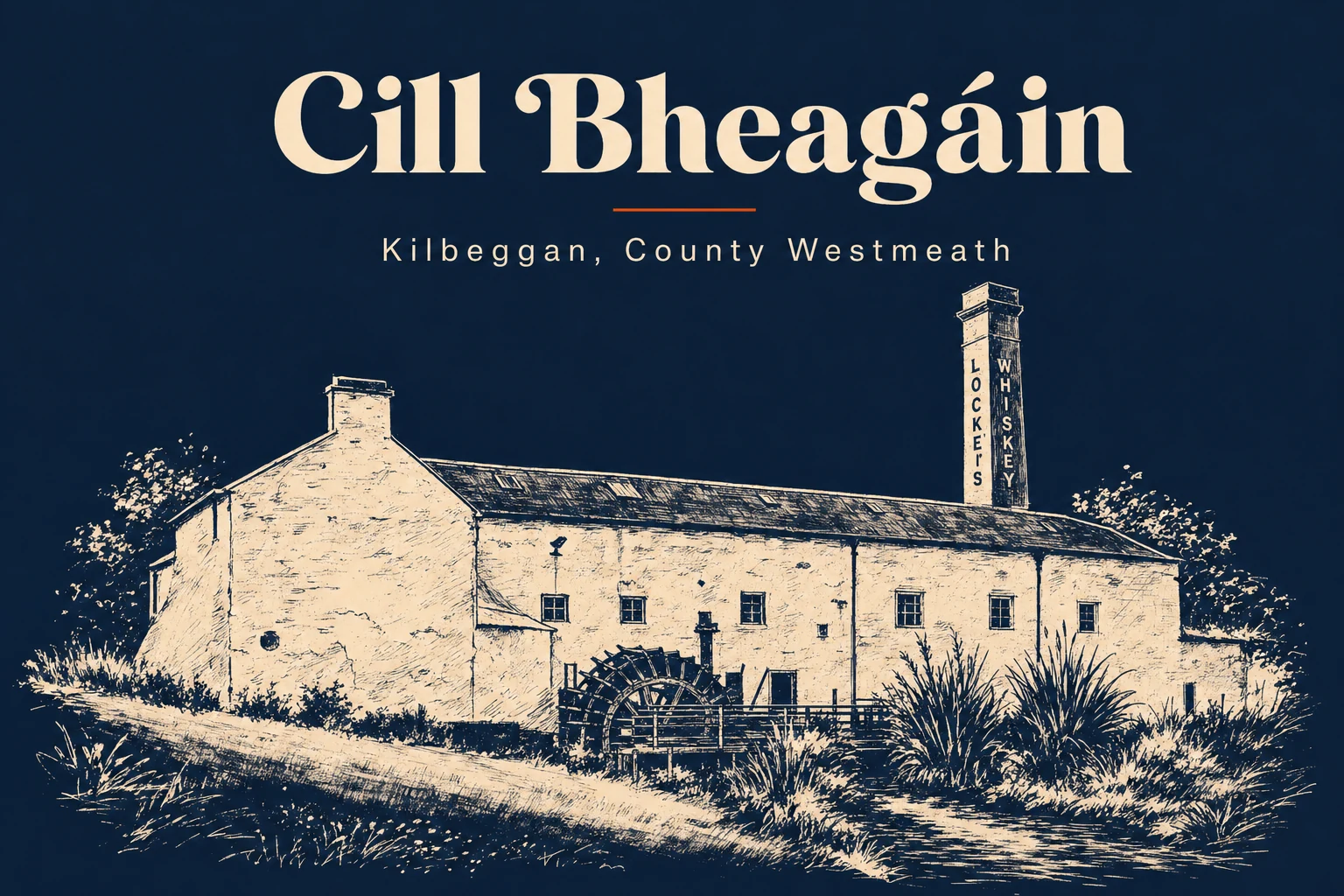
Matthew MacManus took out a licence to distill in Kilbeggan in 1757. The Locke family bought the place in 1843 and ran it for four generations under the name Locke's. The early twentieth century was hard on Irish whiskey — Prohibition shut the American market, the Trade War shut the British one, and the Lockes shut the stills. Production stopped in 1953, the doors closed in 1957, and the building sat there full of copper and silence. The town kept the licence renewed every year just in case. Cooley Distillery bought the brand in 1987 and started maturing whiskey on the site again. In 2007 — exactly 250 years after MacManus signed his name — they fired the pot stills back up. Beam Suntory now own it. The pot stills inside are the oldest working stills in the world.
Loughnagore in July
The Midlands National
Racing in Kilbeggan goes back to a Challenge Cup in March 1840. It moved around the parish for half a century before settling at Loughnagore in 1901, and it has been there ever since. The course is a right-handed undulating mile and a furlong, jumps-only — the only one in Ireland under National Hunt rules and nothing else. Ten meetings a summer, almost all evenings, almost all Friday or Saturday. The Midlands National Handicap Chase in July is the headline — three miles a furlong, a hundred grand in prize money, and a recognised trial for the Galway Plate three weeks later.
Pikes against muskets
1798 in Kilbeggan
On the day of the local fair in June 1798, around a thousand United Irishmen marched into Kilbeggan armed mostly with pikes and pitchforks. Sixty soldiers of the Northumberland Militia were holding the town with muskets. The fight that followed was not a fight in any meaningful sense — over a hundred insurgents were killed in the riot. The trigger had been the arrest and execution of John MacManus, son of a local distiller, in the weeks before. Local memory keeps both names. The fair-day date is still in the parish records.
Where the name comes from
St Bécán
Cill Bheagáin — the church of Bécán. A sixth-century saint set up a monastery here, and the McCoghlans rebuilt it as a Cistercian house in the twelfth, with monks coming down from Mellifont in 1150. The monastery ran until the Dissolution around 1549. The town's name still carries the saint's, and you can see traces of the monastic enclosure if you know where to look on the older side of the river.