County Wexford Ireland · Co. Wexford · Ballycullane Save · Share
POSTED FROM
BALLYCULLANE
CO. WEXFORD · IE

Ballycullane
Baile Uí Choileáin, Co. Wexford

The Ireland's Ancient East
STOP 07 / 07
Baile Uí Choileáin · Co. Wexford

A crossroads on the way to Tintern Abbey, with one pub and a closed station.

Ballycullane is a small village in south-west Wexford, about three kilometres north of Tintern Abbey, on the road that runs from Wellingtonbridge down towards the Hook Peninsula. Three hundred and eighteen people at the last count. A shop, a pub, a primary school, a Garda station, a church from 1840 and a railway platform with no trains. That's the inventory.

Nobody comes to Ballycullane for Ballycullane. They come for the abbey three kilometres down the road - Tintern de Voto, founded c. 1200 by William Marshal after he survived a storm in Bannow Bay - or they're driving on towards Hook Head and the lighthouse, or out to Loftus Hall to scare themselves. The village is the petrol stop on the way. The pint after the walk. The place where the bus used to turn around before they cut it. That's not nothing - it's just not headline material, and the village wouldn't claim otherwise.

Population
318 (2016)
Walk score
A shop, a pub, a school, a Garda station
01 / 07

At a glance.

Three things every local will eventually mention. Read these and you've already understood more than most day-trippers do.

02 / 07

The pubs.

None of these are themed Irish pubs, because they don't need to be. A few that earn the trip:

Power's Bar & Lounge

Local
Village pub

The pub in the village. If you want anything more, you're driving to Duncannon or Wellingtonbridge.

03 / 07

Stories & lore.

The reason to come back. The things every local will eventually tell you about, usually after the second pint.

The vow in the storm

Tintern de Voto

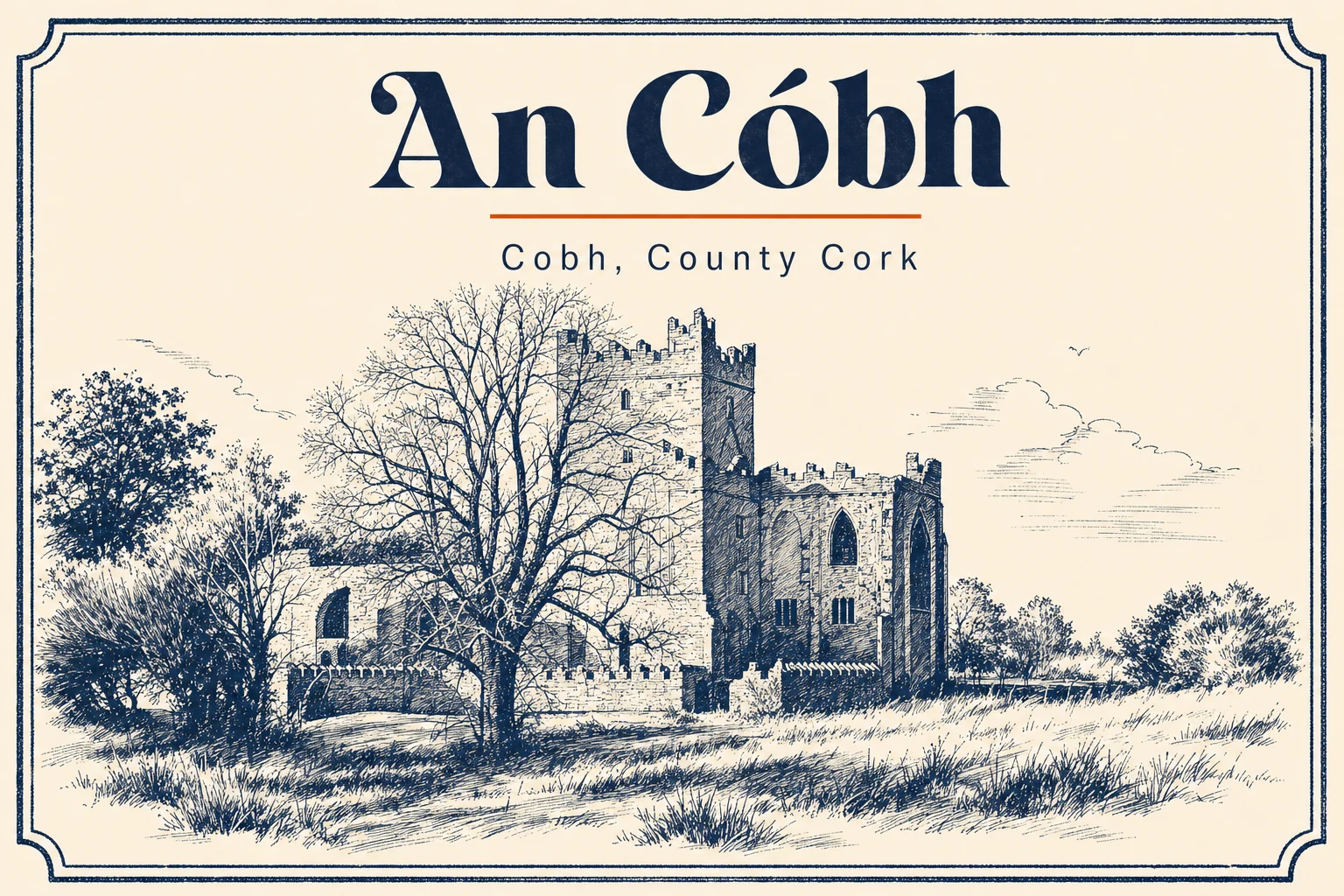
William Marshal, Earl of Pembroke, was crossing the Irish Sea around 1200 when his boat was caught in a bad storm. He vowed to build an abbey wherever he made dry land. He landed at Bannow Bay, three kilometres south of where Ballycullane now sits, and made good on the promise. The Cistercians were brought over from Tintern in Monmouthshire, Wales, so the Irish house was called Tintern de Voto - Tintern of the Vow - to tell them apart. The ruin is still there. So is the road that runs past it up to the village.

400 years in the abbey

The Colcloughs

After Henry VIII dissolved the monasteries, Tintern was granted in 1575 to Anthony Colclough, an English soldier from Staffordshire. His descendants didn't knock it down - they moved into it. They turned the nave into a house, added a tower, built bridges and a walled garden, and lived in the abbey for nearly four hundred years. Caesar Colclough went to Paris in 1792 to report on the French Revolution and came home an MP. The last of the family, Marie Biddulph Colclough, left in 1959. The state took over and started taking the house back out of the ruin.

Ballycullane station, 1906-2010

The line that isn't

The Waterford-Rosslare line opened in 1906 to feed the Fishguard ferries; Ballycullane was one of the stops. By the end it was a single train each way, one platform, no staff. The last train ran on Saturday 18 September 2010. Then in 2026 they cancelled the Tuesday-only Bus Éireann 373 as well. The platform is still there if you go looking. The road is now the only way in or out.

04 / 07

Things to do outside.

Wear waterproofs. Bring a sandwich. Tell someone where you're going if it's the mountain.

Tintern Trails Coillte runs five waymarked walks out of the abbey car park - the Mr Rose's Garden loop (1 km) up to the Caesar Colclough trail (11 km). Beech and oak woodland, bluebells in spring, the river running past the abbey. Free. The proper reason to come here.
1-11 km, take your pickdistance
20 minutes to 3 hourstime
Hook Head Lighthouse About 25 minutes south by car. One of the oldest working lighthouses in the world - there's been a light here for 800 years. Park, walk the headland, do the tower tour if it's open.
A drive, then a clifftop walkdistance
Half a daytime
05 / 07

When to go.

There is no bad time. There are different times.

Spring
Mar-May

Bluebells and wild garlic in the Tintern woods. The reason locals quietly love April here.

◉ Go
Summer
Jun-Aug

Long evenings on the peninsula. Hook Head and the beaches are the draw - the village is the quiet base.

◉ Go
Autumn
Sep-Oct

The woods turn. Fewer cars on the abbey road. Probably the best month if you want the trails to yourself.

◉ Go
Winter
Nov-Feb

Short days, the abbey on shorter winter hours, and a lot of the peninsula is shut. The pub's still on.

◐ Mind yourself
06 / 07

What to skip.

Honestly? Don't bother.

If a local was sitting beside you, this is the bit where they'd lean in.

×
Looking for a "village centre"

There isn't really one. It's a junction with a few buildings. The point of Ballycullane is what's near it, not what's in it.

×
The railway station

It's a platform behind a fence. Trainspotters and railway historians will get something out of it. Nobody else will.

×
Trying to eat dinner in the village

Plan to eat in Duncannon, Fethard-on-Sea, or Wellingtonbridge. The village has the pub and the shop and that's it.

+

Getting there.

By car

On the R733 between Wellingtonbridge and Campile, about 45 minutes south-west of Wexford town and 35 minutes east of Waterford city via the N25 and the Passage East ferry.

By bus

There isn't one anymore. The Bus Éireann 373 (Tuesdays only) was cut in May 2026. Nearest scheduled service is at New Ross or Wellingtonbridge.

By train

The station closed in September 2010. Nearest open stations are Wexford and Rosslare Europort to the east, or Waterford Plunkett across the estuary.