Banú · Co. Wexford
Where Ireland changed. The Normans came ashore on 1 May 1169.
On 1 May 1169 three ships out of Milford Haven beached on the south side of Bannow Bay. Robert FitzStephen led them - a Welsh-Norman knight, half-brother to Maurice FitzGerald, sprung from a Welsh prison on the condition he sail to Ireland. With him: thirty mailed knights, sixty other men-at-arms, three hundred bowmen. Diarmait Mac Murchada, the deposed king of Leinster, met them on the strand the next morning with five hundred of his own. They marched on Wexford town within the week and took it. The Anglo-Norman story in Ireland starts here, on a bit of sand most people drive past.
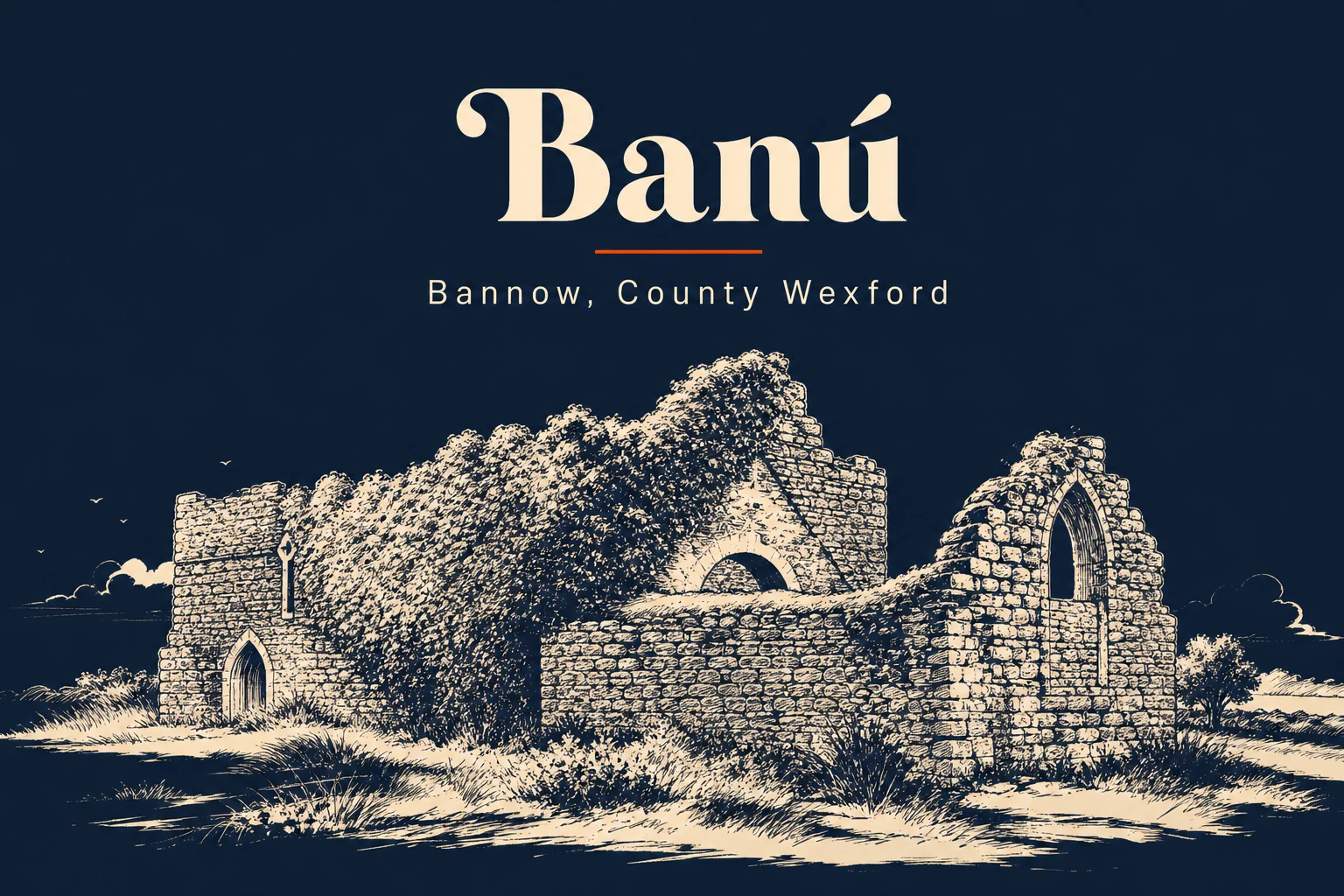
A Norman town grew up on the headland after - a place called Bannow, with St Mary's Church at its centre, six streets of thatched houses, a small castle and a sheltered harbour behind the dunes. It traded for a hundred and fifty years. Then in 1348 the Black Death came in off a trading vessel and tore through it the way plague tears through ports. The town never recovered. The harbour silted. The dunes shifted. By the 1600s the houses were ruins, and by the 1800s only the church stood - and only because it sat thirty feet up on solid ground. What the locals call Bannow Island is now joined to the mainland by sand. The town is under it.
Modern Bannow is Carrig-on-Bannow, a small crossroads village a few kilometres inland. There is a pub, a chipper, a coffee shop, a community hall, a graveyard. The bay is ten minutes down the road. St Mary's Church ruin stands on the old peninsula, walls open to the wind, sea on three sides. Walk out to it. Read the date on the headstones. Stand where FitzStephen's men slept the first night. Then drive on. There isn't much else here. There doesn't need to be.