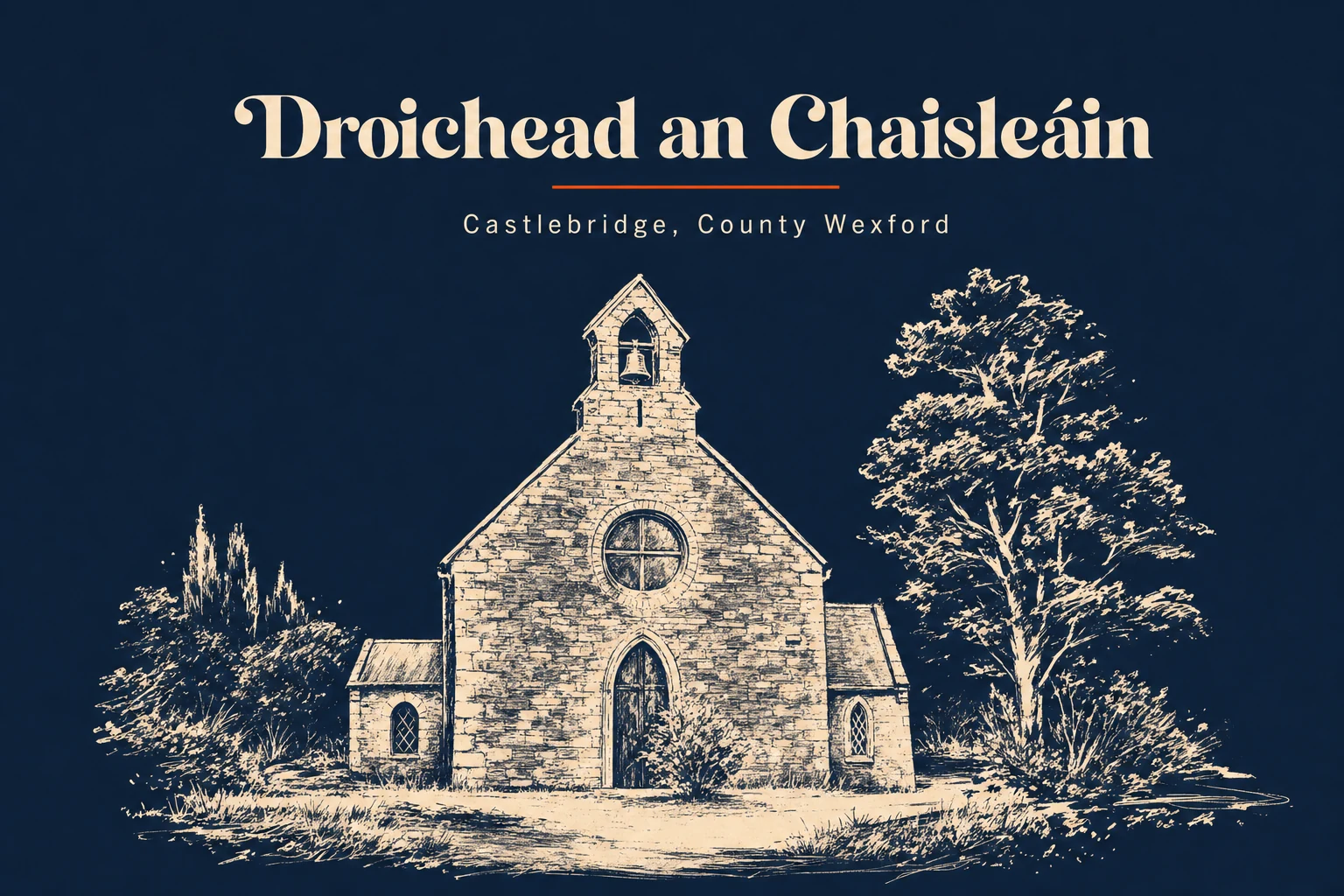
Droichead an Chaisleáin · Co. Wexford
Five kilometres north of Wexford. A malt-mill village that accidentally invented the Guinness Book of Records.
Castlebridge is a Slaney-edge mill village five kilometres north of Wexford town, on the road to Gorey. The Sow river meets the Castlebridge channel here and the whole place was laid out around a malting industry that ran for two and a half centuries - Nicholas Dixon built the malt house, dock and bridge in 1742, and the Breen and Nunn families later ran the operation that fed barley to Guinness in Dublin. Walk the village today and the bones of it are still industrial: the long stone stores, the canalised river, the old mill conservatory beside the big house.
What surprises people is the geese. The North Slob - flat reclaimed farmland behind a sea-wall on the south side of the village - is one of the two most important wintering grounds on earth for the Greenland white-fronted goose. Around 7,000 birds arrive every October and stay until April. The Wexford Wildfowl Reserve has been managing the land since 1969 and the hides are open year-round. In the off-season the same flats hold lapwing, curlew, and the kind of sky that does most of the work.
The other thing that happened here, somehow, is the Guinness Book of Records. In November 1951 the managing director of Guinness, Sir Hugh Beaver, was out shooting on the Slob and got into an argument that evening at Castlebridge House about Europe's fastest game bird. He couldn't settle it from the library on the wall. Four years later the first edition of the Book of Records was published. The village marks it now. It is, on reflection, an oddly specific origin story for a global publishing phenomenon - and it happened in a country house five kilometres outside Wexford.