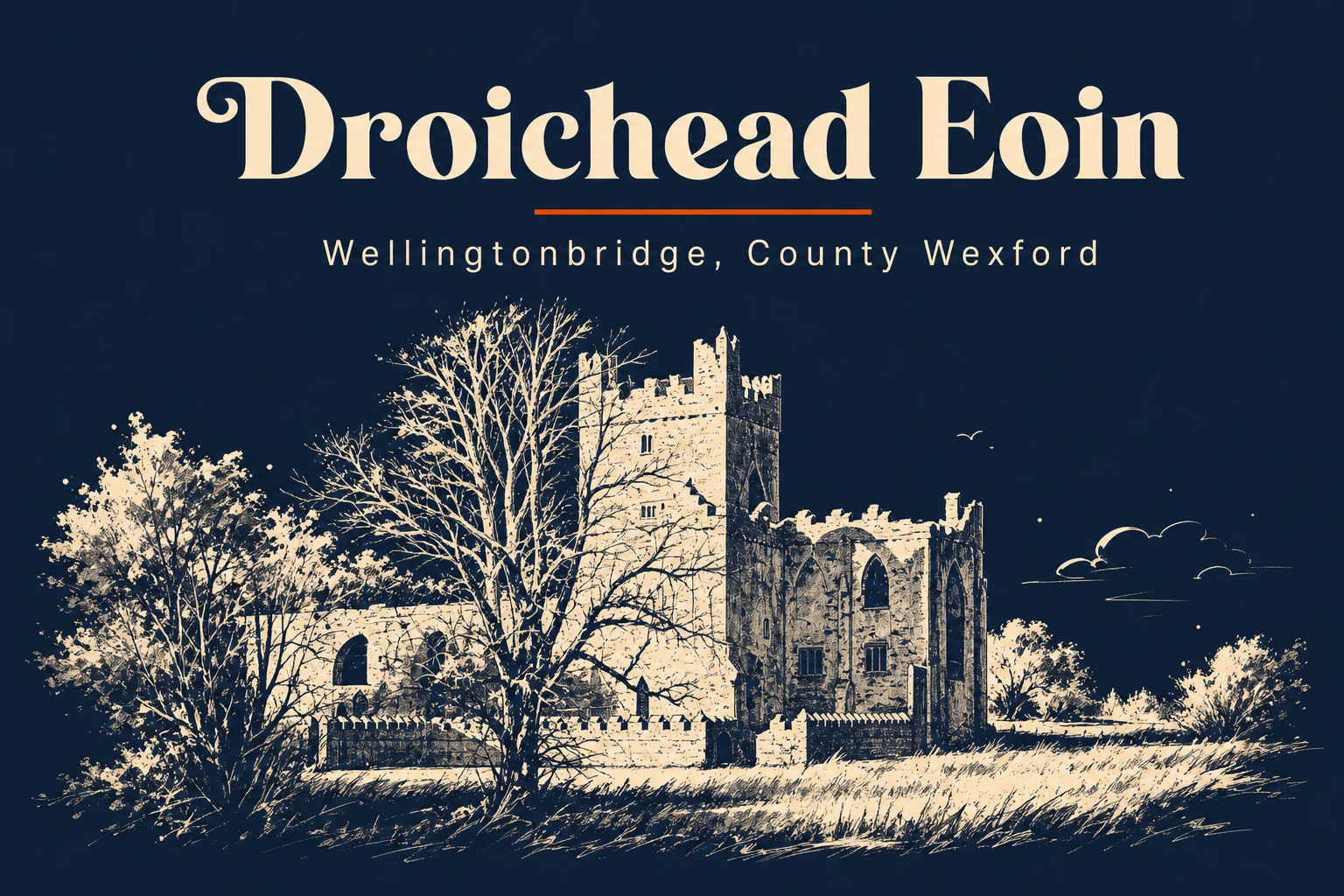
Droichead Eoin · Co. Wexford
A bridge with a name borrowed from Waterloo, and a hinterland that earns the visit.
Wellingtonbridge is a road village. The N25 swings south of it and the R733 runs through it, and most cars on the R733 are pointed at Tintern Abbey or the Hook lighthouse and not stopping here. That is fine. The village is a place to fill up the car, get a sandwich, maybe a pint at Tír na nÓg, and carry on.
What the village has, that nothing on the postcard tells you, is a railway story and a naming story. The railway was the South Wexford line - Rosslare to Limerick via Waterford - and for thirty years Wellingtonbridge was the loading point for Ireland's sugar beet harvest, six trains a day in season hauling 150,000 tonnes a year up to the factory at Mallow. The factory closed in 2006. The line lost passengers in 2010. The loading sidings are still there, weeds through the rails, if you know where to look.
The naming story is older and stranger. The bridge was built early in the nineteenth century by Tom Boyse of Bannow, a local landlord with an unusual interest in his tenants and a brother who fought at Waterloo and came home wrecked. Boyse named the bridge for the man who won that battle. The townland it sits on is still called Ballyowen on the Ordnance Survey. The Irish form of the village name, Droichead Eoin, is not a translation of Wellington - it is a translation of Ballyowen. Two names, two histories, one road.