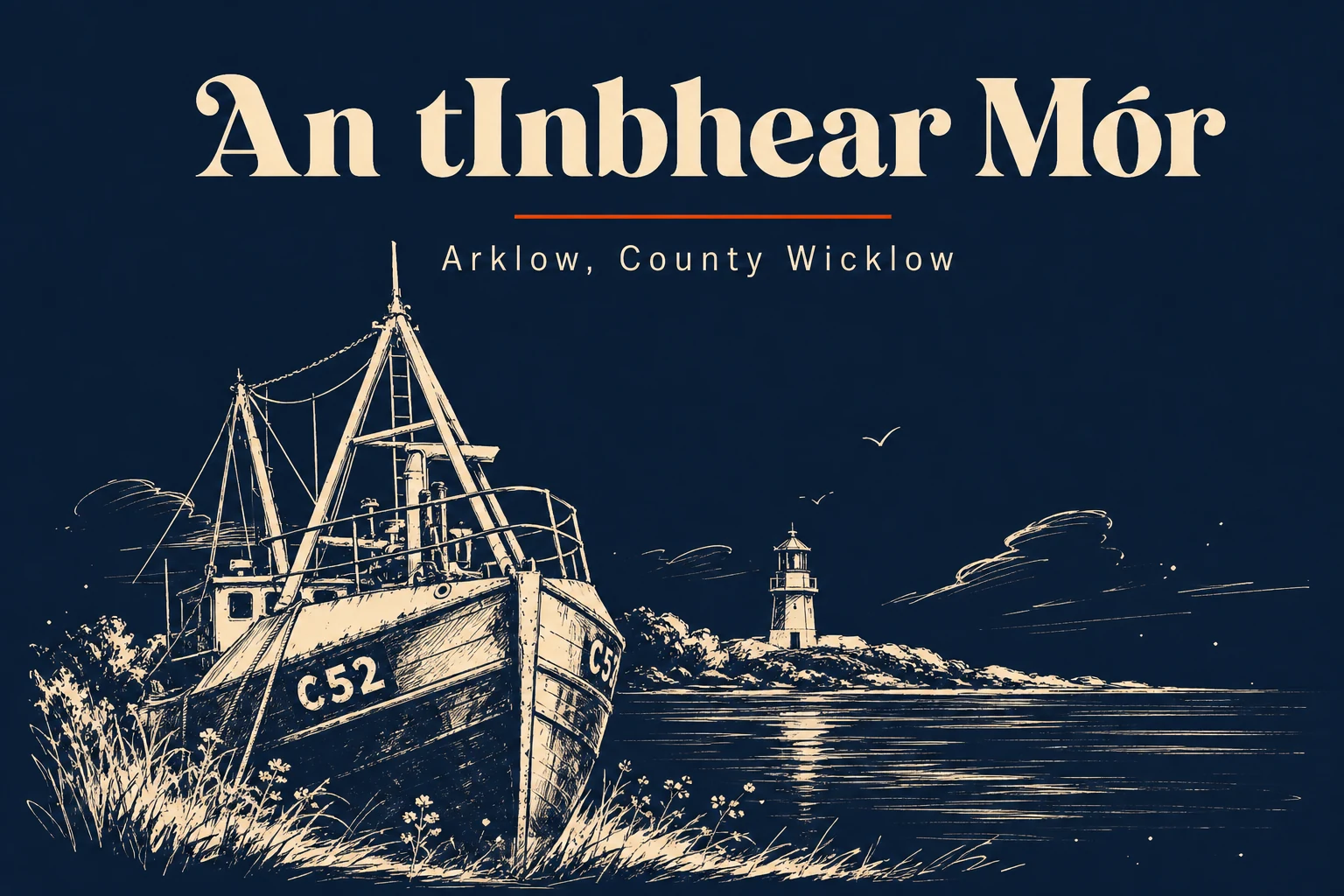
An tInbhear Mór · Co. Wicklow
A working port town at the mouth of the Avoca, with a maritime history that runs from Viking longships to cordite and bone china.
Arklow is not selling itself to you. It is a town of 13,000 people with a working port, a Main Street that serves the people who live there, and an industrial history that most Irish towns would find hard to match. The Vikings made it a port in the 9th century. The Normans built on it. Copper ore from the mines at Avoca came down the river and out through here in the 18th century. Shipbuilders launched schooners and brigantines from the North Quay. During the First World War, a British explosives company called Kynoch employed 5,000 people on the edge of town to make cordite for the Western Front - and in 1917, four huts of nitro-glycerine and guncotton went up in the night and killed twenty-seven men. From 1934 to 1998, Arklow Pottery made bone china that is now a collector's item. The town has lived many lives.
None of this makes Arklow a tourist village. The Main Street has the rhythm of a real Irish town - a proper hardware shop, a barber, a bookmaker, Christy's bar with a terrace on the river. The Arklow Heritage Museum on the quay is small, seriously curated, and worth an hour of anyone's time. The Nineteen Arches Bridge is one of the longest stone arch bridges in Ireland, and most people drive over it without stopping to look. The South Beach walk is six kilometres of sea air that you share with the locals rather than a tour group.
Come through Arklow on the way between Dublin and Wexford - on the train if you can, which stops here on the Rosslare line. Spend an afternoon. Walk the quay, cross the bridge, walk the beach, have a pint on Christy's river terrace. Drive the ten kilometres up to the Vale of Avoca in the morning. Don't expect a village designed for visitors. Expect a town that has been doing its own thing for twelve hundred years.