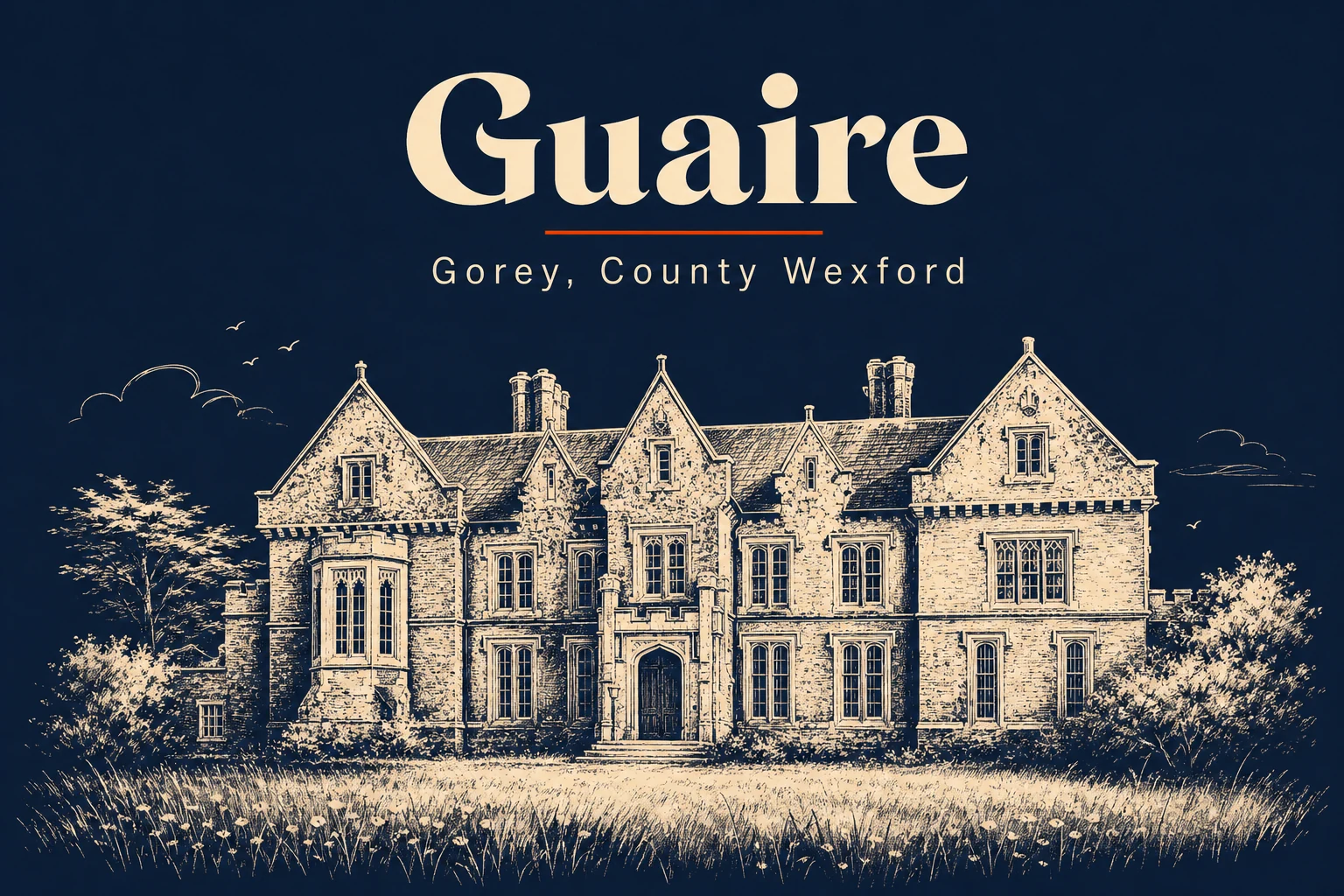
Guaire · Co. Wexford
A market town on the motorway that nearly trebled in size in a generation.
Gorey is not a postcard town. It is a working market town that woke up in the late 1990s to find Dublin had moved closer. The N11 became the M11. The 8:07 to Connolly filled up. And the population very nearly trebled - from under four thousand in 1996 to over twelve thousand by 2022.
What that means on the ground is a long Main Street with the bones of a Georgian-and-Victorian market town, a ring of newer estates around it, two big hotels on the edges, and a steady traffic of commuters, weekenders, and farmers in for the day. The Saturday farmers' market still sets up at the Community School. The Gorey Show still pulls a crowd in midsummer. Pugin built two of the better buildings, and they're both still in use.
The instinct of a passing traveller is to stop at the motorway services and keep driving. Don't. Pull off at Junction 23, do Main Street on foot, eat at Table Forty One or out the road at Marlfield, and stay the night somewhere with a bath in it. Courtown beach is eight kilometres east when you wake up.
It's a town that does its own life rather than performing one. That's the appeal, if you let it be.