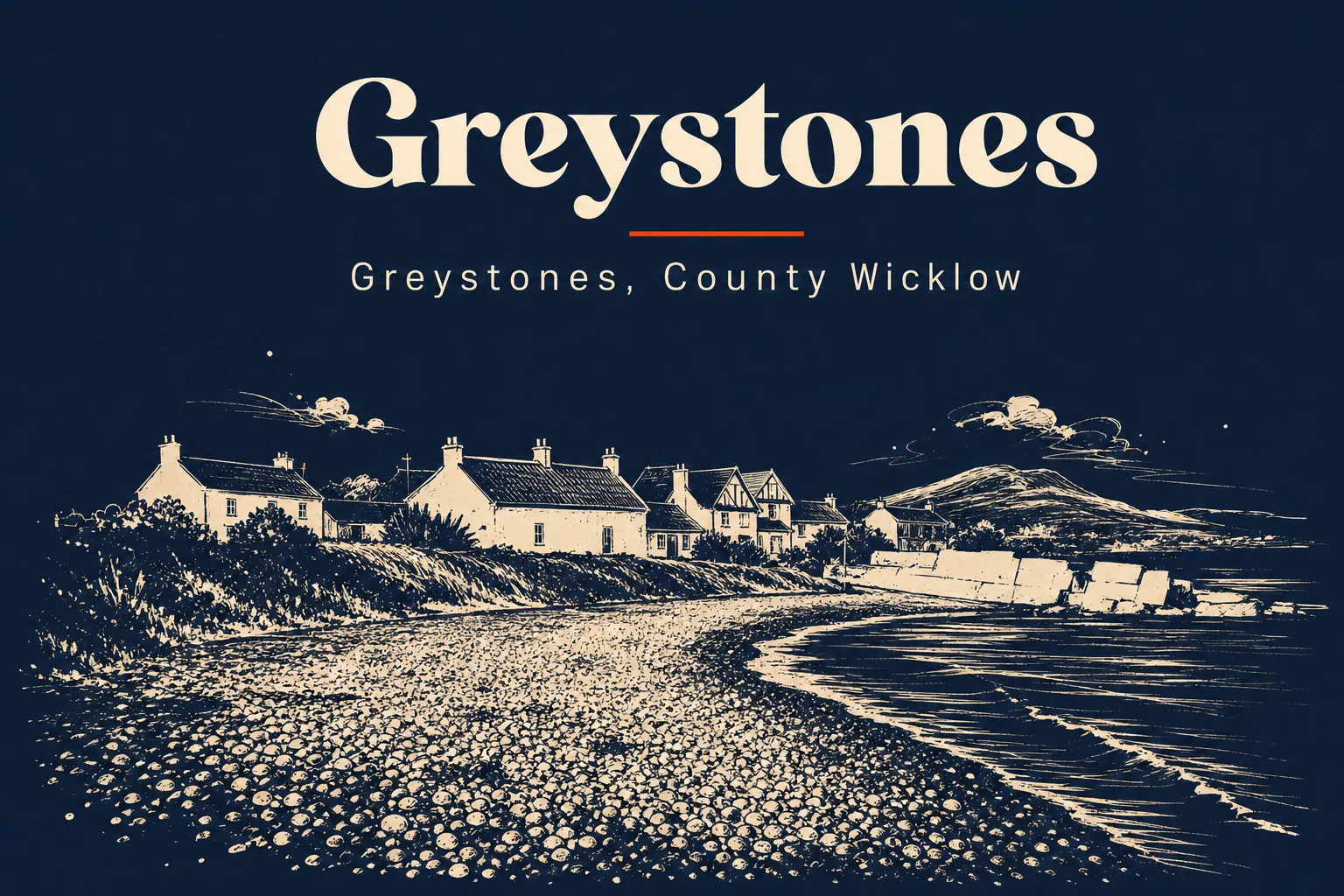
Greystones · Co. Wicklow
The last stop on the DART, with better food than most of Dublin expects to find here.
Greystones is where the DART stops. Literally -- it's the southern terminus, the end of the electrified line from Dublin, and for thirty years before the year 2000 it wasn't even that: Bray was the end, and Greystones was a town you had to go out of your way to reach. The extension changed things. You can now be at Pearse Street in forty minutes, which turned what had been a quiet seaside town into a commuter suburb that earns well and spends some of it on dinner.
The fishing village came first. In 1795 someone described it as 'a noted fishing place four miles beyond Bray,' which gives you the scale. A harbour was built between 1885 and 1897 to service the fleet. Then in October 1911, a storm came in and wrecked most of the boats in a single night. The fishing industry never recovered, and the railway, which had arrived in 1855 with Isambard Kingdom Brunel's involvement, became the only story worth telling. The grey rocks the name comes from are still on the seafront.
What you get now is an affluent town that has, somewhat accidentally, become one of the better places to eat on the east coast. The Hungry Monk on Church Road has been running a proper wine-bar-and-Irish-produce operation for years. Chakra by Jaipur -- modern Indian cooking, Michelin Guide listed -- is in a shopping centre, which sounds wrong and tastes right. The Happy Pear, started by twin brothers Steve and Dave Flynn, turned a Church Road cafe into a plant-based brand with cookbooks and a following, and the original cafe is still the busiest breakfast queue in town. None of this happened by design. It accumulated.
The harbour is the reason to walk, not just eat. The Beach House pub at the water has been there since 1850, which is older than the harbour wall beside it. The cliff walk north to Bray is 7 kilometres of open coastal path that starts flat and gets spectacular around Bray Head. South Beach is a broad sandy kilometre. The Wicklow Mountains are visible inland on any clear morning, which in Wicklow is fewer mornings than you'd like but more than enough.