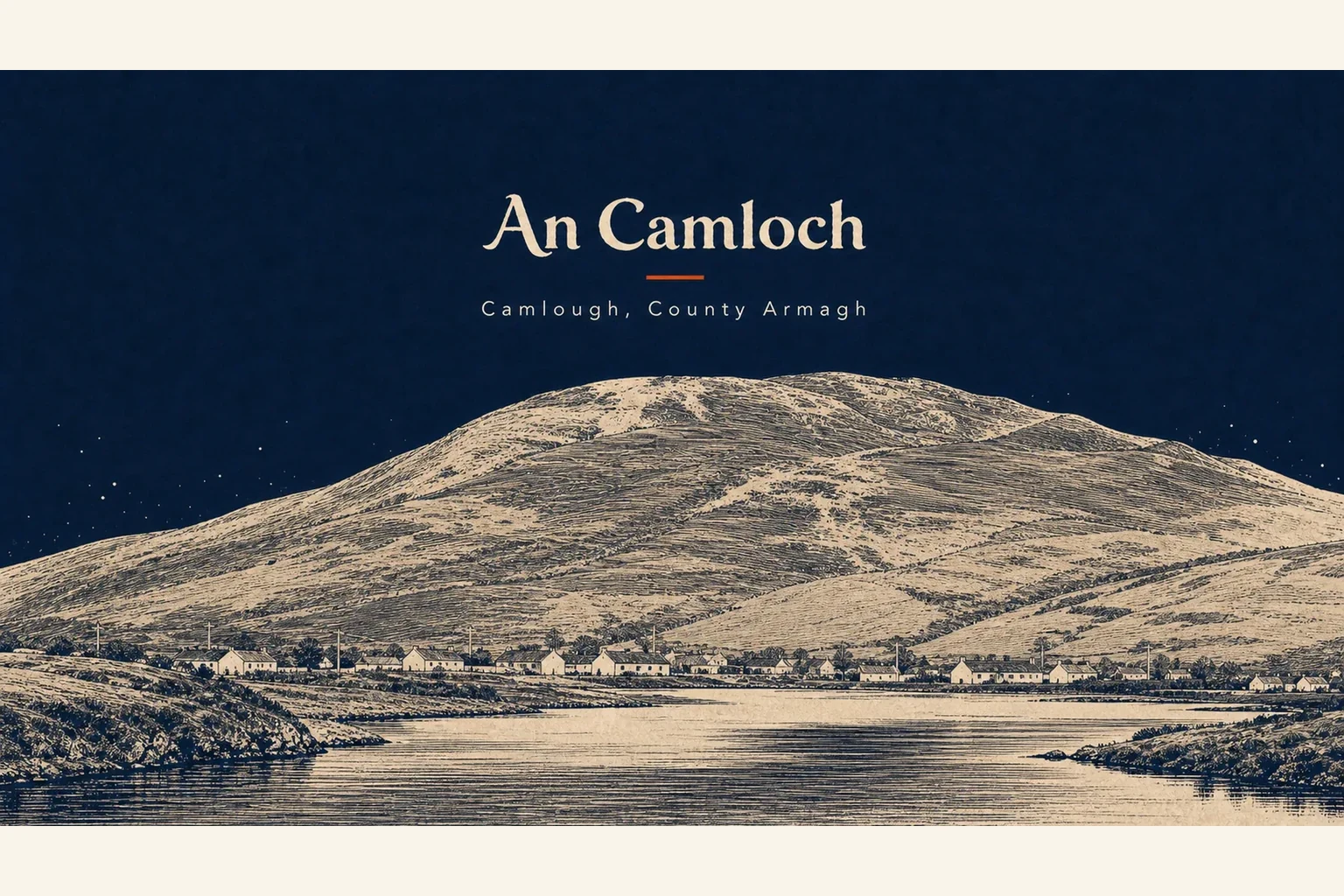
An Camloch · Co. Armagh
A crooked lake, a fault line, and a mountain at the back door.
Camlough sits three miles west of Newry, at the south end of the Ring of Gullion - a circle of hills thrown up around the old volcanic plug of Slieve Gullion. The lake the village is named for runs north from the edge of town in a long, thin slot, with Camlough Mountain on one side and the slopes up to Slieve Gullion on the other. It's an unusual bit of geology and a quietly beautiful one.
It's also South Armagh, which means the village has a heavier history than its size suggests. The British Army called this stretch of country bandit country in the 1970s and 80s. A landmine on the Chancellors Road in May 1981 killed five soldiers in a Saracen. Raymond McCreesh, who died on hunger strike two days later, grew up in a house in St Malachy's Park. The memorials are there if you want to find them. The village isn't a museum about any of it.
What it is now: a working village with a filling station, a chemist, a takeaway, one good pub-restaurant, and a lake fifteen minutes' walk from the main street. The Ring of Gullion AONB is the reason most outsiders come - the loop walk over Camlough Mountain and back along the lake is genuinely one of the best half-days in the region. Park in the village, follow the road up.