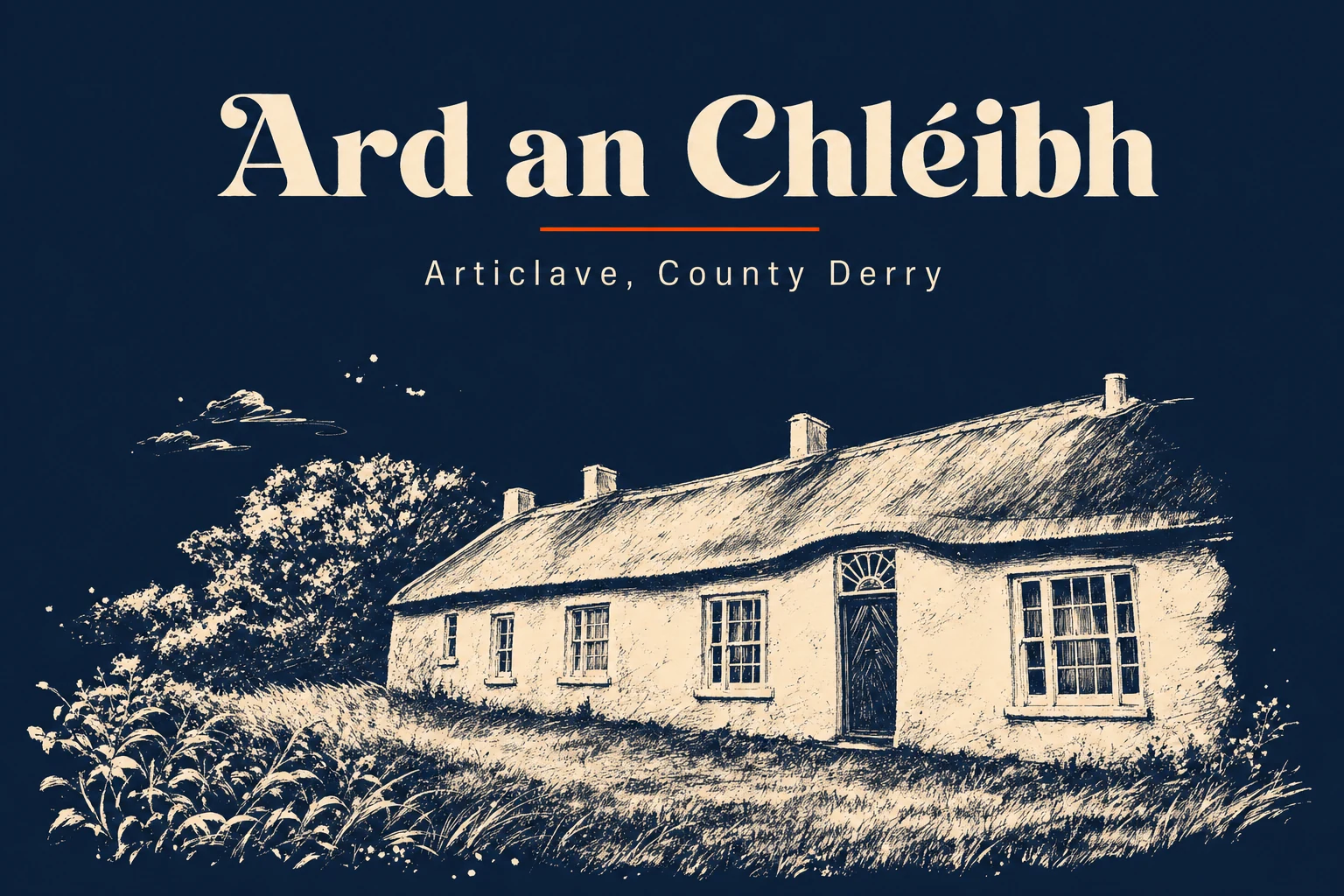
Ard an Chléibh · Co. Derry
A plantation village on the A2, with a 681 AD hillfort behind it and a chipper out front.
Articlave is a small Causeway-Coast village strung along the A2 between Coleraine and Castlerock. A row of houses, the church at one end, a pub, a chip shop, the hill rising behind to a place called the Sconce. From the road you'd drive through it in a minute and not notice. That would be the wrong thing to do.
The village is a plantation village - one of the older ones in Ulster, in fact. The Worshipful Company of Clothworkers of London were granted around 6,000 acres west of the River Bann in 1613, and Articlave was their first settlement on the estate, founded the year before the grant was finalised. St Paul's, the Church of Ireland parish church, stands on ground the Clothworkers gave in 1691 after the older church at Downhill was destroyed in the Jacobite war of 1689. The Irish name - Ard an Chléibh, height of the basket - survives on the postmark from much further back.
The reasons to stop are mostly on the edges of the village rather than in it. The Sconce, on the hill behind, is one of the oldest named places in this part of Ireland. Hezlett House, two minutes east at the Liffock crossroads, is a thatched cruck-framed cottage from around 1691 that the National Trust keeps. The strand at Castlerock is fifteen minutes' walk. Most people who stay in Articlave are using it as a quieter bed than Portrush, with the coast in every direction. Treat it the same way.