De Courcy, then de Lacy, then ruin
The castle on the rock
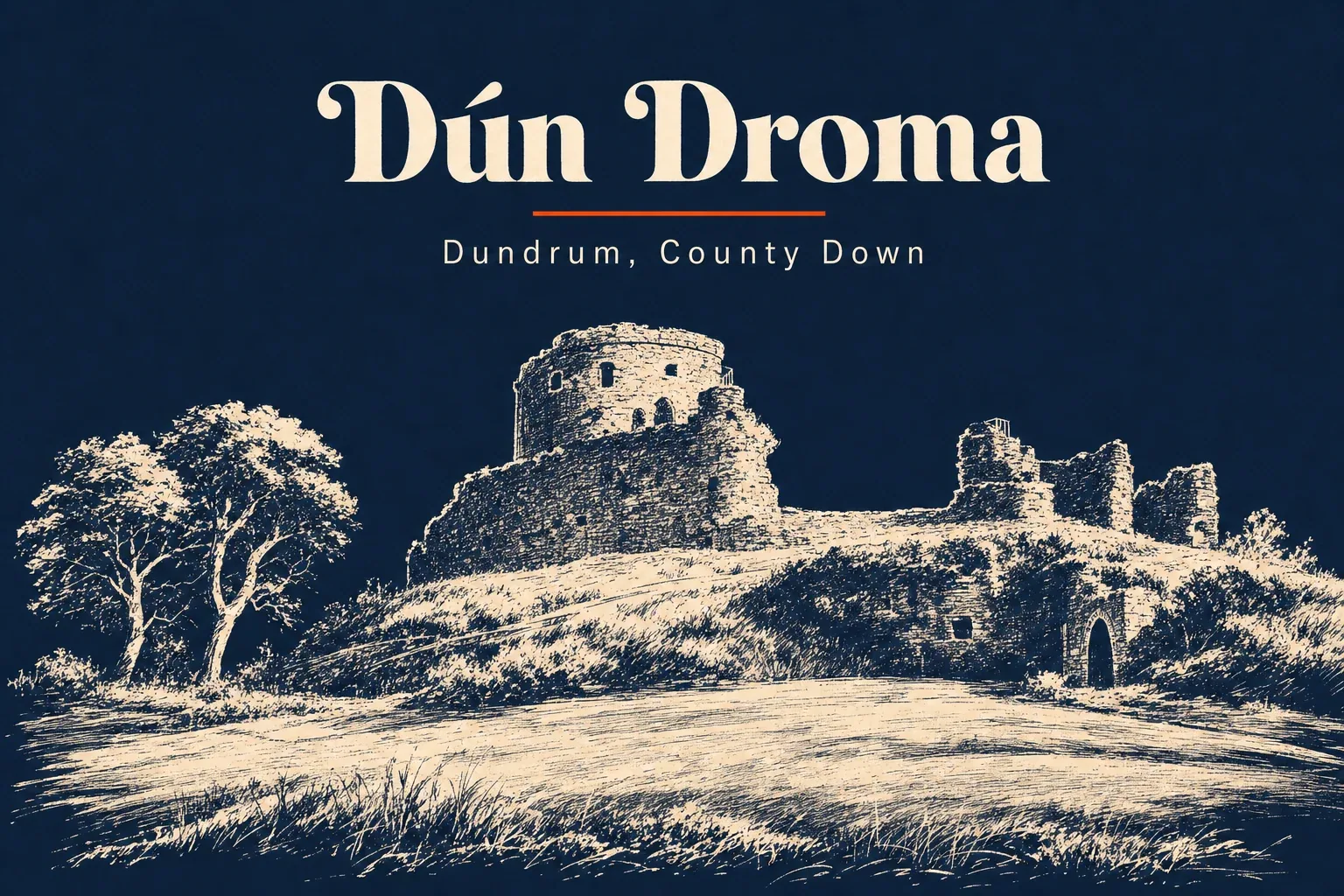
John de Courcy built the first castle here around 1177, two years after the Normans invaded Ulster, on top of an older fort called Dún Rúraí. Hugh de Lacy took it from him in 1203 and put up the great round keep that still stands. The Magennis clan held it through the late medieval centuries, lost it to Lord Deputy Grey in 1538, recaptured it during the 1640s wars, and finally lost it for good when Parliamentarian forces dismantled it around 1652. Local tradition blames Cromwell. Historians shrug. The walls have been mouldering quietly ever since.
Brunel's flagship, beached for a year
The SS Great Britain
In September 1846, the SS Great Britain — Brunel's iron-hulled ocean liner, the most advanced ship in the world — mistook the St John's Point light for the Chicken Rock light off the Isle of Man and ran aground on Tyrella Strand at the south end of Dundrum Bay. She sat there for nearly a year. No casualties; passengers got off; the wooden ships that would have broken up didn't, because she was iron. Brunel built a breakwater around her. They refloated her in August 1847. The salvage is reckoned the birth of modern marine recovery. Bristol got the ship back. Dundrum kept the story.
Why the Mourne Seafood Bar is here
The oyster bay
Dundrum Inner Bay is a sheltered, shallow, fast-tidal lagoon — the kind of water native oysters used to grow in all around the Irish coast before two hundred years of dredging and disease saw most of it off. The Dundrum beds are still working. They are part of the reason the Mourne Seafood Bar is on Main Street and not somewhere else, and the reason the chefs in Belfast know the name of the village before they know the road in.
A line that ran to Newcastle
The disused railway
The Belfast and County Down Railway ran a coastal line from Downpatrick down through Dundrum to Newcastle from 1869 until the closure in 1950. The track is gone. The cutting along the western shore of the inner bay became the Dundrum Coastal Path — 2.5 kilometres of flat, level walking right at the water, now part of the Lecale Way. The herons knew before the planners did.