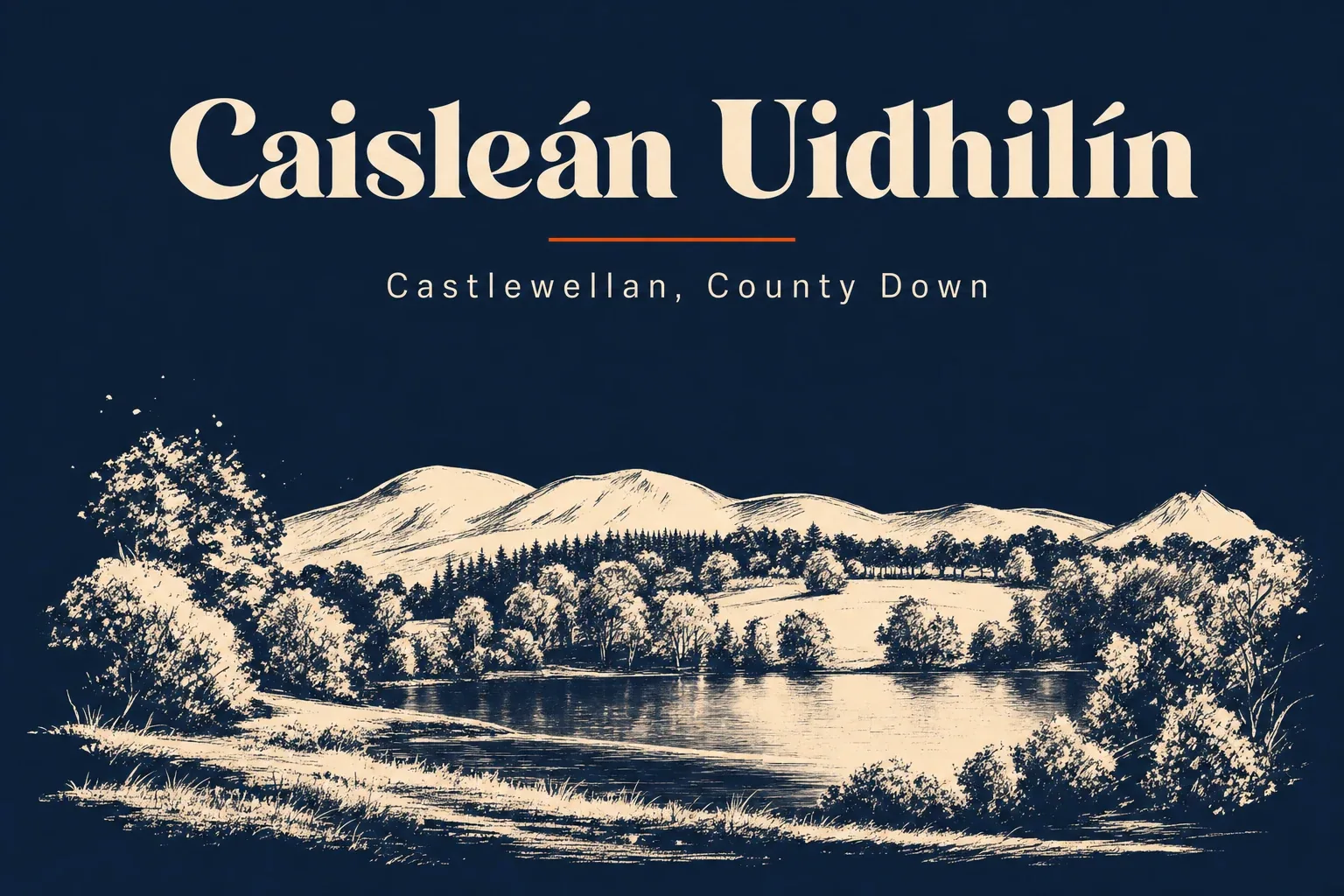
Caisleán Uidhilín · Co. Down
A market town at the foot of the Mournes with a 460-hectare forest park out the back gate.
Castlewellan is a market town at the foot of the Mournes that happens to have one of Northern Ireland's main forest parks out the back gate. That order matters. The town is a real town - two squares, a wide main street, chestnut trees, the second-Monday market still trading after two and a half centuries. The forest park is the reason most people drive in, and most of those people never see the squares. Their loss.
The estate is the old Annesley demesne. The 4th Earl built the castle between 1856 and 1859 to a William Burn design in granite quarried on site. The 5th Earl was the gardener - he laid down the arboretum that is now ranked among the finest in the British Isles. The Forest Service bought the land off the family in 1967 and opened it to the public. The castle itself has been a Christian conference centre since the 1970s and is not open to walk around; the gardens, the lake and the trails are.
Come for a Sunday and you will queue at the gate behind every family in south Down. Come on a Tuesday in October and you will have the arboretum more or less to yourself, with a wind off Slieve Croob and the last of the leaves doing their thing. Either way, walk into town afterwards for a pint at Maginn's and a plate at the Yard. Two hours in the trees, two hours in the squares, and you have actually been to Castlewellan instead of just the car park.