← All Dublin tours via partner · From €225 · 2 hours 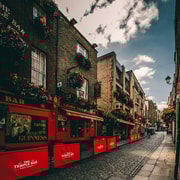
Dublin: 2-Hour Walking Tour with a Local Historian
Free cancellation Booked securely via partner
Check availability & prices →
From €225 per person
Most walking tours tick off a list of famous spots. This one takes a different approach - you spend two hours with a local historian who’s genuinely interested in helping you understand what you’re seeing, not just pointing at it. If you’re curious about how Dublin became the city it is today, this is the tour that answers that.
You meet your guide outside The Gresham Hotel on O’Connell Street, a Dublin institution since the 19th century. From there, you’ll pass a statue of James Joyce on North Earl Street before reaching the Spire of Light, which towers above the General Post Office. The GPO isn’t just a landmark - it was the headquarters of the 1916 Rising, and your guide will make sure you understand exactly what that moment meant for Ireland.
Next comes the O’Connell Monument, which commemorates Daniel O’Connell, the man credited as the architect of Catholic Emancipation in 1829. Then you cross O’Connell Bridge - genuinely as wide as it is long - where you get a useful vantage point across the city. Looking west, you can spot Christchurch Cathedral at the medieval heart of Dublin; looking east, the modern ‘Silicon Docks’ that have transformed that stretch of the Liffey in recent decades.
On the south side of the river, you’ll pass the Palace Bar on Fleet Street, long associated with writers including Brendan Behan and Patrick Kavanagh. Then it’s into the Temple Bar district, which survived a plan to demolish it for a bus station, largely because its thriving bohemian arts community made the area too alive to flatten. You’ll pass cultural spots including the Project Theatre, the Irish Film Institute, and the National Photographic Archive. The Olympia Theatre - a fine piece of Victorian architecture still very much in regular use - appears before you reach Dublin Castle, built on the site of Dublin’s first Viking settlement in 841.
The tour wraps up with a look at the Chapel Royal, the neo-Gothic church that served as the private chapel of the lord lieutenant during British rule.
The GPO is worth a closer look after the tour. The building on O’Connell Street now houses a permanent exhibition called Éire / Ireland, which tells the story of the 1916 Rising and the events that followed. It’s free to enter and pairs well with everything your historian tells you on the street outside.
The Palace Bar on Fleet Street is worth a stop. It’s one of Dublin’s most intact Victorian pubs - low lighting, wooden snugs, old newspaper cuttings on the walls. If Behan or Kavanagh were alive today they’d still be comfortable in there. Go for a quiet afternoon pint rather than a weekend evening if you want the atmosphere to yourself.
Temple Bar has two sides to it. The tourist-facing part around the cobbled square can be loud and pricey on weekends. But the streets your historian takes you through - past the Irish Film Institute and the Project Theatre - are the real Temple Bar, and they’re worth knowing about for the rest of your stay.
Dublin Castle is free to walk around the grounds. The exterior courtyards and the main gate area are open without charge. The formal state apartments and chapel require a ticket, but even a wander around the grounds gives you a real sense of the place your guide describes.
O’Connell Street repays a second look. The statues along the central median - O’Connell, Parnell, and others - tell a particular version of Irish history, and your guide will have given you the context to read them more critically than most visitors do.