← All Dublin tours via partner · From €18 · 5 hours 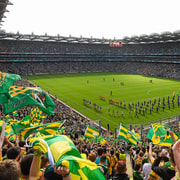
Dublin: Croke Park Stadium Tour and GAA Museum
Free cancellation 191 traveller reviews Booked securely via partner
Check availability & prices →
From €18 per person
Croke Park has been at the centre of Irish sporting life for over 100 years. As the headquarters of the Gaelic Athletic Association - Ireland’s largest sporting organisation - it’s where Gaelic Football, Hurling, Rounders, and Handball have their spiritual home. One of the largest stadiums in Europe, the place carries real weight.
This behind-the-scenes tour gives you all-areas access. You’ll visit the team dressing rooms, walk pitchside, and take in panoramic views from the top tier of the stand, 30 metres above the famous pitch. Local guides bring the history to life, covering the GAA’s role in shaping modern Ireland - sporting, social, and political.
Entry to the GAA Museum is included. You’ll find exhibits tracing the evolution of the games and their place in today’s sporting landscape, along with an interactive zone where you can test your hurling and football skills, challenge your reaction speed, and put your passing accuracy to the test.
The panoramic view from the top tier stops most people in their tracks. Standing 30 metres above the pitch, you get a proper sense of just how big Croke Park is - it holds over 82,000 people on match days. On a clear day you can see right across the north Dublin rooftops and out toward the Dublin Mountains. It’s one of the best elevated views in the city, and it costs a fraction of what you’d pay for a rooftop experience elsewhere.
The Bloody Sunday exhibits in the museum are handled with real care. On 21 November 1920, during a Gaelic Football match at Croke Park, British forces opened fire on the crowd. Fourteen people were killed. The museum covers this event as part of a broader account of the GAA’s place in Irish political and cultural history, and it’s worth taking time here. The guides don’t shy away from it and the context they provide is genuinely illuminating.
Give the interactive zone more time than you think you need. Trying your hand at hurling - even in an indoor practice setting - is harder than it looks and funnier than you’d expect. The reaction speed and accuracy challenges are popular with kids but adults tend to get quietly competitive. It’s a good way to get a felt sense of sports most visitors have only seen on television.
Try to visit on a non-match day. Tours run year-round but the behind-the-scenes access - dressing rooms, pitchside - is only available when no match or major event is scheduled. Check the GAA fixtures calendar before you book if access to every area matters to you. On match days, Croke Park and the surrounding streets in the Drumcondra and Ballybough areas come alive in a way that’s worth seeing even if you’re not attending the game.
The area around Croke Park has its own character. The stadium sits in a residential part of north Dublin, not in the tourist district. After your tour, the streets around Drumcondra and Clonliffe Road have the kind of local pubs and cafés you won’t find on Grafton Street. It’s a short walk to the Royal Canal, which has a pleasant towpath for a stroll before you head back into the city centre.