← All Dublin tours via partner · From €18 · 1 day 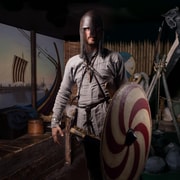
Dublin: Dublinia Viking and Medieval Museum Entry Ticket
Free cancellation 31 traveller reviews Booked securely via partner
Check availability & prices →
From €18 per person
Dublin was founded by Vikings - that’s not a footnote, it’s the reason the city exists. Dublinia sits right where that story began, in the Victorian Synod Hall beside Christ Church Cathedral, and it brings the first centuries of Dublin life back to the surface in a way that genuinely sticks with you.
The Viking exhibition isn’t the kind of museum where you walk past things behind glass. You can try on Viking clothing, handle replica tools and weapons, and walk through a reconstructed street complete with a smoky longhouse that gives you a real feel for daily life a thousand years ago. A good portion of the artefacts are the real thing too - they come from the famous Wood Quay excavations and are on loan from the National Museum of Ireland.
The medieval galleries take up where the Vikings left off, covering Dublin’s transformation into a busy medieval port city. Trade, medicine, crime, and punishment all get proper attention, and the multi-sensory approach - authentic smells included - means it works for visitors of every age. Before you leave, the 96 steps up St Michael’s Tower are worth every one of them, with some of the best rooftop views in Dublin looking out over the old medieval quarter and down toward the river.
If you’re visiting with kids, give yourself a full two hours rather than rushing. The hands-on sections - trying on Viking kit, handling the replica weapons, the reconstructed longhouse - are genuinely engaging for children, and you’ll be peeling them away from things.
The Wood Quay artefacts are the real highlight for history lovers. When construction began on the city council offices in the 1970s, archaeologists uncovered one of the most significant Viking-age settlements ever found in Ireland. Many of those finds are here on loan from the National Museum, and seeing them in context inside Dublinia makes them far more meaningful than in a standard museum gallery.
Pair it with Christ Church Cathedral next door. The two buildings are connected by a covered bridge, and between them you get a sweep of Dublin’s story from Viking settlement through Norman rule and into the Reformation. Most people who visit one end up doing both on the same day.
Get to St Michael’s Tower before the afternoon tour groups arrive. The view from the top is genuinely one of the better free-ish vantage points in the city, looking north over the rooftops of the Liberties and across to the Four Courts dome. It’s 96 steps with no lift, so factor that in if mobility is a concern.
Dublinia tends to be quieter on weekday mornings outside school holidays, which is when you’ll have the most room to actually engage with the interactive displays without queuing.