← All Dublin tours via partner · From €15 · 1 day 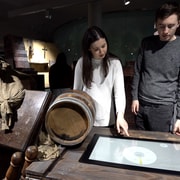
Dublin: Historic GPO (General Post Office) Museum
Free cancellation 18 traveller reviews Booked securely via partner
Check availability & prices →
From €15 per person
The GPO on O’Connell Street is not just a post office. It’s the building where modern Ireland was born. On Easter Monday 1916, Patrick Pearse stood on the steps outside and read the Proclamation of the Irish Republic, setting off a chain of events that would lead to Irish independence. Look closely at the pillars when you arrive - the bullet holes are still there.
Inside, the award-winning GPO Witness History museum does a remarkable job of bringing those pivotal moments to life. Rather than relying on static displays, the exhibition uses interactive touch screens, audio-visual storytelling, and authentic artefacts to walk you through the build-up to the Rising, the week of fighting, and the political transformation that followed. The highlight for many visitors is a specially commissioned film that puts you right in the centre of the action.
What sets this museum apart is the location itself. You’re not visiting a reconstruction or a purpose-built heritage centre - you’re standing in the actual building where these events took place. That sense of place gives the whole experience a weight that’s hard to replicate anywhere else in the city.
Allow 60 to 90 minutes for a thorough visit. The museum is inside the GPO building on O’Connell Street, right in the heart of Dublin city centre. The Luas Red Line stops directly outside. The building is still a working post office, so you can send a postcard from the same counter on your way out - a nice touch. Suitable for older children and teenagers with an interest in history.
Stand on the front steps before you go in and read the Proclamation. A copy of the original text is displayed outside, and reading it in the place where it was first spoken aloud on Easter Monday 1916 is quite a different experience from reading it in a book. The bullet marks in the columns are from the week of fighting that followed - run your hand along one if you get close enough. It makes everything inside the museum feel more immediate.
The GPO is still a fully functioning post office on the ground floor. After you finish the museum, you can post a letter or buy a stamp from the same building that was at the centre of a revolution. It’s the kind of small detail that Dublin does well - history layered directly on top of everyday life. A postcard from here is a more interesting souvenir than most.
Pair it with a walk up O’Connell Street before or after. The street itself is a chapter in Irish history - the Garden of Remembrance is at the northern end, the statue of Daniel O’Connell anchors the south, and the Spire marks the spot where Nelson’s Pillar stood until it was blown up in 1966. A slow walk with a bit of background knowledge turns a busy shopping street into something much more interesting.
Older children and teenagers tend to get a lot from this museum. The interactive elements are well-designed and the specially commissioned film is genuinely engaging rather than dry. If you’re travelling with secondary school-age kids who have covered Irish history in school, this visit has a good chance of actually sticking with them.