← All Dublin tours via partner · From €50 · 2 hours 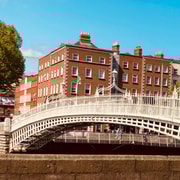
Dublin: Small Group Walking Tour includes Temple Bar
Free cancellation Booked securely via partner
Check availability & prices →
From €50 per person
This two-hour walking tour with a native Irish guide takes you through the layers of Dublin - Viking origins, Georgian grandeur, literary connections, and the living city you see today. You meet at the Chester Beatty Library in the beautiful Dubh Linn Garden behind Dublin Castle, which turns out to be one of the best starting points in the city.
From there, your guide walks you through the castle grounds and explains where the name “Dublin” actually comes from - it’s rooted in the Irish “Dubh Linn,” meaning dark pool, a reference to the tidal inlet where the Vikings moored their longboats. You pass Christ Church Cathedral and hear about the Catholic Church’s long history in Ireland, including the fact that Handel’s Messiah had its world premiere in this building.
The tour covers Temple Bar, the oldest part of the city and still the liveliest quarter - pubs, music, and conversation well into the night. Crossing the Ha’penny Bridge, your guide talks about how trade and travel shaped the city over centuries. At O’Connell Bridge, you hear about the 1916 Easter Rising and see the statue of Daniel O’Connell, the great Irish parliamentarian. The River Liffey gets its own chapter, including the story of the famous Liffey Swim.
Trinity College is a highlight. You step into the courtyard of one of the world’s most storied universities and your guide points out who studied here down the centuries. From there, the route takes you along Kildare Street - where Bram Stoker grew up and where Leinster House, now Ireland’s parliament, sits - and past the National Museum of Archaeology. Your guide explains the connection between Leinster House and the White House in Washington, DC, which is a genuinely surprising story.
On Dawson Street, you stop outside St Anne’s Church, where Bram Stoker married, before finishing on Grafton Street at the ornate Bewley’s Cafe - a Dublin institution.
The tour starts at the Chester Beatty Library in the Dubh Linn Garden, behind Dublin Castle. Wear comfortable shoes - you’ll be on cobblestones for stretches of the route. The tour is conducted in English.
The Dubh Linn Garden is worth arriving early for. The meeting point behind Dublin Castle is one of those spots that most visitors walk straight past. The garden is calm, well-kept, and sits on ground with genuine Viking history underneath it. Give yourself ten minutes before the tour starts to just stand in it.
The Handel’s Messiah detail is one of those facts that stops people in their tracks. The world premiere of one of the most performed pieces of classical music in history took place in Dublin in 1742, not London, not Vienna. Your guide will fill in the full story at Christ Church - it’s worth listening to carefully.
The Leinster House and White House connection is real. James Hoban, the Irish-born architect who designed the White House, is thought to have drawn on Leinster House as a reference. Your guide will show you why the resemblance is hard to miss once you’re standing in front of both buildings in photos.
Bewley’s on Grafton Street is where the tour ends, and it’s worth going inside. The cafe has been on Grafton Street since 1927 and the interior is genuinely beautiful - stained glass, dark wood, the smell of fresh coffee. A sit-down coffee after the tour is a proper Dublin way to finish the morning.
Small group means you can ask. This isn’t a tour where you’re one of forty people trailing behind a guide with an umbrella. If something your guide says sparks a question, ask it there and then - the format is built for it, and a good native Irish guide will go deeper on whatever catches your interest.