County Fermanagh Ireland · Co. Fermanagh · Lisnaskea Save · Share
POSTED FROM
LISNASKEA
CO. FERMANAGH · IE

Lisnaskea
Lios na Scéithe, Co. Fermanagh

The Ireland's Hidden Heartlands
STOP 09 / 09
Lios na Scéithe · Co. Fermanagh

The market town of south Fermanagh, on the drumlin shore of Upper Lough Erne.

Lisnaskea is the main town of south Fermanagh - bigger than the village it looks like from the main street, more useful than most guidebooks give it credit for. Lios na Scéithe means fort of the shield, though the shield in question is long gone and the fort has been replaced by a market town that serves the farming parishes around Upper Lough Erne.

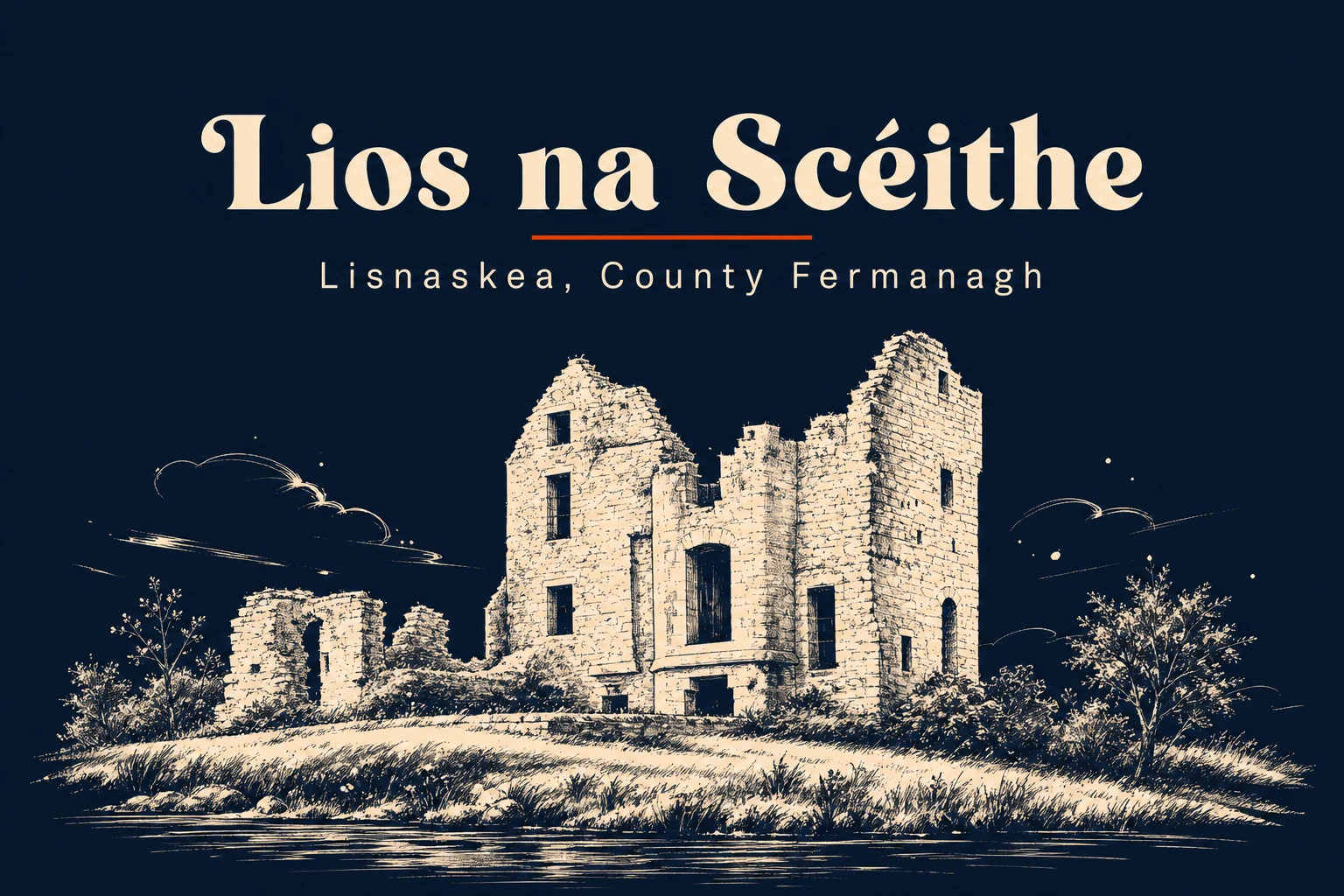
Castle Balfour is the reason to stop. Built between 1618 and 1622 for James Balfour - a Scottish planter given lands during the Ulster Plantation - it is a T-plan tower house of a type common in Lowland Scotland. In Fermanagh it sits at the edge of town looking slightly surprised at itself, roofless but solid. The National Trust signposting is minimal. The castle is better for it.

The lake is four kilometres south. Upper Lough Erne here is a different thing from the open water of the lower lake - narrower, broken into channels by glacial drumlins, with islands appearing and disappearing depending on rainfall. Share Discovery Village runs activity programmes on the water year-round. Watermill Lodge, a few kilometres out, is the best food option in the area and has been for years.

Population
~3,000
Pubs
5and counting
Walk score
Town centre in 15 minutes end to end
Coords
54.2158° N, 7.4942° W
01 / 09

At a glance.

Three things every local will eventually mention. Read these and you've already understood more than most day-trippers do.

02 / 09

The pubs.

None of these are themed Irish pubs, because they don't need to be. A few that earn the trip:

Frank's Bar

CAMRA-listed, quiet, unhurried
Traditional local

Main Street. Listed in the CAMRA National Inventory of Historic Pub Interiors for its traditional fittings. Not a tourist destination - a working local that happens to have kept what other pubs stripped out. Cask ale available. The kind of bar that rewards coming back.

O'Brien's Bar

Sports, lively at weekends
Town local

Main Street. The sport-watching option in town - televised matches draw a crowd. Straightforward town pub without pretension.

03 / 09

Where to eat.

PlaceTypeLocal note
Watermill Lodge Restaurant €€€ A few kilometres outside town on the Upper Lough Erne shore. Chef Pascal Brissaud has been running the kitchen here for years. The reputation is solid and earned - local produce, French technique, no nonsense. Book ahead at weekends. The drive out along the lough is worth doing in daylight.
The Butter Market Café Café Town centre. Daytime only. Soups, sandwiches, baking. The kind of café that keeps a market town functioning.
04 / 09

Where to sleep.

PlaceTypeLocal note
Share Discovery Village Activity centre & accommodation On the shore of Upper Lough Erne, 4 km from town. Originally set up to provide outdoor activities for people with disabilities - it still does, and has expanded into general outdoor tourism. Accommodation ranges from glamping pods to group lodges. The water activities are the point: kayaking, canoeing, sailing on the upper lake.
Watermill Lodge Restaurant with rooms A small number of rooms attached to the restaurant. If you are coming for the food, staying the night makes more sense than driving back on the Fermanagh back roads.
05 / 09

Stories & lore.

The reason to come back. The things every local will eventually tell you about, usually after the second pint.

A Scottish design on Irish land

Castle Balfour

James Balfour arrived in Fermanagh as part of the Ulster Plantation, the early-17th-century scheme to settle confiscated Gaelic lands with British colonists. He was granted the barony of Knockninny and built his castle between 1618 and 1622. The design is a Scottish T-plan - a rectangular hall block with a projecting entrance bay - the typical form for Lowland Scottish tower houses of the period, transplanted to south Fermanagh wholesale. Balfour was created 1st Baron Balfour of Glenawley in 1619. The castle passed through several hands, was used as a barracks, fell derelict, and now stands roofless at the edge of Lisnaskea, maintained by the state.

Fermanagh before the Plantation

The Maguire territory

Before the Plantation, the lands around Lisnaskea were Maguire country - the heartland of the Maguire lordship that had controlled Fermanagh for centuries. Cuconnacht Maguire was the last lord of independent Fermanagh before the Flight of the Earls in 1607 opened the county to Plantation settlement. The landscape around Upper Lough Erne, with its labyrinth of islands and channels, had made the Maguires nearly impossible to dislodge for generations. The Plantation changed all of that within a decade.

The lake the maps get wrong

Upper Lough Erne

Upper Lough Erne is more complicated than any map suggests. It is not a single lake but a chain of interconnected channels, bays and shallow spreads, broken by hundreds of drumlins - oval glacial hills - that became islands when the water rose after the ice retreated. The lough is tidal in the sense that rainfall raises and lowers it significantly across the year. Anglers have known this landscape for generations. Everyone else tends to notice it from a boat, when the islands multiply unexpectedly and the channel you were following narrows into a reed bed.

06 / 09

Things to do outside.

Wear waterproofs. Bring a sandwich. Tell someone where you're going if it's the mountain.

Castle Balfour & town loop The castle is at the western edge of the town centre - signposted from Main Street. Walk to it, circuit the exterior (access is open; no entrance fee), and return through the town. Short but the castle is the reason to be here.
2 kmdistance
45 mintime
Share Discovery Village water trail Kayak or canoe hire from Share Discovery Village on Upper Lough Erne, 4 km from town. The upper lake's channels and islands reward slow exploration. The Share centre runs guided water sessions - worth booking if you are unfamiliar with the lough.
Variabledistance
Half daytime
07 / 09

When to go.

There is no bad time. There are different times.

Spring
Mar-May

The lough channels are full after winter and the countryside is quiet. Good for kayaking before the summer groups arrive at Share.

◉ Go
Summer
Jun-Aug

The best season for the water. Upper Lough Erne is at its best in long evening light. Book Watermill Lodge at least two weeks ahead.

◉ Go
Autumn
Sep-Oct

Quiet and golden. The drumlin islands turn russet. Fewer visitors on the water and better chances of a seat at the restaurant.

◉ Go
Winter
Nov-Feb

The lake is cold and the activity centre pares back its programme. The town functions normally. Castle Balfour is worth a look in any weather.

◐ Mind yourself
08 / 09

What to skip.

Honestly? Don't bother.

If a local was sitting beside you, this is the bit where they'd lean in.

×
Passing through without stopping at Castle Balfour

Most people drive through Lisnaskea on the way to Enniskillen. The castle is five minutes off the main road and is one of the better-preserved Plantation-era castles in Ulster. It takes twenty minutes. Stop.

×
Upper Lough Erne from the road only

The B-roads around the upper lake give glimpses between hedges. The lake only makes sense from water level. Hire a kayak at Share or take the Erne boat hire from the marina.

+

Getting there.

By car

Enniskillen to Lisnaskea is 16 km southeast on the A34 - about 20 minutes. Clones (Co. Monaghan) is 30 minutes east on the A34. The road through Newtownbutler connects to Cavan.

By bus

Translink Ulsterbus connects Lisnaskea to Enniskillen several times daily. Bus Éireann services run toward Cavan and Monaghan. Check Translink.co.uk for current timetables.

By train

No train. Nearest stations are Clones (no longer active) - effectively Enniskillen for bus connections or Cavan for rail.

By air

Belfast International (BFS) is approximately 1h 30m. Dublin Airport is around 2h via the A3 and N3.