The saint in the bog
St Colman mac Duach
Colman mac Duach came to a bog in Galway in the 7th century with the intention of being alone. Seventeen other monks followed him. He had a well. The hermit's well, they called it. Water rose from the bog as if the ground itself was obeying the saint's prayers. The monastery grew around that well. By the medieval period, Kilmacduagh was a scriptorium, a place where books were copied and thought was preserved on vellum. The saint's intention to be alone lasted about three days. Then history arrived.
34 metres and counting the centuries
The round tower
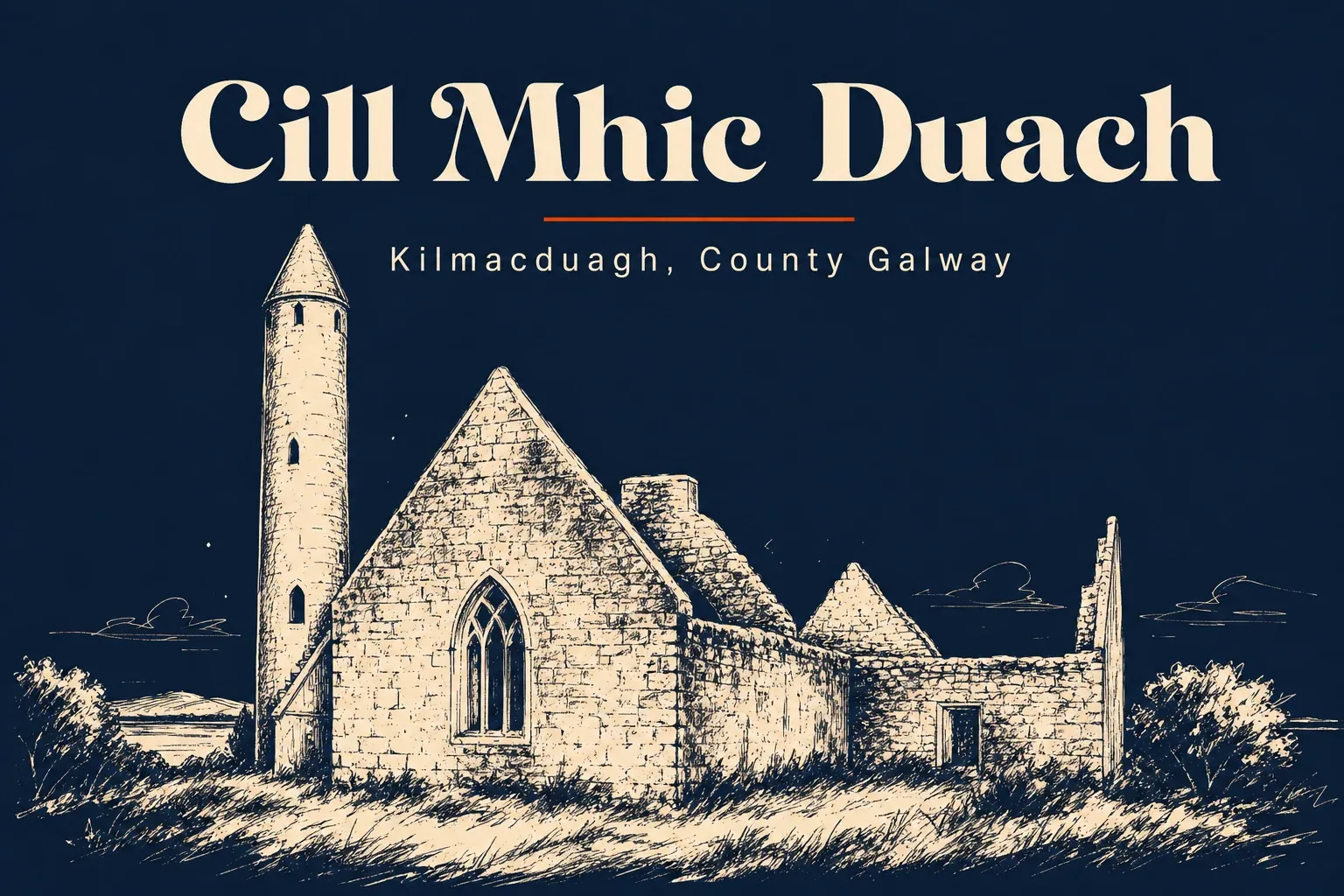
The round tower at Kilmacduagh was built in the 10th century, after the site had already stood for three hundred years. It rises 34 metres from the bog and has been leaning very slightly eastward for nine centuries. The lean is measurable — a stone sinking on the western side where the bog is softer — but it is not dramatic. The tower has accepted its own weight. It stands in a kind of permanent negotiation with gravity. The corners are square, unusual for Irish round towers. The doorway is 3 metres above ground, as they always are, for reasons that archaeologists still argue about. From inside, you can see sky.
Where prayers learned to stop
The cathedral complex
The cathedral at Kilmacduagh is a shell. Roofless. Some walls high enough to cast a shadow. The complex spread over medieval centuries — the cathedral itself, the church of St John (now very partial), the family tomb. The Dissolution came. Then came time. The stones slumped into the bog. Ivy took the mortar. The cathedral became something closer to memory than architecture. It is quiet in a way that settlements never are. The kind of quiet that was always the point.