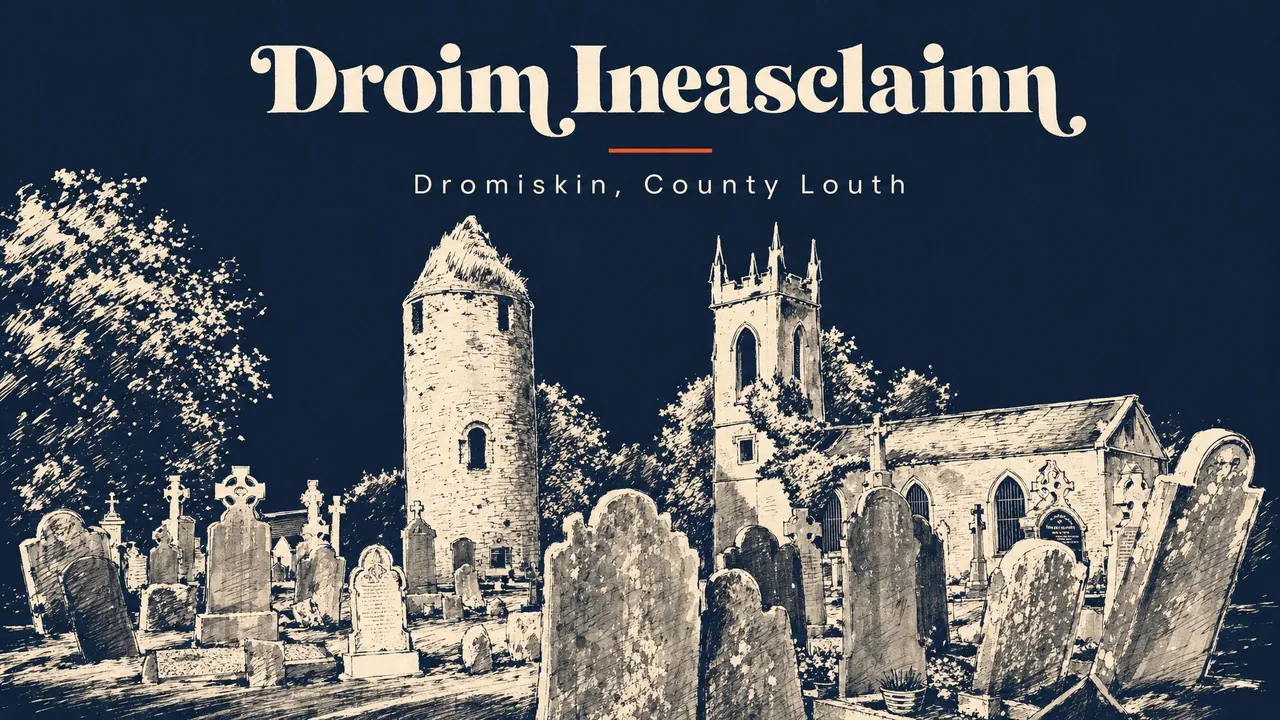
Droim Ineasclainn · Co. Louth
A round tower and a high cross in the same graveyard, ten kilometres south of Dundalk.
Dromiskin is a small village ten kilometres south of Dundalk, a kilometre off the coast, on the old N1 / R132. About twelve hundred people, almost all of the housing stock built since the 1990s commuter boom. The reason to come is in the centre of the village - a 9th-century round tower and a 10th-century high cross in the same small graveyard, both National Monuments, both unguarded, both genuinely worth the stop.
The monastic settlement here is reputedly associated with St Patrick himself, who is said to have placed Lughaidh - son of Aengus mac Nadfraoich, the first Christian king of Munster - as its first bishop. Other sources name St Lugdach or St Ronan (died 664) as the founder; the medieval tradition is layered. What is documented is what came after: the Annals of Ulster record Dromiskin burned by Vikings in 833, pillaged repeatedly through the 9th and 10th centuries, and finally abandoned around 1043. The tower and the cross are what survived.
Don't come for the day. Come for an hour - park near the church, walk into the graveyard, climb the small mound to the round tower, look at the Romanesque doorway four metres above your head, walk over to the cross fragment in the corner of the graveyard, read the OPW panel, leave. Then take a pint in Herity's on the main road, or drive five minutes south to Castlebellingham for the village green and the religious panels cut into the houses. Dromiskin is a stop on a route, not a base. The route is good.