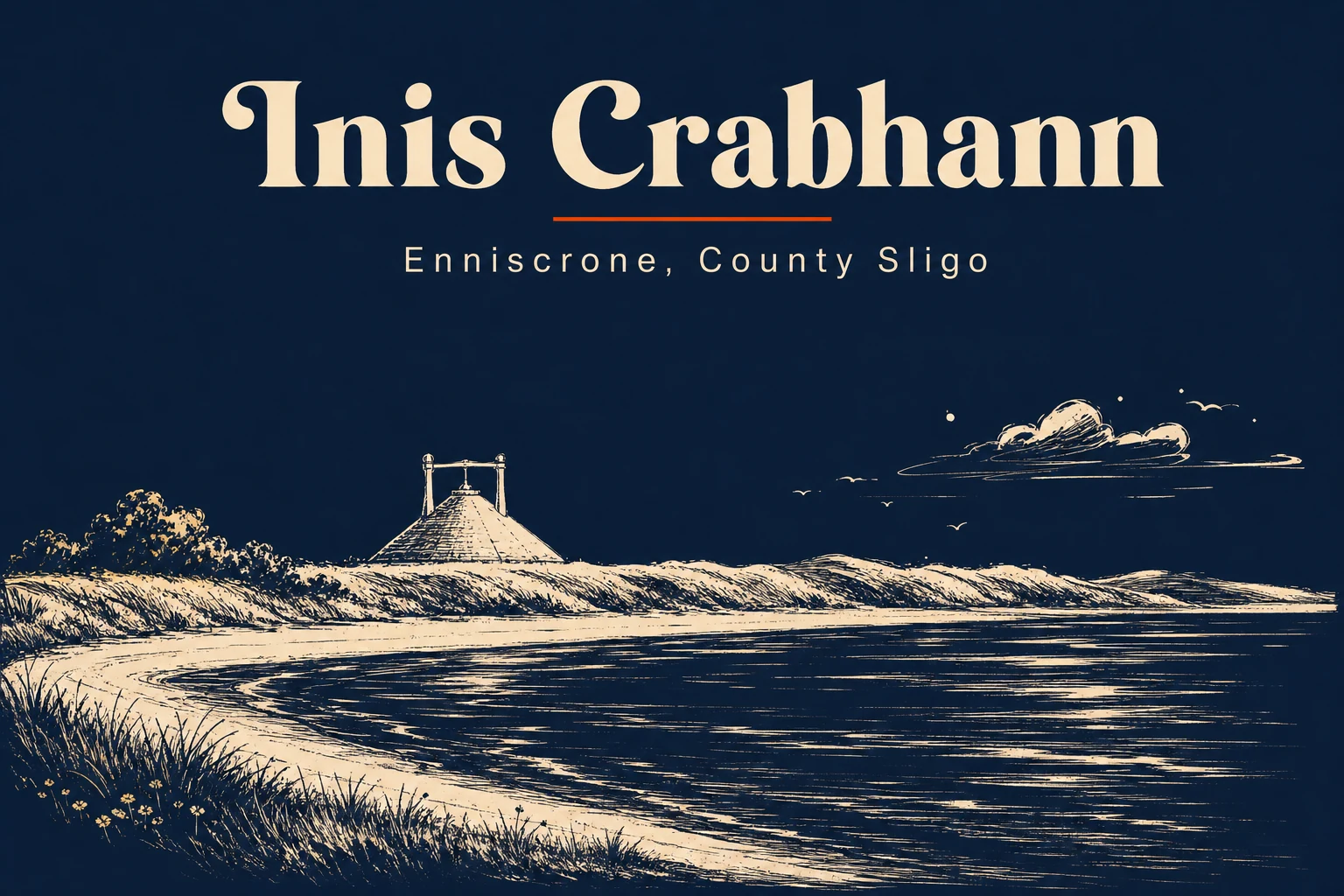
Inis Crabhann · Co. Sligo
Five kilometres of sand, a Victorian bath house, and a links course in the dunes.
Enniscrone sits on the south-west corner of Killala Bay, looking across at Mayo. The strand is the engine of the place - five kilometres of sand running north, the dunes hiding a links course, the Atlantic doing whatever the Atlantic feels like that morning. The town itself is one long climb up from the beach: Main Street, the cluster of pubs and shops, the bath house at the bottom, the golf course on the ridge, the castle ruins above that.
It is a working seaside town. The trade is older than the surf craze and older than the spa craze too - Kilcullen's bath house opened in 1912 and the same family still runs it five generations on. The surfers arrived in the 60s and stayed. The golfers turn up most months of the year. Between the three crowds and the summer holiday-home families, the population doubles in July and quietly halves again in October.
Stay a night or two. Walk the strand at low tide. Sit in a tub of hot seawater and seaweed until you stop thinking. Eat a chowder at the Pilot Bar. Drive across the bay to Ballina for a change of scene if you need one. The town is small enough that two days will give you the shape of it; the bay is big enough that a week will not exhaust it.