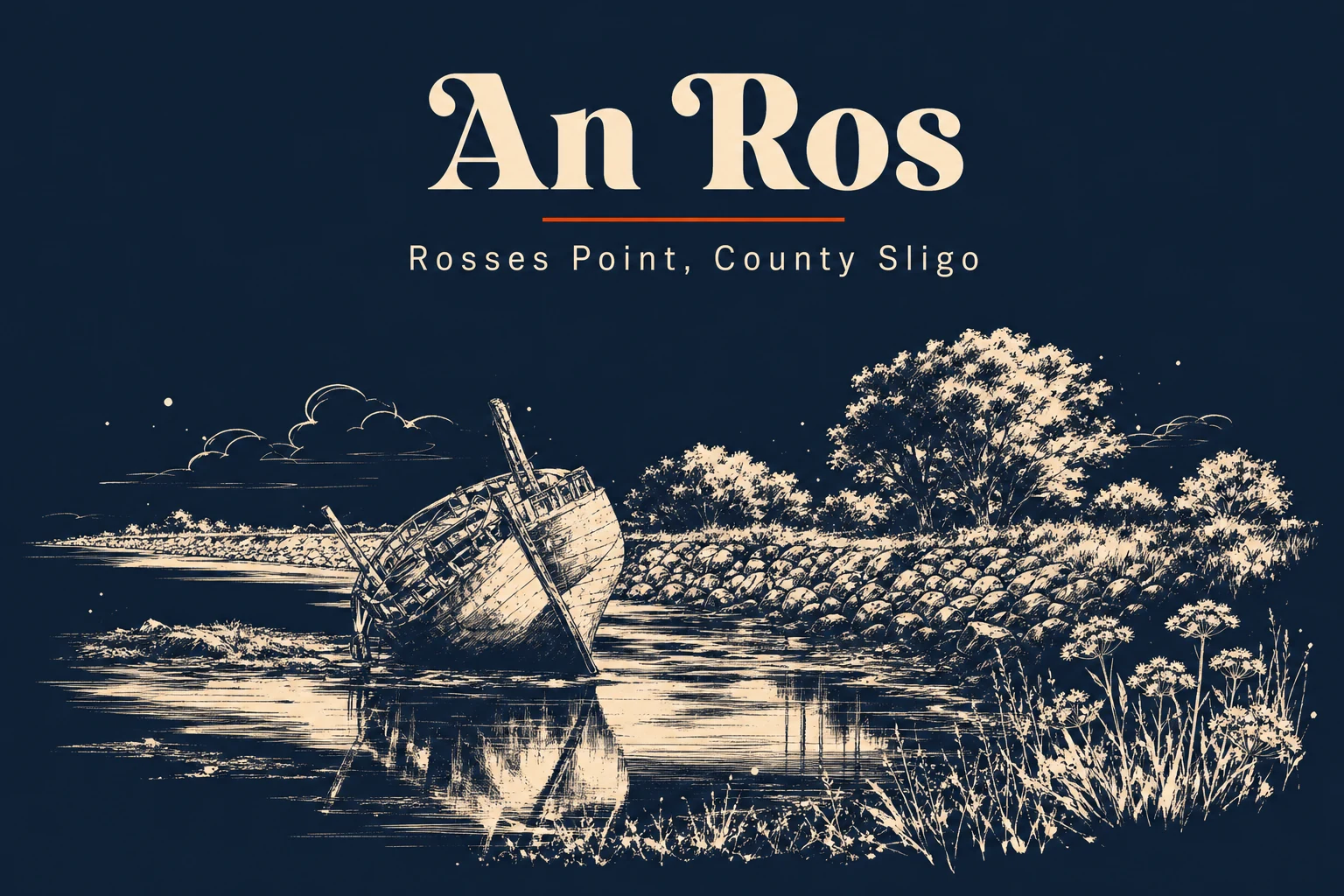
An Ros · Co. Sligo
A cast-iron sailor points the way in. The Yeats boys spent their summers here.
Rosses Point is the village Sligo town goes to on a Sunday. Eight kilometres north-west of the bridges, out the road past the docks, and the bay opens up - Coney Island on one side, Oyster Island the other, Ben Bulben sitting up the coast like a piece of stage scenery somebody forgot to strike. The Metal Man stands on his rock in the middle of it, painted and pointing, doing the same job he was set down to do in 1821.
The Yeats connection runs deep and is the reason most people first hear of the place. W.B. and Jack's mother's family - the Pollexfens and their Middleton cousins - were Sligo merchants and shipowners with summer houses out at the Point. The boys spent long summer holidays here in the 1870s and 1880s, rowing in the river mouth, being taken out in a heavy schooner yacht, picking up the sea-and-sailor imagery that runs through half the work after. Elsinore Lodge, the Middleton house low by the sea, is still standing - derelict now, restoration promised on and off for years.
The other thing the village is known for is the golf. County Sligo Golf Club at Rosses Point - Co. Sligo, or just Rosses Point if you talk about it for long enough - is a Colt-and-Alison links from 1894 that hosts the West of Ireland Amateur Championship every Easter. It has done so since 1923. The course runs along the bay with Ben Bulben framing every shot, which sounds like brochure talk and is in this case just a description.
Two long beaches - the First and the Second - run north from the village. The Pilot's Lookout sits on the headland above them, a small white tower where the harbour pilots once watched the channel. Walk up there on a clear evening and the whole bay is laid out: the Metal Man, Coney Island, the Sligo hills, Knocknarea behind you with Maeve's cairn on top. Then come back down to Austies for a pint. That's the day.