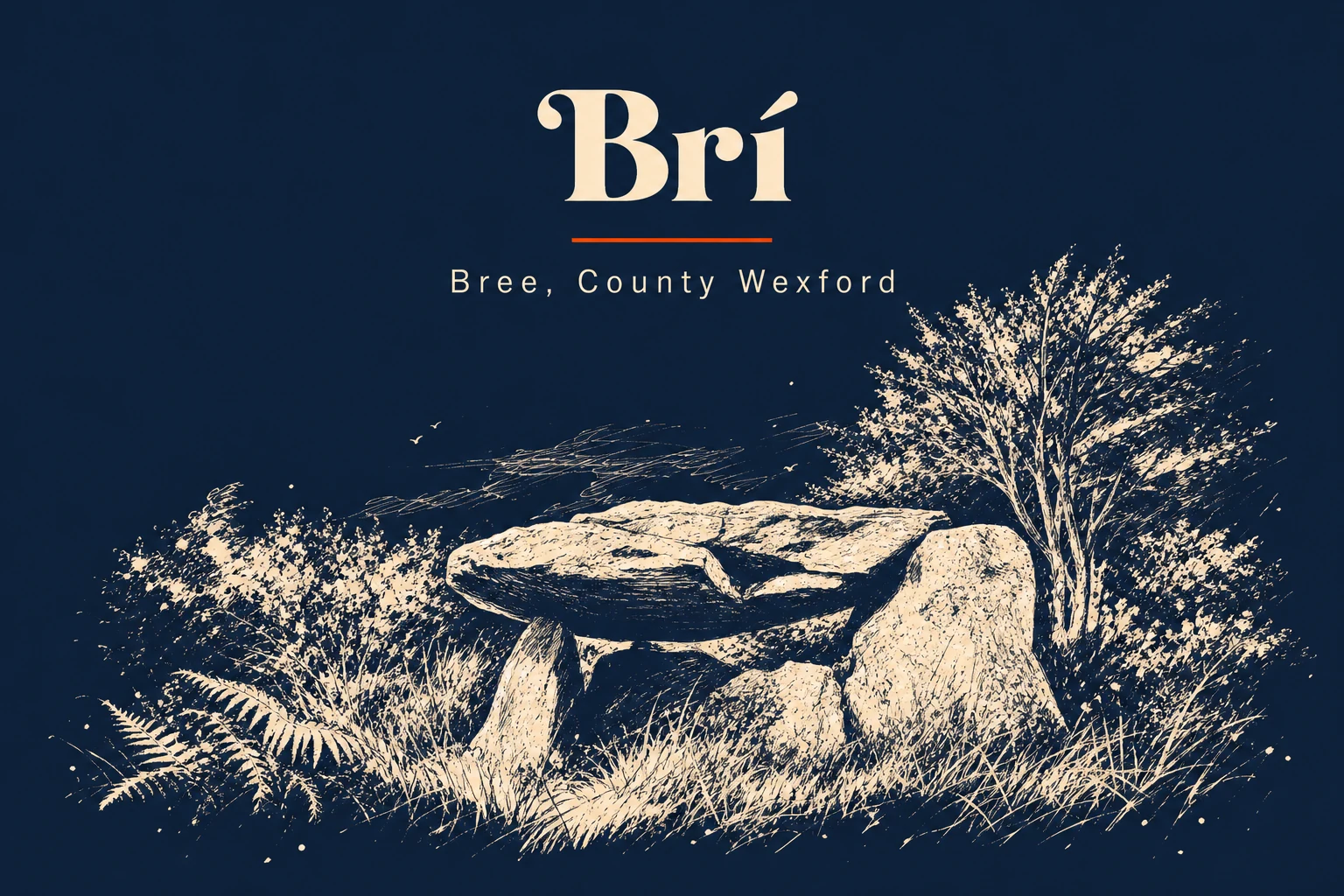
Neolithic, on the hill
The Ballybrittas dolmen
A portal tomb at the top of Bree Hill, dated to the Neolithic period - 4000 to 2500 BC. Two large portal stones and a backstone hold up the roof stone; two side stones and a sill stone complete it. Probably the oldest standing structure in Wexford. Nobody knows exactly what it was for: a burial chamber, a boundary marker, a status symbol. The walk to it from the village is about 3 km up through the woods, signposted as the Ballybrittas Dolmen Trail.
The 7th-century monastery
Saint Aidan and Clonmore
There was an early Christian monastery at Clonmore, near Bree, traditionally associated with Saint Aidan - the same Aidan who became the first Bishop of Ferns. The ruins are not much to look at now, but the site is on the heritage map and the parish church in the village (the Church of the Assumption) carries the line forward. The Church of Ireland church at Clonmore was built in 1827.
Born in Bree, early 1400s
Sir James Keating
Sir James Keating, born in Bree in the early 15th century, became Prior of the Knights Hospitaller in Ireland and a leading figure in the Irish government of his day. The Hospitallers were a crusading military-religious order with origins in the Holy Land. A small village producing a national-level figure is the kind of thing that turns up more often in rural Ireland than the maps would suggest.