Cluain an Róistigh · Co. Wexford
Wexford strawberry country. A pub, a church, and the N30.
Clonroche is a strawberry village. That's the line, and it's true. The fields running south and east of the Main Street produce the fruit that Wexford has been known for since the mid-twentieth century, and the family names on the punnets in the supermarket have been at this for two and three generations. From late May to August the farm gates open, the pickers arrive, and the country smells of warm fruit. Outside that window, Clonroche is a quiet stretch of the N30 with a pub, a church, a shop, and a couple of hundred people getting on with their week.
South of the village rises Carrigbyrne Hill. The Coillte forest on its slopes is where locals walk the dog on a Sunday - a tidy 222-metre lump with marked trails and a clearing at the top. In the parish on the New Ross side, the Grubb family started making farmhouse cheese in 1982: St Killian, the little hexagonal washed-rind round in the orange box, and later the Wexford Wagonwheel. The dairy has changed hands more than once over the years - check current stockists rather than turning up at the gate.
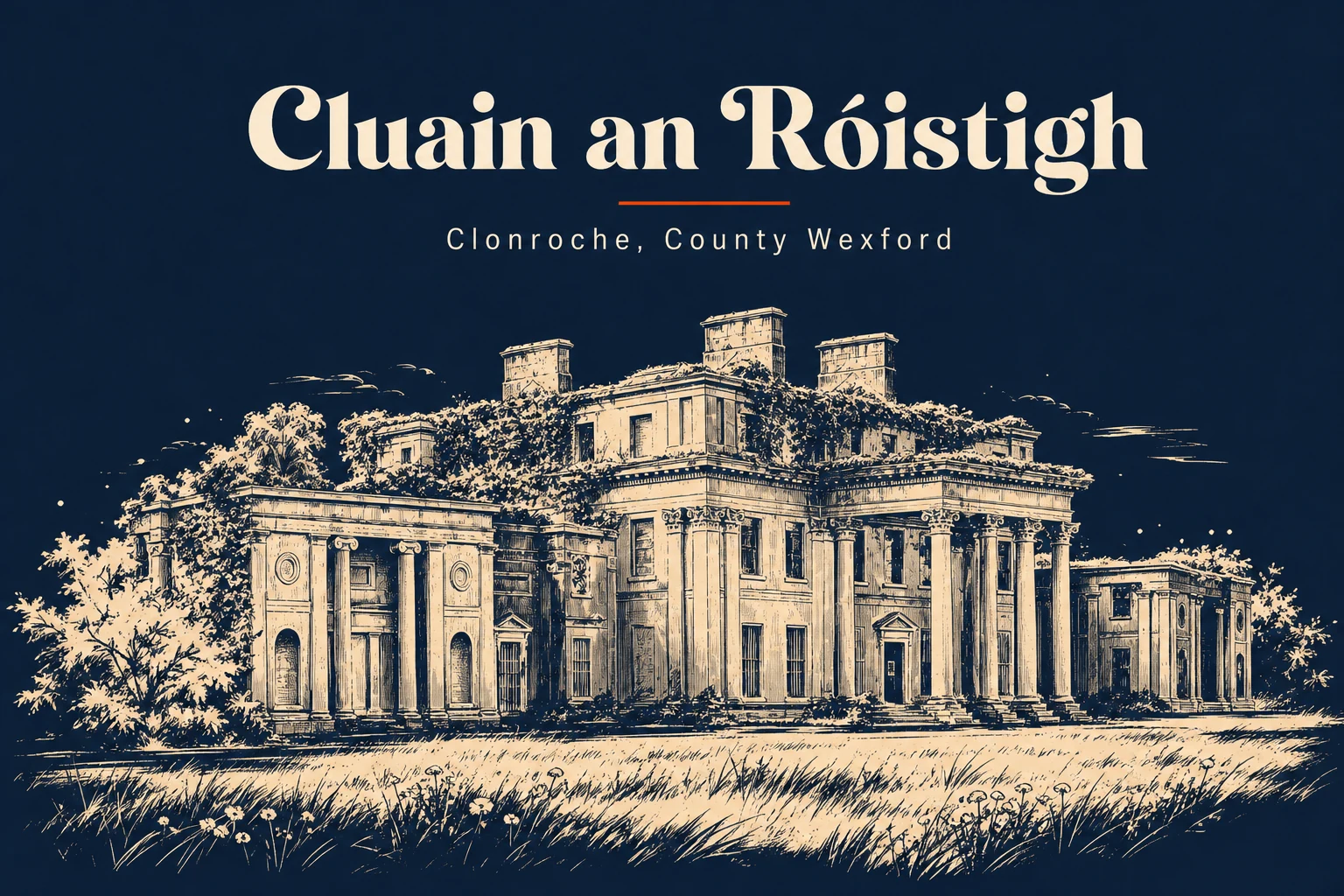
The village itself sat on what was, for two and a half centuries, the Carew estate. Robert Carew bought the land in 1669, and the family built Castleboro House a couple of kilometres east in the 1770s - a Palladian pile by the architect Daniel Robertson. It burned in 1923 during the Civil War, was never rebuilt, and stands today as a roofless shell in the woods on private land. Don't drive through Clonroche expecting a postcard. It isn't selling itself. Pull in for a pint, buy a punnet at a farm gate in season, walk the forest if you've an hour. That's the village. It's enough.