The landlord who led the tenants
Parnell and Avondale
Charles Stewart Parnell was born at Avondale House on 27 June 1846, the son of an Anglo-Irish Protestant landowner. He became, in the 1880s, the most powerful Irish politician of his generation - leader of the Irish Parliamentary Party at Westminster, president of the Land League, the man who drove Gladstone toward a Home Rule bill. The contradiction at the heart of it - a Wicklow landlord organising the largest campaign of tenant resistance in Irish history - played out, in part, on this estate. 'Captain Moonlight' was the pseudonym used in threatening letters sent to landlords during the Land War; the tactic spread across Wicklow and beyond. Parnell's political career ended in 1891 following a divorce case that split the Irish party. He died that October, aged forty-five. Avondale passed through other hands. Coillte turned it into a forestry demonstration site in the twentieth century and then, after a long restoration, reopened the house and built a treetop walkway through the estate in the 2020s.
From the first hostilities to the last holdout
1798 in South Wicklow
Wicklow men were in the field from the very first day of the 1798 rebellion - 23 May - and they kept fighting longer than almost anyone else, well into the autumn. South Wicklow saw some of the worst loyalist reprisals: on 21 June 1798, yeomanry including men from Rathdrum were involved in a massacre of civilians at Aughrim. The rebel cause in Wicklow was led by figures from a small number of Catholic families with enough property to hold their standing - the Byrnes of Ballymanus, from whom the leader Billy Byrne came, were the most prominent. The mountains gave the rebels cover and supply lines that Crown forces struggled to cut. The memory of 1798 sits beneath the surface of south Wicklow in a way that is still legible, two hundred and twenty-eight years later, if you look.
The ringfort on the ridge
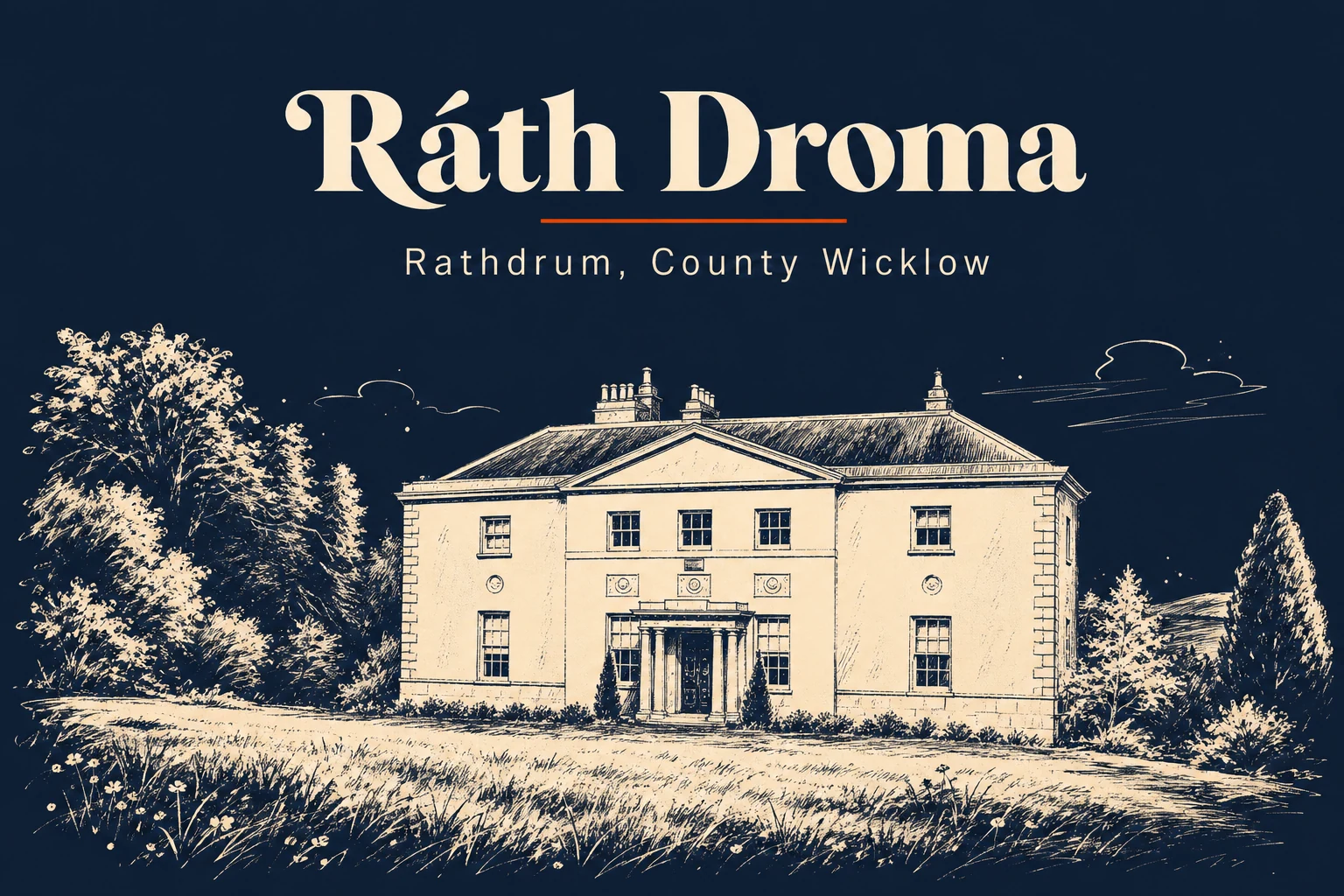
Ráth Droma
The name means 'ringfort of the ridge' and it describes the strategic reality: Rathdrum stands on high ground above the Avonmore valley, the natural control point for river crossings and the mountain passes above the Vale of Avoca. The O'Byrne clan held this ground until the late sixteenth century, when English forces pushed them out. The land went to an English grantee. The market town grew on the ridge through the seventeenth and eighteenth centuries. The railway arrived in 1863, connecting the town to Dublin Connolly and, eventually, to Rosslare Europort. The ridge is still the spine of everything.