← All Wicklow tours via partner · From €5 · 8 hours 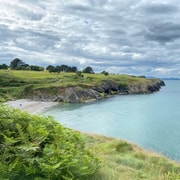
Wicklow: Guided Cliff Walk with Seals and Town Tour w/Picnic
Free cancellation Booked securely via partner
Check availability & prices →
From €5 per person
Wicklow’s coastline is genuinely dramatic - cliff caves where ancient flints were found, a beach that appeared in the film Excalibur, and a string of iconic lighthouses that once guided ships safely around Wicklow Head. This 8-hour guided experience takes you through all of it, on foot and at a pace that lets you actually take it in.
The day opens with a cliff walk along the wild Wicklow coastline. Grey seals and seabirds turn up regularly here, so keep your eyes on the water. You’ll visit St. Bridget’s Well, Ireland’s most easterly Holy Well, and hear its cultural and historical significance from your guide. Walk through the cliff caves where ancient flints were discovered and learn about the three lighthouses of Wicklow Head - their history as navigation landmarks and the stories attached to them.
After the walk, you’ll sit down for a picnic with locally sourced tea, coffee, and fresh pastries, with nothing but sea air around you.
The afternoon moves into Wicklow Town itself, a 9th-century Viking settlement and the county capital. Your guide will point out the shore where St. Patrick first set foot in Wicklow - and share the curious story of how that first encounter with the locals went. Lunch is at a traditional Irish tavern with views over the Vartry River, after which you’ll visit the ruins of Black Castle, the 12th-century Norman fortress that once dominated this stretch of coast. You’ll also hear about Wicklow Gaol, one of the most notorious prisons in Irish history, and the stories of those who passed through its gates.
Duration is approximately 8 hours. Wear comfortable walking shoes - the cliff walk covers uneven coastal terrain. The tavern lunch and picnic are both included.
The Black Castle ruins are open at any hour and the headland views - north along the coast toward Dublin, south toward Wicklow Head - are genuinely worth stopping for. Maurice Fitzgerald built the first castle here in 1176; the O’Byrne clan burned it three separate times in the 14th century, and each time the Normans rebuilt. What you’re walking around is mostly Tudor-era masonry, open to three sides of wind and sea.
The tavern lunch stop is likely on Bridge Street near the Vartry - the Bridge Tavern, where Robert Halpin was born in 1836, is the historic pub on this stretch. Halpin went on to captain the Great Eastern and lay the first functional transatlantic telegraph cable in 1866. His granite obelisk on Fitzwilliam Square - the locals call it the Smoothing Iron - is a minute’s walk from the river. A pint here earns its context.
Note on Wicklow Gaol: The gaol on Market Hill is currently closed for major renovation (from September 2025). Your guide will explain its history - it held United Irishmen after 1798 and transported hundreds to Australia - but don’t expect to go inside. The exterior and the story are compelling enough.
The cliff walk terrain is uneven in places - boots or proper walking shoes will serve you better than trainers on the headland path. The morning section before the picnic is the wilder stretch; the afternoon town tour is comfortable walking on pavement. If the weather cooperates, this is one of the finest half-days on the east coast. Explore more of Wicklow on your own time.