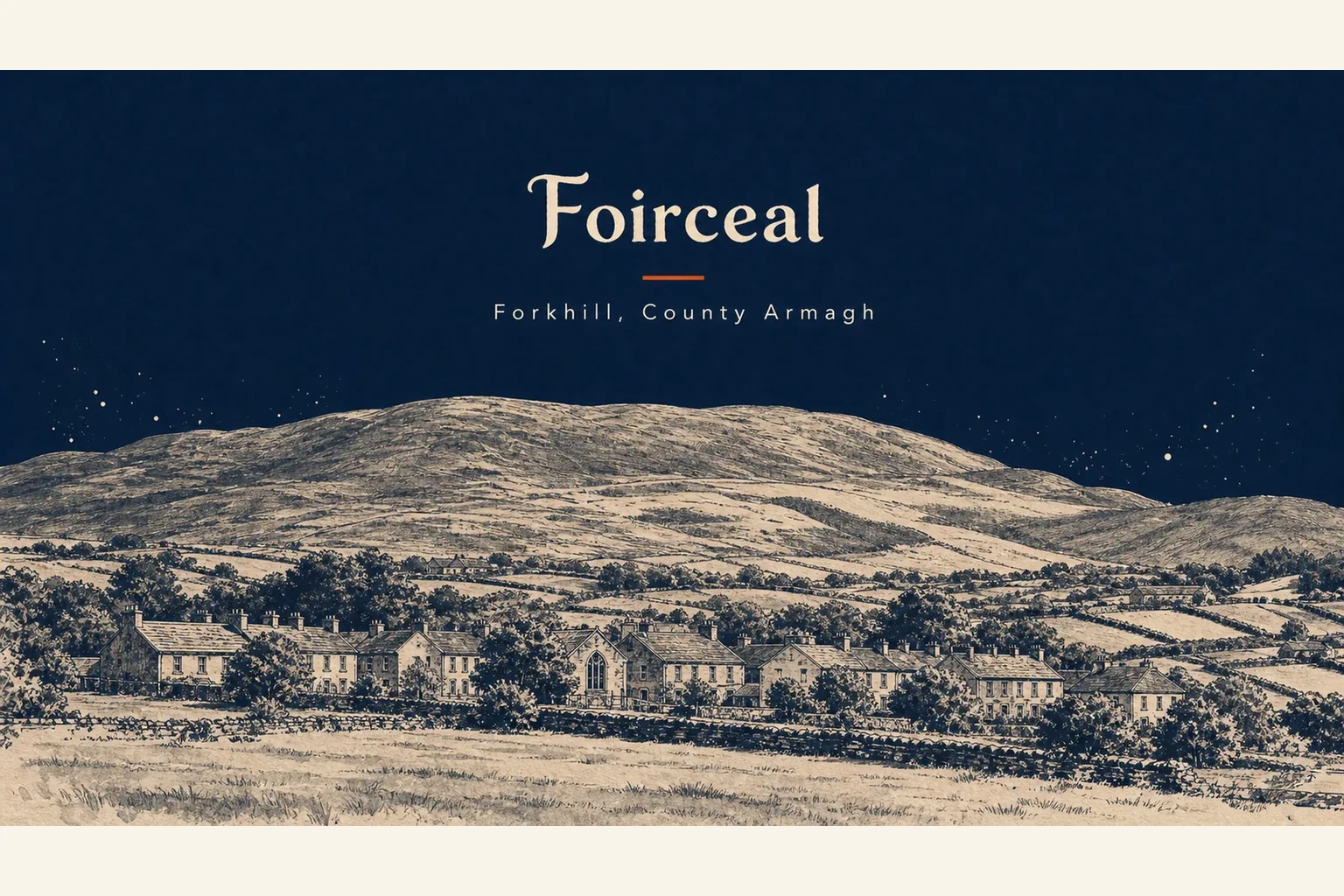
Foirceal · Co. Armagh
A small village in the lap of Slieve Gullion - sing in the pub on Tuesday, walk the hill on Wednesday.
Forkhill is a one-street village in the lap of Slieve Gullion, three miles short of the border. Five hundred and fifty people on the last count. A pub, a café, a chapel, a primary school, a GAA pitch named for an 18th-century Gaelic poet who's buried up the road. That's most of it.
The angle here is song. South Armagh is the heartland of a particular kind of Irish music - unaccompanied singing in English and Irish, a tradition that produced poets like Peadar Ó Doirnín and Art Mac Cumhaigh and is still being carried by working singers today. The Tuesday session in the Welcome Inn has been running for the bones of fifty years. Tí Chulainn, the cultural centre that anchors all of this, is up the road in Mullaghbawn.
The other thing to know is that the Troubles fell hard on this parish. There was a base at the edge of the village, a watchtower on the hill, and a long list of incidents in the 1970s, 80s and 90s. The towers came down in 2006-07. People here lived through it and would rather talk about something else, which is fair. Read about it before you come; don't lead with it when you arrive.
Come for the hill, the session, the quiet. The Ring of Gullion runs all around you - a 150-square-kilometre ring dyke, the first one mapped anywhere in the world. There are worse places to spend a wet afternoon than a corner seat in the Welcome Inn with a fire on.