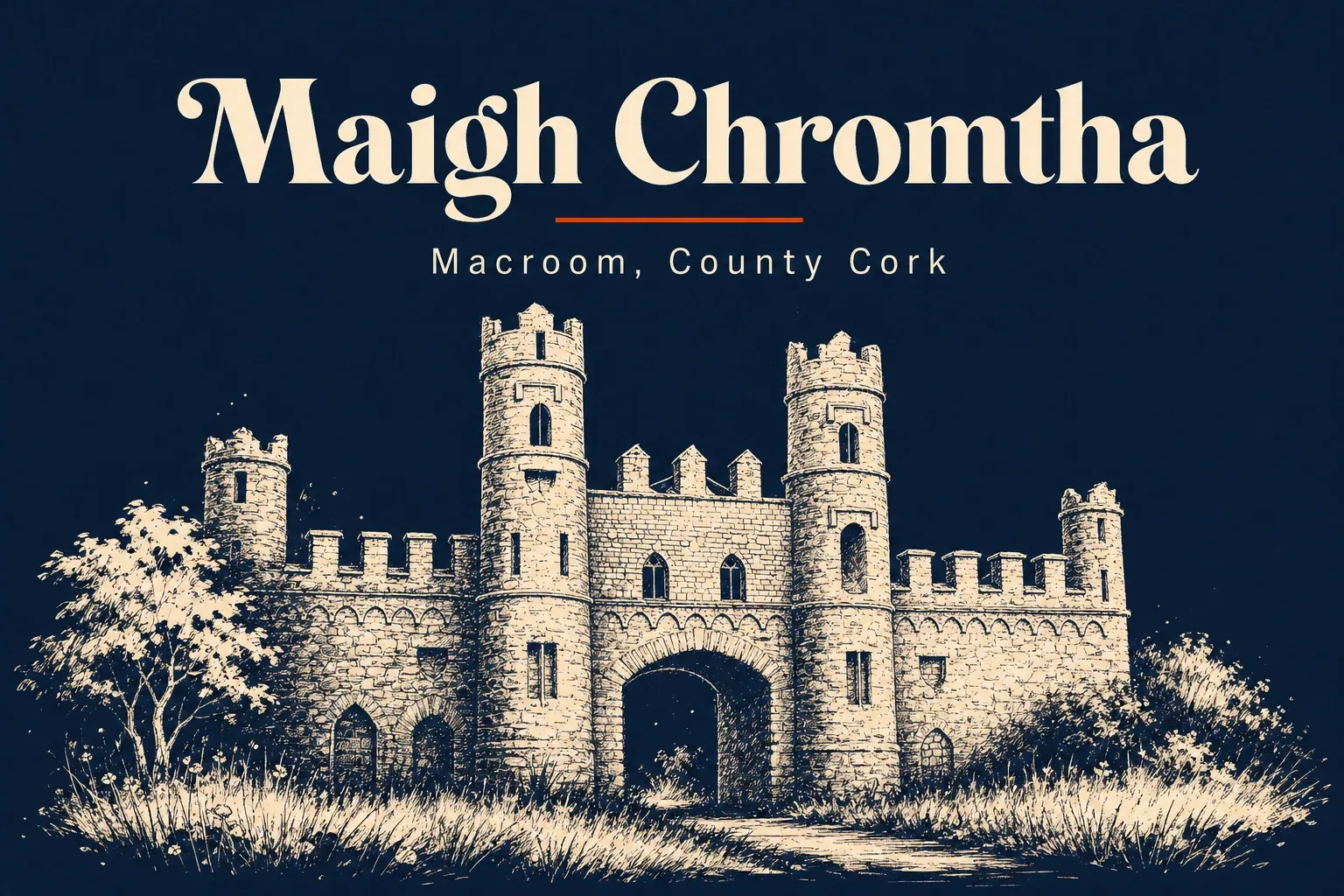
Maigh Chromtha · Co. Cork
William Penn spent his childhood here - his father was granted the castle after Cromwell - before founding Pennsylvania. Now it's the working gateway to West Cork.
William Penn is the reason to pause. His father, Admiral Sir William Penn, was granted Macroom Castle after Cromwell. Young William grew up here in the 1650s and 1660s - before he sailed to America, founded Pennsylvania (named after his father, not himself), and wrote the constitution that became the template for the US one. The castle is ruined now and sits in the town square, but the fact of it - that this Irish market town is where one of America's founding figures spent his childhood - is worth standing in front of.
Macroom is the gateway to West Cork. The N22 runs through it, the Cork-Killarney road, and most people drive straight through. They shouldn't. The town is real - a proper market town with a Wednesday and Saturday cattle market that has nothing to do with tourism. The square fills with farmers, cattle trucks, the serious business of livestock trading. The pubs are proper too. Castle Hotel bar is the kind of place where the same people have been sitting in the same seats for decades.
The River Sullane runs through it, feeds into the Lee, and if you follow the Lee south you end up at Gougane Barra - the source, a forest park, St Finbarr's oratory on an island. Macroom is the logical place to stop before heading up into the mountains. The town is in the edge of the Gaeltacht - Irish-speaking territory is close. The landscape starts to fold into itself. You feel it the moment you arrive.