← All Dublin tours via partner · From €10 · 3 hours 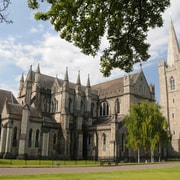
Dublin Cathedrals Private Guide - St Patricks + Christchurch
Free cancellation Booked securely via partner
Check availability & prices →
From €10 per person
Dublin is unusual among European cities in having two medieval cathedrals from the same diocese, and the rivalry between them goes back almost as far as the buildings themselves. This private 3-hour tour takes you inside both, with an expert guide who has spent over a decade unpacking the Viking, Norman, and Irish history that shaped these two remarkable buildings.
You start at Christ Church Cathedral - the city’s oldest building, founded by the Viking king Sitric Silkenbeard in 1030. The tour goes down into the medieval crypt, the largest in Ireland or Great Britain, where you’ll find the cathedral treasury, carved stone monuments, and the famous mummified cat and rat that James Joyce immortalised in his writing. Back above ground, you’ll stand before the tomb of Strongbow, the Norman conqueror who rebuilt the cathedral in the 1170s, and take in the royal plate gifted by William III and an iconic Magna Carta.
A short walk brings you to St Patrick’s Cathedral, the National Cathedral of the Church of Ireland, built on the site where St Patrick is said to have baptised converts in a holy well 1,500 years ago. Inside, your guide tells the story of Jonathan Swift - author of Gulliver’s Travels, and Dean of St Patrick’s for thirty years. You’ll see his final resting place and his death mask. The tour also covers how the cathedral commemorates Ireland’s British war dead and the lasting philanthropic legacy of the Guinness family.
Because this is a private tour, the whole thing runs at your pace and follows your interests. There’s no fixed script, no group to keep up with, and no question that doesn’t get a proper answer. It’s just you and a guide who genuinely knows the place, working through a thousand years of Dublin history together.
The crypt at Christ Church is genuinely worth your time. It’s easy to rush through on your way to the main nave, but the crypt is where a lot of the most interesting material lives. Your guide knows where to look - the mummified cat and rat alone tend to generate a conversation that goes further than you’d expect.
St Patrick’s is bigger than it first appears from the street. The approach along Patrick Street doesn’t quite prepare you for the scale of the interior. Give yourself time to look up once you’re inside, and let your guide set the context before you start reading plaques on your own - the Swift connection in particular makes a lot more sense with some background.
Book the earliest slot you can. Both cathedrals are active places of worship, and morning services or special events can occasionally affect access to certain areas. Going early also means fewer tourists in the building, which makes the experience noticeably better - especially in the crypt.
This works well as a starting point for a wider medieval Dublin day. Christ Church sits right on the edge of the old Viking and medieval quarter, and Dublinia - the Viking and medieval history museum - is directly connected to it by a bridge. Your guide can point you toward what’s worth seeing in the area once the tour wraps up.
Ask about the Magna Carta. It’s one of those things that catches people off guard - the fact that a copy ended up in Christ Church and what that says about Dublin’s place in the medieval English world is a thread your guide can pull on if you’re interested.