← All Dublin tours via partner · From €1 · 2 hours 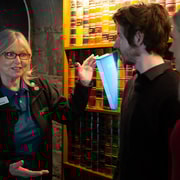
EPIC Museum Dublin: Exclusive Private Tour
Free cancellation Booked securely via partner
Check availability & prices →
From €1 per person
Going through EPIC on your own is fine. Going through it with a private guide who knows every gallery, every story, and how to connect it all to your own family history is something else entirely.
The private tour takes your group - up to six people - through all 20 galleries over as much as two hours. Your guide covers the individual stories of Irish emigrants and the global diaspora in a way that a self-guided visit can’t replicate. If you have Irish roots, tell the guide before you start. They’re good at weaving your family’s particular background into the broader narrative, so the experience feels personal rather than general.
EPIC works well for anyone with Irish heritage who wants to understand how and why their ancestors left, but it’s equally engaging for people who simply want to understand the Famine, Irish emigration, and what Irish people went on to do across every continent once they left. The ripple effects of that movement - in science, politics, arts, culture, sport - are genuinely remarkable when you see them laid out this clearly.
As for the calibre of the tour: this is the same experience offered to visiting presidents, royalty, and celebrities. That detail is worth knowing.
The Docklands is worth arriving early to explore. The CHQ Building that houses EPIC is a stunning 19th-century vaulted warehouse on the quays, and the wider Docklands area around it has changed dramatically in recent decades. A walk along the River Liffey from O’Connell Street to the Docklands takes about 15 minutes and gives you a strong sense of how the city has rebuilt itself around the water.
Pair it with the Jeanie Johnston if you have the time. The Jeanie Johnston is a full-size replica Famine ship moored nearby, and the two experiences complement each other in a way that’s hard to describe but immediately obvious once you’ve done both. The ship puts you physically in the spaces where emigration happened; EPIC shows you what those emigrants built when they arrived.
The Irish Family History Centre inside EPIC is genuinely useful. If you’re tracing Irish ancestry, the centre has resources and staff who can help you start or advance a search. It’s not a full genealogy service, but it’s a good starting point and it’s included with your visit.
Docklands restaurants are a notch above the tourist-centre options. Once you’re done, you’re in one of Dublin’s better dining neighbourhoods. The area around Grand Canal Dock and the surrounding streets has a range of places that serve a working Docklands crowd rather than day-trippers, which tends to make a difference.