County Louth Ireland · Co. Louth · Carlingford Save · Share
POSTED FROM
CARLINGFORD
CO. LOUTH · IE

Carlingford
Cairlinn

The Ireland's Ancient East
STOP 01 / 04
Cairlinn · Co. Louth

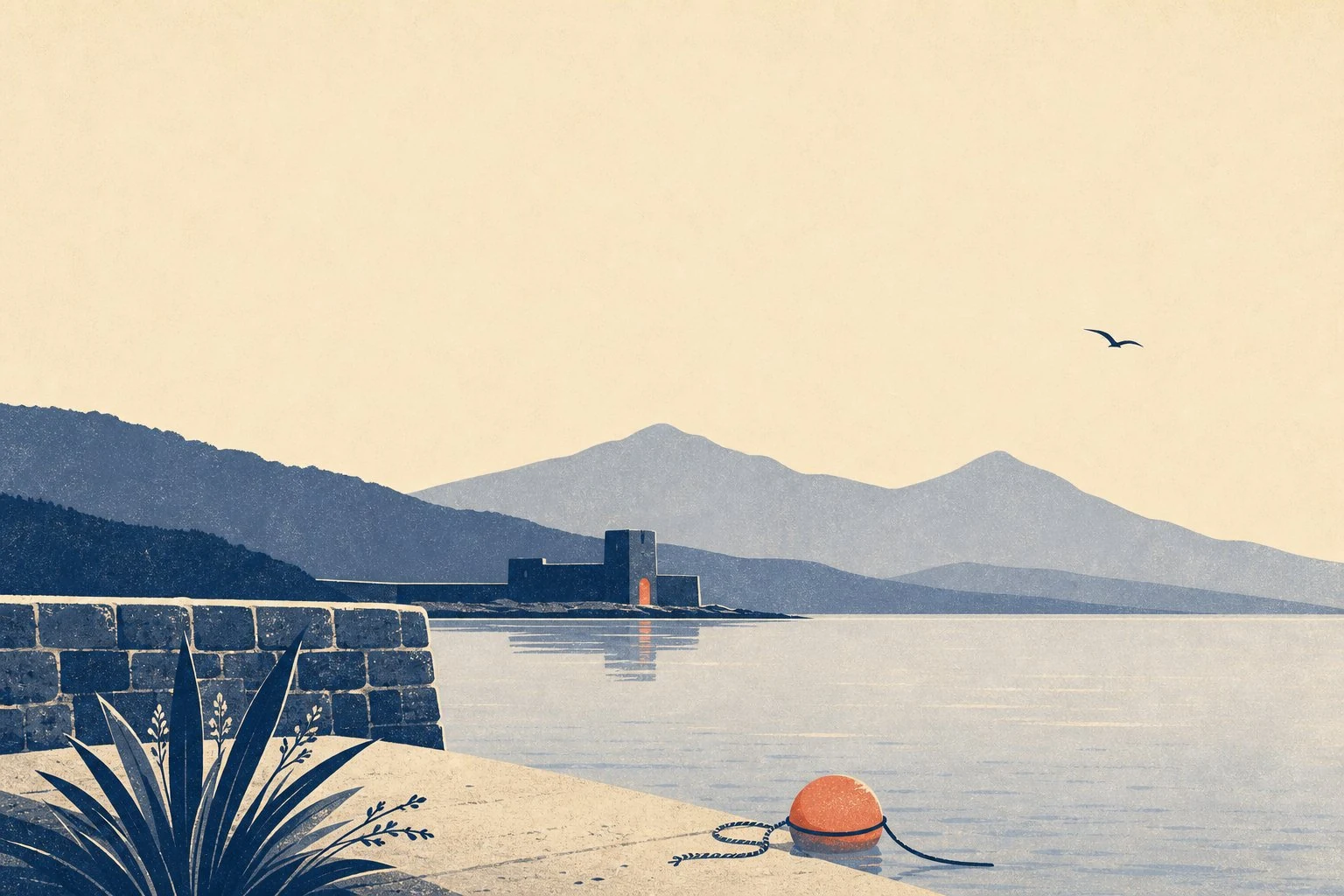
A Norman town on a fjord, looking across at the Mournes.

Carlingford is a Norman fishing town on a fjord, an hour from Dublin, looking across the water at Northern Ireland. The Mourne Mountains start where the lough ends. The Cooley Mountains rise behind the town. Between the two ranges, a tight grid of medieval lanes that the centuries somehow forgot to demolish.

It was rich once — five royal charters between 1326 and 1619, a port that traded with England and France, oysters that turned up on London menus. Then the Scots burned it in 1388, the herring left in the 1700s, the railway came and went, and the place quietly preserved itself by being broke for two hundred years. The result is the most complete medieval streetscape on the island.

Don't come for a checklist. Come for a long walk on the Greenway with the Mournes on your right shoulder, a plate of Carlingford Lough oysters that were in the water this morning, a pint in PJ O'Hare's where someone will eventually try to sell you the leprechaun story, and a wander up the lanes after dark when the castle is lit and there's nobody about. Two nights minimum. The day-trippers leave at five.
Population
~1,445
Pubs
6and counting
Walk score
Whole medieval grid in fifteen minutes
Founded
Norman town c. 1180s (Hugh de Lacy)
Coords
54.0431° N, 6.1862° W
01 / 10

At a glance.

Three things every local will eventually mention. Read these and you've already understood more than most day-trippers do.

02 / 10

The pubs.

None of these are themed Irish pubs, because they don't need to be. A few that earn the trip:

PJ O'Hare's

Famous, deserved
Pub & grocer, since 1865

The pub everyone has heard of. The leprechaun-in-the-wall story started here in the late 80s when PJ found a small skeleton, a bone whistle and four gold coins in a nearby field. Half tongue-in-cheek, half not. The bone whistle is on the wall behind the bar. The pints are properly poured.

Taaffe's Castle Bar

Atmospheric, low ceilings
Bar inside a 16th-century tower house

The bar of McKevitt's, set inside the surviving tower-house on the square. Stone walls four feet thick. Open fire. The kind of room where 'medieval' is not a decorating choice, it's the building.

McKevitt's Village Hotel bar

Locals and stayers mix
Hotel bar

Family-run on the square since the seventies. The lounge is the unofficial sitting room of the town. Live music most weekends, bar food till nine, and the staff know every regular by name.

Carlingford Brewing Company

Outdoor, leafy
Microbrewery & taproom

Local craft beer, wood-fired pizza on a leafy terrace ten minutes' walk from the square. New, modern, and the only place in town where the noun 'IPA' lands without irony.

03 / 10

Where to eat.

PlaceTypeLocal note
Ghan House Restaurant & country house, Michelin-recognised €€€ The proper dinner in town. Georgian house from 1727, walled garden, a kitchen run by Paul Carroll that has held standards for two decades. Six-course tasting menu, local lamb, lough oysters, the cheese trolley you came for. Book weeks ahead. The eight bedrooms upstairs mean you can stagger up rather than out.
The Bay Tree Bistro on the square €€ The reliable mid-range. Local seafood, slow-cooked Cooley lamb, a wine list that punches above the price. Lunchtimes do a chowder that the locals queue for. Book Friday and Saturday.
Kingfisher Bistro Bistro, family-run €€ Tucked off Dundalk Street. Mark and Claire have been quietly turning out the best plate of fish in town for years. Small room, blackboard menu, no fuss. Book ahead — twenty-six covers and word has got around.
Carlingford Oyster Company Oyster farm & shucking €€ Second generation — Kian Louët-Faisser is now running the farm his father started in 1974. The new visitors' centre at the lough does a tasting and a shucking lesson. The 'green-finned' Carlingford oysters that ended up on Victorian London tables come out of the same beds.
Rabelo Bistro & wine bar at the marina €€ On the marina, looking across at the Mournes. Antipasti boards, decent wine, live music at weekends. The view does about half the work, and that's fine.
04 / 10

Where to sleep.

PlaceTypeLocal note
Ghan House Country house, 8 rooms The proper stay. Georgian house, walled garden, the restaurant downstairs. Booked out months ahead in summer. If you can get a room here and a table the same night, do it.
Four Seasons Carlingford Hotel & spa Bigger hotel on the edge of town, leisure centre, pool, the wedding venue. Functional rather than charming, but the rooms with a lough view earn their keep.
McKevitt's Village Hotel Family-run hotel on the square Family-owned, in the heart of the medieval town. Taaffe's Castle is the bar. The rooms are unfussy. The location is unbeatable — everything in Carlingford is two minutes' walk.
Belvedere House Guesthouse Above the town with a view of the lough and the Mournes. Walking-distance to dinner. The breakfasts are the kind that make a long mountain day possible.
05 / 10

Stories & lore.

The reason to come back. The things every local will eventually tell you about, usually after the second pint.

A Norman keep on a rock

King John's Castle

Hugh de Lacy started building in the 1180s on a pinnacle of rock at the entrance to the lough. King John himself turned up in 1210 on his way north to fight Hugh's son, stayed three days, and lent the place his name forever. The western gate was designed so only one horse and rider could squeeze through at a time. The castle has been under restoration for years; the silhouette over the harbour is the postcard you came for.

An Táin Bó Cúailnge

The Brown Bull

The oldest story in the Irish language is set on these mountains. Queen Medb of Connacht came east to steal the great bull of Cooley, Donn Cúailnge. The seventeen-year-old Cú Chulainn held the entire army off at the river fords, single-handed, while Ulster slept under a curse. The Táin Way walking trail follows the geography of the cattle raid. You can stand on Slieve Foye and look down at the ground the bull was driven over.

PJ O'Hare's whistle

The leprechaun law

In 1989 PJ McCoy found a small skeleton, a bone whistle and four gold coins on Slieve Foye. He put them behind the bar of his pub on Tholsel Street. Twenty years later Kevin Woods — the 'Leprechaun Whisperer' — lobbied the EU and got Carlingford's leprechauns formally protected under the 2009 Habitats Directive. It is, on paper, the only place in the European Union where the leprechauns are a legally protected species. Make of that what you will. The bone whistle is still behind the bar.

A medieval town that survived

The walls and the gate

Carlingford was walled by the 14th century. The Tholsel — the last surviving medieval town gate in the town, and one of very few in Ireland — still spans Tholsel Street. It was gate, jail, and the room where the burgesses argued about taxes. The Mint on the same street was a fortified merchant's house granted licence to strike coins in 1467. Taaffe's Castle is a tower-house that became a bar. Five centuries of building stock, mostly intact, mostly still in use.

06 / 10

Things to do outside.

Wear waterproofs. Bring a sandwich. Tell someone where you're going if it's the mountain.

Carlingford Lough Greenway Carlingford to Omeath along the old Dundalk, Newry and Greenore railway line. Largely off-road, flat, the Mournes filling the entire view across the water. Family-friendly. The pint in Omeath at the far end is part of the route.
7 km one waydistance
1 hour by bike / 2 hours walkingtime
Slieve Foye Loop The big walk. Up the slopes of County Louth's highest peak, 589 metres, on blue waymarkers through Slieve Foye Forest and out onto the open mountain. On a clear day: the Mournes, the Cooley, Dundalk Bay, and the Isle of Man if the light is unusual. Don't go up in cloud unless you know mountains.
9 km loopdistance
3–4 hourstime
The Táin Way The full circuit of the Cooley Peninsula, following the geography of the cattle raid. Mountains, forest, coast. Most people do it as a multi-day; the Carlingford-to-Omeath section can be done as a long day walk.
40 km circuitdistance
2–3 daystime
Slieve Foye Forest Loop The shorter version. Forest tracks above the town, climbs to a viewing point over the lough, drops back to the car park. Good legs-stretcher in the morning before a proper lunch.
4 km loopdistance
1.5 hourstime
07 / 10

Tours, if you want one.

The ones below are bookable through our partners — pick one that suits, or skip the lot and just turn up.

We earn a small commission when you book through our tour pages. It costs you nothing extra and keeps the village hubs free. All Co. Louth tours →

08 / 10

When to go.

There is no bad time. There are different times.

Spring
Mar–May

The Cooley lambing is in full swing, the Greenway is empty, and the Mournes still have snow on top in March. Restaurants are open and not yet rushed.

◉ Go
Summer
Jun–Aug

Busy. Day-trippers from Dublin and Belfast both come here, and August brings the Carlingford Oyster Festival — book everything two months out. Long evenings on the lough are worth it.

◐ Mind yourself
Autumn
Sep–Oct

The locals' season. The light on the Mournes turns gold, oysters are at their best, and the medieval lanes get quiet again.

◉ Go
Winter
Nov–Feb

Half the daytime stuff shuts. The pubs and the proper restaurants stay open. Storms come straight up the lough. If you want the medieval town to yourself, this is when.

◐ Mind yourself
09 / 10

What to skip.

Honestly? Don't bother.

If a local was sitting beside you, this is the bit where they'd lean in.

×
The leprechaun-shop tat on the square

The PJ O'Hare's story is genuinely funny and worth ten minutes. The plastic-leprechaun gift shop next door is not the same thing. Buy the pint, skip the keyring.

×
Hotels with no view of the lough

Half of Carlingford's appeal is looking across at the Mournes. If your room faces a car park, you have paid for the wrong room. Pay the supplement or stay somewhere else.

×
Driving the Cooley Peninsula in a hurry

The R173 is a small road on a small peninsula. The whole loop is forty minutes if nothing is in front of you, ninety if a tractor is. Plan for ninety. Stop in Omeath.

×
The "medieval banquet" experience

You are already in a medieval town with a tower-house bar and a 12th-century castle. You do not need a costumed re-enactment. Eat in Ghan House instead.

+

Getting there.

By car

Dublin to Carlingford is 1h 15m on the M1 to Dundalk, then the R173 around the Cooley Peninsula. Belfast is the same. The last fifteen minutes are the views you came for.

By bus

Bus Éireann 161 from Dundalk runs several times daily, plus a Local Link service. About forty minutes from Dundalk station. No direct bus from Dublin — change at Dundalk.

By train

No train. The Dundalk, Newry & Greenore line closed in 1952 and is now the Greenway. Nearest station is Dundalk on the Belfast–Dublin Enterprise line.

By air

Dublin Airport (DUB) is 1h 10m by car. Belfast International (BFS) is 1h 15m. Both work.